The head of the Oil Industry Technology and Innovation Park said Iran has revised the contract model for reviving low-yield oil wells, with more financial support from the Oil Ministry, lower risk for technology companies, easier access to well data, and no cap on the number of wells that can be assigned.
OIL Feed Atom
An informed U.S. source said China’s imports of Iranian oil — or oil that may belong to Iran — have dropped to 440,000 barrels a day.
Brent crude futures dropped $1.65, or 1.6%, to $103.17 a barrel. U.S. West Texas Intermediate (WTI) futures fell 61 cents, or 0.6%, to $101.30 a barrel.
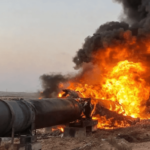
The Sept. 10 attacks on Saudi Arabia’s East-West pipeline hit several parts of the system and damaged at least one pump station, forcing Riyadh to shut a vital Hormuz bypass.
Brent crude futures fell $2.67, or 2.5%, to $103.13 a barrel. U.S. West Texas Intermediate (WTI) futures dropped $1.61, or 1.6%, to $100.82 a barrel.
The Oil Ministry is 60 trillion tomans behind on pollution-right payments to Khuzestan, Dezful lawmaker Abbas Papizadeh said.
Officials from the University of Tehran Science and Technology Park, the Oil Ministry and related bodies reviewed how to turn academic and knowledge-based capacity into working solutions for the oil industry.
Brent crude futures fell 59 cents, or 0.54%, to $108.16 a barrel. U.S. West Texas Intermediate (WTI) futures dropped $1.20, or 1.13%, to $104.63 a barrel.
National Iranian South Oil Company aims to cut flare-gas burning to about 8.6 million cubic meters a day by the end of the current Iranian year in March 2027 and to 4.5 million cubic meters a day by the end of 1406 (March 2028), its production manager said.
Abadan’s member of parliament said the city’s oil refinery should stay out of private hands and criticized the current privatization track.
Saudi Arabia has told some European refiners that crude cargoes due to load this month have been canceled after Yemeni attacks knocked out the East-West pipeline.
Brent crude futures rose $1.67, or 1.58%, to $107.35 a barrel. U.S. West Texas Intermediate (WTI) futures gained $2.14, or 2.11%, to $103.53 a barrel.
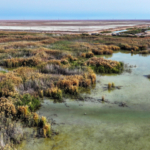
Iran’s Department of Environment applied unusually strict scrutiny to the Sohrab oil field after its experience at North and South Azadegan and is insisting the Oil Ministry guarantee its environmental commitments so damage to the Hoor al-Azim wetland is kept to a minimum, the deputy for marine environment and wetlands said.
Brent crude futures rose $3, or 2.9%, to $107.61 a barrel. U.S. West Texas Intermediate (WTI) futures gained $2.48, or 2.5%, to $102.53 a barrel.
National Iranian South Oil Company will begin staged start-up of flare-gas gathering projects in the Aghajari operating area from October–November 2026 and is trying to bring part of that capacity online before cold weather.
Iran has unveiled two catalysts for oil, gas and petrochemical plants: a chromium-free high-temperature shift catalyst and a medium-temperature shift catalyst.
A parliamentary inquiry into the National Iranian Oil Company (NIOC) has been filed in the Majlis system, Tehran lawmaker Hossein Samsami said, accusing the oil minister of nine months of silence on indebted oil-sales trustees.
Reuters reported: Oil tanker freight rates hit record highs.
Brent crude futures fell $3.75, or 3.48%, to $103.88 a barrel. U.S. West Texas Intermediate (WTI) futures dropped $3.33, or 3.25%, to $99.15 a barrel.
Iranian parliament speaker Mohammad Bagher Qalibaf responded to Brent crude moving above $105 a barrel by posting a chart on X arguing that U.S. Treasury tools will not cap prices.