


Brent crude futures rose 35 cents, or 0.35%, to $100.93 a barrel. U.S. West Texas Intermediate (WTI) crude futures gained 15 cents, or 0.17%, to $89.59 a barrel.
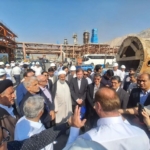
The chairman and members of parliament’s Article 90 Commission visited oil and energy infrastructure in the Pars Special Economic Zone during a trip to Bushehr Province, to assess readiness against challenges from regional developments.
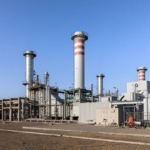
A major overhaul of the hot-gas path of the turbine and boiler on unit GTG-501B at Tabriz Petrochemical’s power plant is under way on schedule, with specialists from several departments taking part.
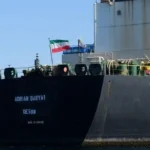
Reuters reported that China’s independent refiners have increased purchases from Iraq and Qatar after a drop in Iranian oil supply, buying at least 12 million barrels from the two countries.
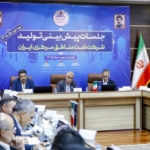
The chief executive of the Iranian Central Oil Fields Company said gas production and storage targets in the country’s eastern fields were met in the first half of this year. East Oil and Gas Production Company raised gas output by 1 billion cubic meters from the same period last year and is ready to supply the northeast in the cold season.
Brent crude futures fell 83 cents, or 0.8%, to $99.49 a barrel. U.S. West Texas Intermediate (WTI) crude futures fell $1, or 1.1%, to $88.43 a barrel.
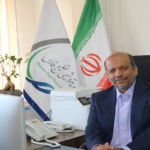
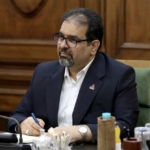
Hossein Panahian, deputy for finance, investment, and equity at Persian Gulf Petrochemical Industries Group and chairman of Arya Sasol Petrochemical, has taken over management of the company while keeping his other posts.
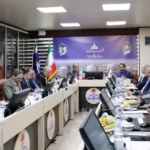
The Yaran oil-field development project manager said the latest execution, technical, financial, human-resources, and HSE status of the scheme was reviewed at the 19th Joint Management Committee meeting.
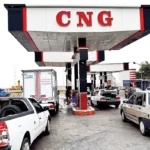
The chairman of the CNG trade association said the price gap between gasoline and compressed natural gas is the main reason drivers have pulled back from CNG, and that using existing CNG capacity and incentives for dual-fuel vehicles could offset at least 20 million liters of the gasoline imbalance.
Work on the PVC2 process license for Arvand Petrochemical has reached 60% and, once finished, is expected to save €40 million and end dependence on foreign technology.
The acting head of Ilam Gas Refining Company said the plant has met 103% of its green-space commitment and that environmental projects and knowledge-based firms have cut flaring and returned some flare gas to production.
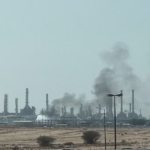
The chief executive of the National Iranian Gas Company said the first gas train at Refinery 6 of the South Pars Gas Complex will return to production this year. Three phases with a committed capacity of about 94 million cubic meters a day are already back, and actual recovered capacity on that path is close to 100 million cubic meters a day.
Brent crude futures rose 5 cents to $102.30 a barrel. U.S. West Texas Intermediate (WTI) futures fell 49 cents, or 0.5%, to $90.62 a barrel.
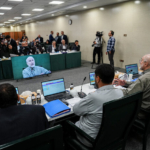
Lawmakers approved the generalities and details of a double-urgency interpretive bill on Article 1 covering how bitumen is allocated to civil projects.
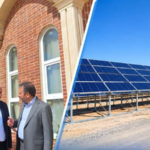
During a trip to Razavi Khorasan Province, Energy Minister Abbas Aliabadi reviewed the latest status of Persian Gulf Petrochemical Industries Group’s renewable projects in the province and follow-up on their development and execution.
The chief executive of Gachsaran Oil and Gas Production Company said oil and gas output continued without a break during the third imposed war and that, despite hard conditions, production did not fall. Operational projects added 15,000 barrels a day to the Mansourabad field.
The acting head of Ilam Gas Refining Company said reverse engineering of rotating equipment and the use of machine vision in industrial inspections have sharply cut repair times, raised environmental standards, and saved millions of euros that would otherwise have left the country.
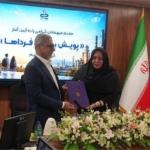
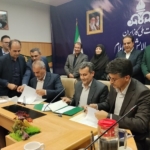
Jam Pilen Petrochemical and the Bushehr Province Welfare Department have signed a memorandum to support top students under welfare coverage. The “Growing Tomorrows” campaign is meant as a model for industry to play a clearer role in building human capital in the region.
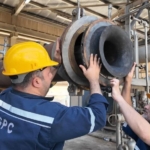
A turnaround of equipment and replacement of worn process lines at the Asmari-1 gas compressor station of the National Iranian South Oil Company has been completed, aimed at maintaining physical assets, keeping production going, and raising operating safety.
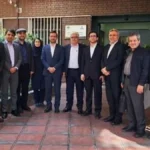
The first training course on “Introduction to and Use of Artificial Intelligence in Organizational Management” for managers in the refining and distribution industry was held on Friday, October 2, 2026, at the company’s Pasian campus.


