The Director-General of the West Asia Office of the Trade Promotion Organization of Iran (TPOI) announced that the preferential trade agreement with Oman has been finalized after completing administrative procedures and has been submitted to the Parliament for final review.
ECONOMY Feed Atom
A tripartite meeting of representatives from Iran, the Eurasian Group on Combating Money Laundering and Financing of Terrorism (EAG), and the Financial Information Center of the Republic of Uzbekistan was held virtually, focusing on the development of international cooperation in combating money laundering and financing of terrorism.
Iranian Parliament Speaker Mohammad Bagher Ghalibaf has said that Strait of Hormuz will not be reopened before oil sanctions are lifted, frozen assets are released, US blockade ends.
The U.S. Treasury Secretary’s recent remarks and his attempt to portray Iran’s economy as being in “unprecedented isolation” are less a sign of strength than an indication of policy frustration after failing to achieve the intended objectives against the Iranian people. When successive instruments of economic pressure have been tested without producing the expected results, repeating economic threats in increasingly sweeping terms does not alter the realities on the ground.
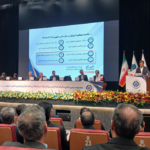
The Iranian Deputy Minister of Economic Affairs and Finance and Brazil's Deputy Minister of Economy met on the sidelines of the BRICS Finance Ministers and Central Bank Governors meeting in Jaipur, India, to review cooperation capacities between the two countries. They emphasized the need for a joint roadmap to expand economic relations, support the private sector, and increase bilateral trade.
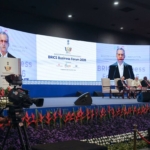
The Governor of the Central Bank of Iran (CBI) met and held talks with the Governor of the South African Central Bank on the sidelines of the BRICS summit.
President Masoud Pezeshkian called for incentive mechanisms, healthy competition among provinces and greater public participation to reduce energy consumption, saying a 10% cut could significantly ease pressure on the energy system during the coming winter.
Iran and Pakistan have agreed to establish specialized working groups to follow up on major agreements involving energy trade, Iranian oil minister said Tuesday.
The Minister of Economic Affairs and Finance, at a meeting of the State Banks Coordination Council, emphasized the need to strengthen coordination among banks, improve discipline in the banking network, and accelerate support for the production sector and economic enterprises.
The Vice-Chairman of the Transportation, Transit, and Logistics Committee of the Iran Chamber of Commerce, while outlining the achievements of the Iranian economic delegation's trip to Pakistan, stated that a new roadmap for Iran-Pakistan logistics cooperation was developed during this visit, with the expansion of transit and trade placed at the center of negotiations.
President Masoud Pezeshkian said Saturday that managing resources and securing public cooperation will be essential to decisions about the future of fuel supplies, warning that Iran must be prepared to manage shortages if production and imports remain constrained.
The Deputy Minister of Industry, Mining and Trade for Commercial Affairs emphasized the revival of the Iran-India Joint Trade Working Group to expand trade relations between the two countries.
President Masoud Pezeshkian has identified the expansion of clean energy, the reform of the subsidy system, and the restructuring of public administration as the three central pillars of Iran’s economic transformation agenda, stressing that the government has already embarked on the reform process and will not reverse course.
President Masoud Pezeshkian said energy imbalance was among the most significant challenges facing his administration during its first two years in office, alongside war, sanctions, water shortages and drought, as he reflected on the government's record ahead of the third year of his presidency.
Imran Ahmed Siddiqui, Pakistan's Ambassador to Iran, and Mahmoud Najafi Arab, Head of the Tehran Chamber of Commerce, held a joint meeting with the presence of Hesameddin Hallaj, Deputy for International Affairs and Trade Development of the Tehran Chamber, Ayman Juwairiyah, Commercial and Investment Attaché of the Embassy of Pakistan in Iran, and Peyman Sanandaji, Head of the Transportation Committee of the Tehran Chamber.
The CEO of the Chabahar Free Zone Organization met with the new Pakistani ambassador and emphasized the development of Iran-Pakistan cooperation centered on Chabahar-Gwadar and the creation of the Rimdan-Gabd joint free zone.
Recent agreements between Iran and Pakistan represent a significant turning point in bilateral economic relations, with the shared border regions—particularly Iran's Sistan-Baluchestan province—emerging as the primary focal point for enhanced cooperation. With approximately 930 kilometers of shared border, Sistan-Baluchestan stands as Iran's only province with a land border with Pakistan, making it an indispensable gateway for bilateral exchanges.
Iran’s oil minister announced the agreement between Iran and Armenia to form a joint specialized working group in the energy sector and said: Tehran has proposed that, by defining a new model for gas trade, the grounds for developing energy cooperation with Yerevan and even exporting gas through Armenia to other markets be examined.
Just weeks after a fragile ceasefire offered a glimmer of hope for stability in the Persian Gulf, the Trump administration has once again plunged the region—and the world—into a dangerous abyss.
President Masoud Pezeshkian said Tuesday that the government remains committed to ensuring a stable energy supply for the country's industrial sector while removing barriers to production and supporting economic activity.