Global Crude Oil Price Today (June 12, 2026) / Brent Oil Price Falls to $88.55
RoydadNaft – Brent crude futures fell by $1.83, or 2%, to $88.55 per barrel. U.S. West Texas Intermediate (WTI) crude futures dropped by $1.60, or 1.8%, to $86.11.
According to Roydad Naft, oil prices fell by more than a dollar on Friday, extending the previous day’s decline. This followed U.S. President Donald Trump canceling plans for an attack on Iran, which eased concerns about further escalation after the mutual strikes earlier in the week.
Brent crude futures declined $1.83, or 2%, to $88.55 per barrel (at 04:10 GMT), while U.S. WTI crude fell $1.60, or 1.8%, to $86.11.
Trump, who had threatened to hit Iran “very hard,” canceled the attack plans on Thursday and said talks with Iran were progressing, with a possible peace agreement that would reopen the Strait of Hormuz to shipping potentially being signed by the end of the week. Iran’s Fars News Agency reported that Tehran had not confirmed the text of any agreement.
Market analyst at IG, Tony Sycamore, said: “While this could of course turn out to be yet another false dawn, the market reaction has been swift and decisive.”
He added that even with the downward correction in oil prices, “as long as prices can hold above support in the low $80s, the risks will remain firmly skewed to the upside.”
On Thursday, Iran announced it had “closed the Strait of Hormuz” — a waterway where ship traffic had already been severely restricted — and said it would fire on any vessel attempting to pass through it. The Strait of Hormuz normally carries one-fifth of the world’s oil and liquefied natural gas, and Tehran’s months-long blockade has kept energy prices elevated.
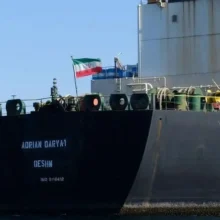
State media reported on Friday that Iranian forces had blocked an oil tanker from passing through the Strait of Hormuz without coordination.
The U.S. military announced on social media that commercial vessels continue to transit the waterway.
Analysts at ING wrote in a Friday note: “We need to be cautious about assuming that any ceasefire extension is a done deal. Even if it is, it may be fragile. And clearly, if nuclear talks do not progress, it could easily fall apart.”
They added: “We believe the market will reach a tipping point in late July if we do not see a resumption of oil flows before then. That is when inventory levels and stronger seasonal demand will push prices significantly higher toward $120–$130 per barrel.”
The Organization of the Petroleum Exporting Countries (OPEC) on Thursday lowered its forecast for global oil demand growth in 2026 to 970,000 barrels per day (down from a previous forecast of 1.17 million bpd) — the second consecutive downward revision.
The producer group also said consumption would rise later and raised its demand growth forecast for 2027. OPEC now expects oil demand to increase by 1.73 million barrels per day in 2027, which is 190,000 bpd higher than its previous forecast.