Global Crude Oil Prices Today (June 16, 2026) / Brent Crude Falls to $79.97
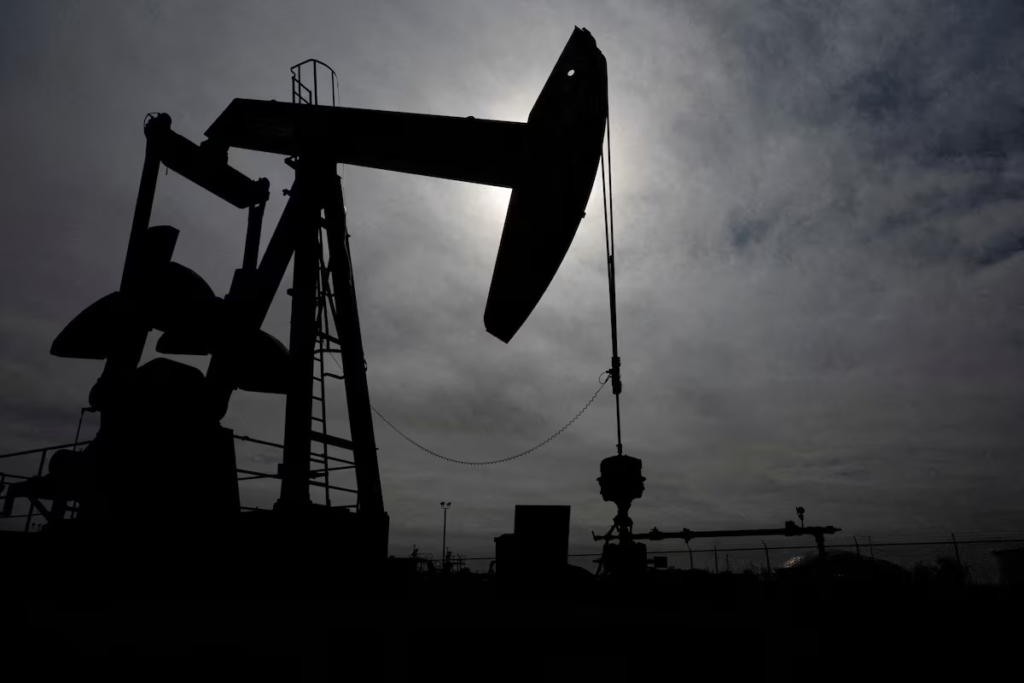
RoydadNaft – Brent crude futures dropped $3.20 (3.85%) to settle at $79.97 per barrel. U.S. West Texas Intermediate (WTI) crude futures fell $3.52 (4.36%) to $77.23 per barrel.
According to Roydad Naft, oil prices fell around 4% on Tuesday, reaching their lowest level in three months. Markets are weighing the prospects of resumed supply through the Strait of Hormuz alongside weaker physical demand and limited details on the initial agreement to end the war with Iran.
Brent crude futures declined by $3.20, or 3.85%, to $79.97 per barrel (as of 12:53 GMT). The contract had earlier hit $79.61 — its lowest level since March 3 — and fell below $80 for the first time since that date.
U.S. WTI crude also dropped $3.52, or 4.36%, to $77.23 per barrel. The intraday low for WTI was $76.88, the lowest since March 10.
Prior to the outbreak of war on February 28, Brent and WTI futures were trading in the $65–70 per barrel range.
Oil prices plunged nearly 5% on Monday after U.S. President Donald Trump announced that a temporary agreement had been reached to end the U.S.-Israel war with Iran, although full details have yet to be released.
Iranian Foreign Minister Abbas Araqchi said on Tuesday that Iran and the United States will begin a new round of negotiations in Switzerland on Friday to reach a final agreement.
Ole Hansen, analyst at Saxo Bank, said: “Short-term downside risks remain in place, as the market has priced in a faster reopening of the strait and the return of barrels that have built up.”
However, lower inventories, seasonal demand, strategic reserve rebuilding, and lingering geopolitical uncertainty suggest that a return to pre-war price levels may prove far more complex than current market optimism implies.
Investors Monitor Strait Reopening
The conflict led to the closure of the Strait of Hormuz, which normally carries around one-fifth of global oil supply.
So far, only a limited number of tankers have passed through the strait, although vessels have been moving covertly along the Omani coast for weeks and crossing “dark” (without signals) with U.S. naval support. Shippers are awaiting safety guarantees for transit, including mine clearance.
U.S. military forces have overseen dozens of covert ship-to-ship transfers to sustain Persian Gulf energy exports and have used aerial and naval drones as well as helicopters in operations to escort convoys toward waiting tankers.
Early indications suggest the U.S.-Iran agreement will reopen the blocked strait and extend a ceasefire for 60 days to allow time for negotiations on issues including Iran’s nuclear program.
Some analysts expect flows through the strait to resume soon, which would exert further downward pressure amid currently weak physical markets.
Goldman Sachs lowered its Q4 Brent forecast from $90 to $80 per barrel and cut its 2027 average estimate from $80 to $75, stating it now assumes Persian Gulf exports will return to pre-war levels by the end of July (instead of late August).
Given the still-unclear details, the absence of a permanent ceasefire, and the likely prolonged period required to restore oil flows after the strait reopens, other analysts say volatility risks persist.
Commerzbank analysts wrote in a note: “Even in the best-case scenario (a sustained reopening of the Strait of Hormuz), it will likely take a relatively long time for shipping traffic — and therefore energy exports from the Persian Gulf region — to normalize again.”
Commerzbank forecasts Brent reaching $85 per barrel by year-end before returning to pre-war levels of around $65 next year.