Seyed Esmaeil Hosseini, the member of parliament for Shiraz and Zarqan, said continued gas discoveries in southern Fars have put the province on the verge of becoming Iran’s newest gas hub.
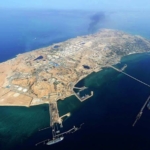
The CEO of the National Iranian Oil Company (NIOC) has dismissed Donald Trump’s claim that Iran’s Kharg Island has been wiped out, saying Trump’s posts are laughable. Conditions on Kharg are calm and stable, he said, and oil operations on the island have not been halted even for a moment.
Ahmad Moradi, a member of parliament’s Energy Commission, said Iran’s petroleum industry—despite damage to facilities—did not halt production or energy supply. Instead, it kept crude oil and gas flowing and maintained oil exports.
The lawmaker representing Nehbandan and Sarbisheh in Iran’s parliament said the board of Persian Gulf Petrochemical Industries Company (PGPIC) last week approved a 62 trillion toman ($investment figure as stated) investment to build a petrochemical complex in Nehbandan County.
A major overhaul at Iran’s South Pars Gas Complex Refinery 11 began on August 27, 2026, and is scheduled to last eight days, with replacement of molecular sieves in the gas-treating unit and removal of technical bottlenecks on the agenda.
The managing director of Iran’s Arvandan Oil & Gas Company said development of the Susangerd oil field has begun with the startup of Well No. 4, targeting 18,000 barrels per day in the first phase, with higher output planned in later stages.
The managing director of Iran’s Dehloran Petrochemical Company said authorities have issued a permit for the complex’s urea and ammonia project, and that the plan has moved into implementation after some of the main obstacles—including feedstock supply, financing, and letters of credit—were cleared.
Iran and Russia have agreed to transfer 55 billion cubic meters of Russian natural gas to Iran each year by land pipeline through Azerbaijan, and the deal has entered the implementation phase after an initial memorandum signed in July 2024.
The CEO of Iran’s National Iranian South Oil Company (NISOC) said the firm’s crude oil production capacity has risen by 120,000 barrels per day over the past two years despite restrictions and crisis conditions, and that seven new contracts will add another 380,000 bpd.
Saman Ghodousi, spokesman and director-general of public relations for Iran's Oil Ministry, said Friday there is no discrepancy between statements made by the president and the oil minister regarding Iran's oil exports, accusing critics of pursuing toxic agendas and nonsense.
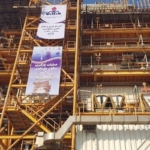
Loading and transport operations began for the 2,300-ton Q4 living quarters platform, part of the Reshadat oil field development project, at the Iran Marine Industrial Company (SADRA) yard in Bushehr.
A member of the Energy Committee of the Parliament stated that the discovery of new hydrocarbon reserves indicates that the development of the oil industry has not come to a halt even under wartime conditions.
A reconstruction agreement for the South Pars Phases 9 and 10 gas refinery has been signed to speed work and bring production capacity back online. After debris removal and site safety measures, the project has moved into the rebuilding phase.
Jam Petrochemical reported total sales of about 24 trillion tomans for the five months ended August 22, 2026, a figure that points to continued revenue generation at the Asaluyeh complex after a volatile start to the year.
Hamid Bovard, CEO of the National Iranian Oil Company, said crude loadings at Kharg Island never stopped during the 40-day Ramadan war despite attacks on export facilities — and volumes rose more than 10 percent from prewar levels.
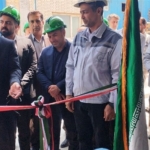
Ilam Petrochemical Company in western Iran has inaugurated a reverse osmosis (RO) water project with a combined capacity of 600 cubic meters per hour, a step officials said will improve cooling-water quality, cut raw-water use, reduce flaring, and support steady production.
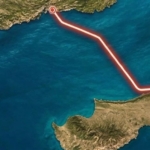
Bloomberg warned that stepped-up U.S. economic pressure on Iran could put at risk about 13 percent of Turkey’s natural gas imports, leaving Ankara facing a difficult choice between energy security and the threat of American penalties.
The CEO of Iran’s National Iranian Oil Refining and Distribution Company said gasoline consumption in Tehran Province has risen about 30 percent in recent days as more drivers have been heading to gas stations, but he insisted there is no cause for concern.