Global crude oil prices today (Monday, October 5, 2026) / Brent rises to $102.30
RoydadNaft – Brent crude futures rose 5 cents to $102.30 a barrel. U.S. West Texas Intermediate (WTI) futures fell 49 cents, or 0.5%, to $90.62 a barrel.
Oil prices edged higher in choppy trading on Monday, October 5, 2026, after crude exports from the Middle East picked up and the Group of Seven pledged to boost supplies. Concerns about ongoing disruption tied to the U.S.-Israeli war on Iran kept selling in check.
Brent crude futures rose 5 cents to $102.30 a barrel by 9:00 a.m. GMT. U.S. West Texas Intermediate was at $90.62 a barrel, down 49 cents, or 0.5%. Both contracts had fallen more than 1% earlier in the session.
Brent gave back most of last week’s gains, and WTI ended the week 1.6% lower, after G7 countries agreed on Friday, October 2, to release 100 million barrels of diesel and crude from emergency reserves. Under pressure from President Donald Trump, they also pledged not to restrict energy exports.
That release will add to Middle Eastern crude exports, which shipping data on Monday showed had climbed above prewar levels on four of the seven days in the final week of September, even with attacks on vessels transiting the Strait of Hormuz.
The supply backdrop is still tight.
ICE gasoil futures jumped more than 4% on Monday to $1,409 a metric ton.
“The bounce in heating oil and gasoil prices is notable, possibly because China has suspended product exports, which makes the refined-product supply picture in the Far East even tighter,” said Tamas Varga, an analyst at PVM Oil Associates.
“A truce in the Middle East remains elusive, and renewed fighting between Saudi Arabia and the Iran-backed Houthis will keep attacks on energy infrastructure and ships going, so the geopolitical risk premium stays elevated.”
Saudi Aramco Chief Executive Amin Nasser told the Energy Intelligence conference in London on Monday that he expects crude and refined-fuel supplies to stay stretched, and that rebuilding global stockpiles after emergency drawdowns could take two years.
It is unclear how much of the oil in the new G7 deal would come from what is left of the March agreement — an emergency release of 400 million barrels coordinated by the International Energy Agency. IEA Executive Director Fatih Birol said last week that members had already released about two-thirds of that 400 million barrels.
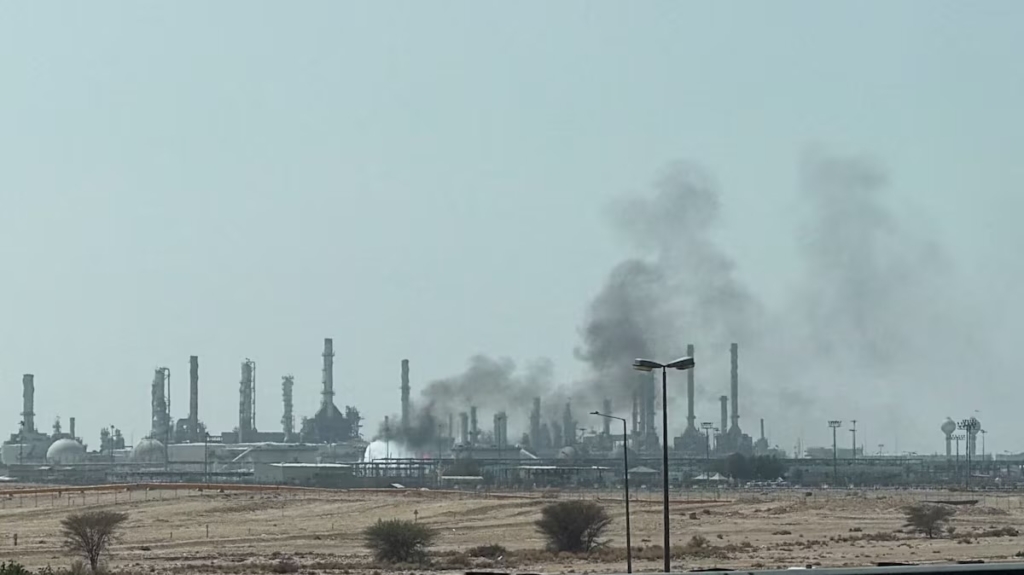
The Houthis said they fired ballistic missiles and drones at Saudi Aramco sites in Riyadh and the Khurais area in response to 50 Saudi-led air and missile strikes in Yemen over the previous 12 hours. Saudi Arabia has not confirmed the claim.
Two military sources said Yemeni government forces attacked Houthi positions in the Dhubab district, which overlooks the strategic Bab el-Mandeb strait, on Monday, a day after the internationally recognized government launched a campaign to retake Houthi-held territory.
OPEC+ delayed a review that would set 2027 output quotas after the Iran war disrupted capacity-expansion projects across the Middle East and clouded estimates of future production potential, two people familiar with the matter said.
Aramco, meanwhile, unexpectedly cut its November crude prices for Asia to six-year lows.
Adding to the refined-product squeeze, Ukrainian President Volodymyr Zelenskiy told Reuters in an interview published Saturday, October 3, that Ukraine will keep striking Russian oil refineries.