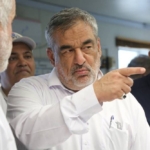
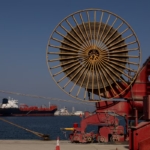
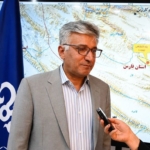
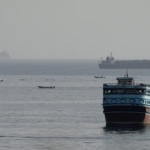
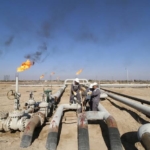
Hamid Bovard, CEO of the National Iranian Oil Company, said crude loadings at Kharg Island never stopped during the 40-day Ramadan war despite attacks on export facilities — and volumes rose more than 10 percent from prewar levels.
Brent crude futures fell $1.07, or 1.2%, to $86.77 a barrel. U.S. West Texas Intermediate (WTI) crude futures dropped $1.13, or 1.4%, to $81.10 a barrel.
Six months into the Iran war, the world's most powerful oil alliance, OPEC+, finds itself in an unfamiliar position: unable to influence a market it once helped shape.
Ilam Petrochemical Company in western Iran has inaugurated a reverse osmosis (RO) water project with a combined capacity of 600 cubic meters per hour, a step officials said will improve cooling-water quality, cut raw-water use, reduce flaring, and support steady production.
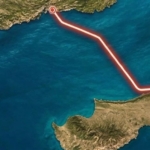
Bloomberg warned that stepped-up U.S. economic pressure on Iran could put at risk about 13 percent of Turkey’s natural gas imports, leaving Ankara facing a difficult choice between energy security and the threat of American penalties.
Brent crude futures fell $2.30, or 2.6%, to $86.28 a barrel. U.S. West Texas Intermediate (WTI) crude futures dropped $2.08, or 2.53%, to $80.29 a barrel.
At least three Indian oil refiners and a global energy major plan to stop using vessels on Iran's new blacklist, including for ship-to-ship transfers, due to security concerns, four sources with direct knowledge of the matter said this week.
Japan is set to unveil on Wednesday a comprehensive plan to boost resilience of its energy supply, with steps such as diversifying crude oil procurement and supporting Middle East pipelines to bypass the Strait of Hormuz, media said.
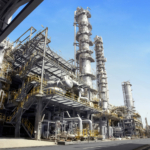
Reconstruction of four damaged refineries at Iran’s South Pars Gas Complex is moving forward under a structured plan focused on domestic capabilities, the complex’s CEO said.
Iran has increased its oil production capacity by more than 200,000 barrels per day over the past two years, reaching its highest level in at least eight years, National Iranian Oil Company CEO Hamid Bovard said.
Brent crude futures fell by 90 cents, or 1.0%, to $91.27 per barrel. U.S. West Texas Intermediate (WTI) crude futures also declined by 76 cents, or 0.9%, to $84.25 per barrel.
Japan plans no additional releases of crude oil from its national reserves in September or October, Economy, Trade and Industry Minister Ryosei Akazawa said on Tuesday.
Jam Petrochemical has been recognized as one of Iran’s Green Industrial Units after being selected among 287 industrial facilities evaluated nationwide—an achievement that goes beyond an environmental accolade for one of the country’s major petrochemical companies, highlighting the link between production, efficiency and corporate responsibility.
Iran has increased its natural gas transmission capacity by commissioning new sections of the national pipeline network and bringing additional compressor stations online, the CEO of the Iran Gas Transmission Company said.
The Exploration Director of the National Iranian Oil Company (NIOC) has announced that the newly discovered "Takhteh" gas field in Fars Province has an estimated economic value of approximately $45 billion, describing it as one of the most significant gas discoveries in the country over the past two decades.
Brent crude futures fell $1.55, or 1.64%, to $92.84 a barrel. U.S. West Texas Intermediate (WTI) crude futures dropped $2.04, or 2.34%, to $85.02 a barrel.
French oil major TotalEnergies will invest in expanding the Fujairah oil export pipeline in Abu Dhabi and continue investing in the Middle East despite the Iran war, its CEO said on Monday at an energy conference in Norway.
Iran’s petrochemical industry pursued expansion and higher production during the first two years of the 14th administration despite energy imbalances, sanctions and volatility in global markets, as well as two 12-day and 40-day wars. Maintaining production and exports, meeting domestic industrial demand and advancing development projects demonstrated the sector’s resilience and commitment to continued growth.
Iran's top security official warned that if the U.S. economic war continues, "not even one drop of oil will be exported" from the Strait of Hormuz or anywhere else in the Persian Gulf.