Iran’s petchem industry: Two years of growth, resilience and transformation
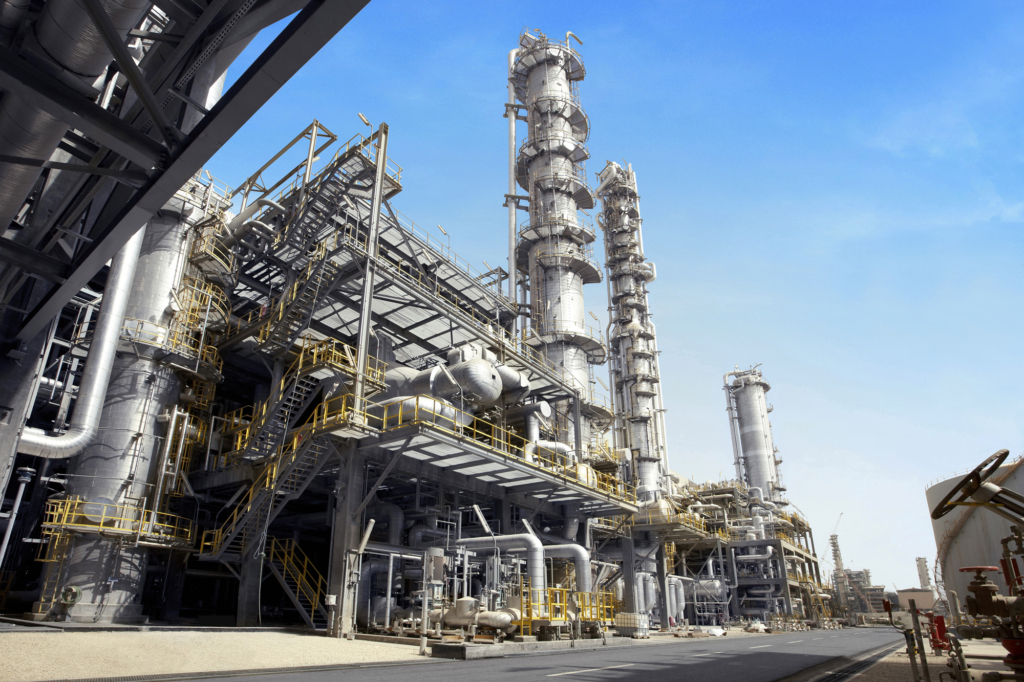
RoydadNaft – Iran’s petrochemical industry pursued expansion and higher production during the first two years of the 14th administration despite energy imbalances, sanctions and volatility in global markets, as well as two 12-day and 40-day wars. Maintaining production and exports, meeting domestic industrial demand and advancing development projects demonstrated the sector’s resilience and commitment to continued growth.
The first two years of the 14th administration were among the most challenging periods for Iran’s petrochemical industry. The sector faced energy imbalances, feedstock constraints, sanctions-related pressures and fluctuations in global markets, while the two wars presented an unprecedented test of production stability, facility security, export continuity and the supply of domestic industries.
Yet the industry’s performance during this period was not limited to maintaining production under difficult circumstances. Capacity expansion, continued exports, supply of feedstock to downstream industries, development of export infrastructure, greater localization of technology and catalysts, a review of stalled projects, the use of new financing instruments and a stronger focus on areas such as artificial intelligence all point to an industry seeking to move beyond day-to-day management toward strategic governance.
An assessment of the National Petrochemical Company’s performance from September 2024 through June 2026 shows that the central strategy during this period was a shift from simply producing petrochemical products toward value creation, value-chain completion and greater resilience — an approach that has become increasingly important amid the country’s economic and security challenges.
Capacity Growth and Stable Revenue
The figures provide a clear picture of the petrochemical industry’s performance under the 14th administration. Despite energy imbalances, feedstock restrictions, wartime conditions and global market volatility, the sector succeeded in maintaining and strengthening production and revenue flows.
Based on performance recorded from September 2024 through the end of June 2026, the industry’s nominal capacity, following the completion of new projects, reached about 101.4 million metric tons per year, spread across 79 production complexes. During the 22-month period, actual production reached 124.2 million metric tons, demonstrating the continued operation of petrochemical complexes despite difficult economic and energy conditions.
Over the same period, the industry recorded about $39 billion in net sales, including domestic and export sales, maintaining one of the country’s most important sources of revenue. The figure further underscores the petrochemical sector’s role as a major pillar of the non-oil economy and a key source of foreign currency.
Of the total output, 49 million metric tons of petrochemical products worth $21.7 billion were exported. Beyond maintaining Iran’s presence in international markets, these exports played an important role in generating foreign-exchange earnings and supporting economic activity.
Maintaining this revenue stream amid sanctions, energy constraints, fluctuations in global prices and two periods of war demonstrates the industry’s capacity to sustain production and generate income under crisis conditions. In this respect, the petrochemical sector has served not only as a manufacturing industry but also as a major economic pillar supporting foreign-exchange flows, production continuity and the stability of related industries.
Petrochemicals at the Forefront of Foreign-Exchange Supply
At a time when Iran’s economy requires stable foreign-exchange sources to finance imports and maintain market balance, petrochemical exports have remained one of the country’s major channels for generating foreign currency.
During the 14th administration, about 49 million metric tons of petrochemical products valued at $21.7 billion were exported. In addition to generating revenue for petrochemical companies, these exports contributed to meeting the country’s broader foreign-exchange requirements.
At the same time, the domestic market remained a key policy priority. Petrochemical products that meet a significant share of the raw-material needs of thousands of downstream industrial and manufacturing units were supplied through the domestic commodity exchange.
The industry therefore pursued two objectives simultaneously: maintaining export markets and foreign-exchange revenues while ensuring a reliable supply of raw materials to domestic producers.
This balance became particularly important during periods of crisis, as managing and maintaining petrochemical supplies helped shield parts of the country’s downstream production chain from disruptions.
Securing Feedstock: Tackling the Root of the Problem
One of the petrochemical industry’s fundamental challenges is securing a stable supply of feedstock. During the 14th administration, efforts were accelerated to increase direct participation by petrochemical companies in associated-gas gathering projects.
Projects including the collection of associated petroleum gas in East Karoun by Bidboland Persian Gulf Gas Refining Co. and Maroon Petrochemical, as well as projects involving the Persian Gulf Hoveyzeh Gas Refining Co. and Dehloran Petrorefinery, are examples of industry investment in this area.
These projects serve several objectives simultaneously: reducing the flaring of associated gas and preventing the waste of energy resources, securing feedstock for industry and protecting the environment.
The industry has increasingly recognized that production security cannot be achieved simply by expanding petrochemical plants. The feedstock supply chain, infrastructure, energy systems and logistics must also be strengthened simultaneously.
Reviewing Projects to Unlock National Capital
Another major initiative undertaken by the National Petrochemical Company during the 14th administration was a review of petrochemical projects and previously issued licenses.
Under the process, projects with insufficient progress were reassessed, while the cancellation or modification of licenses for projects that could no longer meet development objectives was placed on the agenda.
The approach is particularly significant because national resources are limited, and investment in inactive or economically unjustified projects can tie up financial resources and development capacity for years.
By contrast, prioritizing strategically important projects allows capital to be directed toward projects with the greatest impact on increasing production, completing value chains, supplying downstream industries, producing strategic products, creating employment and strengthening economic resilience.
Against this backdrop, 26 priority projects have been identified under the Seventh Development Plan.
At the same time, access to China’s credit line, known as Sinosure, and the use of new financial instruments such as foreign-currency Murabaha bonds have opened additional avenues for financing petrochemical projects.
Nine Projects Completed, Value Chains Expanded
The petrochemical industry has completed nine projects during the 14th administration. Some are directly related to value-chain completion, while others focus on securing feedstock and expanding production capacity.
The projects include the acrylonitrile butadiene styrene (ABS) plant of Polymer Pad Jam, part of Bidboland Persian Gulf Gas Refining Co.’s flare-gas collection projects, Apadana Methanol Petrochemical, Kimia Sanaye Dalaho Petrochemical, Arghavan Gostar Ilam, Petro Entekhab Isfahan Petrochemical, Dehloran Petrorefinery, the olefin and monoethylene glycol (MEG) units of Bushehr Petrochemical, and other related projects.
The composition of these projects is particularly noteworthy. They range from higher-value products such as ABS and polystyrene to associated-gas gathering and the development of olefin units.
This combination reflects the industry’s shift toward completing value chains and making more effective use of available resources.
War: A Real Test of Petrochemical Resilience
Perhaps the most significant aspect of the petrochemical industry’s performance during the 14th administration can be found in its management of crises.
The two 12-day and 40-day wars placed the oil and petrochemical industries in circumstances fundamentally different from their usual economic challenges. Under such conditions, ensuring the safety of complexes, preventing secondary incidents, maintaining production, preserving exports and supplying the domestic market all became simultaneous priorities.
Following the outbreak of war, the National Petrochemical Company immediately convened emergency meetings and established coordination mechanisms among relevant agencies and production complexes to manage the situation.
One of the key priorities was reducing the risks associated with hazardous and toxic chemicals, as well as minimizing the possibility of explosions and fires. At the same time, efforts were made to maintain exports through the ports and terminals of Pars and Mahshahr and preserve stable operations along the West Ethylene Pipeline and its associated complexes.
Domestic supply and demand for essential petrochemical products were also closely managed to prevent downstream industries from facing raw-material shortages and to ensure that people did not encounter disruptions in the supply of essential goods.
At the same time, damage to petrochemical facilities was assessed, while coordination and planning were carried out with affected units to remove bottlenecks and accelerate the recovery and reconstruction process.
One of the most significant outcomes was the restoration of about half of the production capacity in Asaluyeh and Mahshahr through the commissioning of independent steam units and access to electricity from the national grid. The move demonstrated that even under crisis conditions, technical and operational management can accelerate the restoration of production capacity.
The war was therefore not merely a threat but also a test of the industry’s resilience. It demonstrated that production security in the petrochemical sector depends not only on the nominal capacity of individual complexes, but also on the quality of crisis management, infrastructure preparedness, inter-agency coordination and the speed of decision-making.
From Buying Technology to Co-Developing It
One of the major changes in the petrochemical industry’s approach during this period was its increased focus on technology and efforts to reduce technological dependence.
As part of this strategy and in line with a more active energy diplomacy approach, cooperation with foreign technology centers and companies was pursued to facilitate knowledge transfer and technology development.
The signing of a memorandum of understanding with China’s Dalian Institute of Chemical Physics and cooperation with China’s KSC to localize the propane dehydrogenation (PDH) process for producing propylene from propane are among the initiatives undertaken in this area.
The projects are important for developing the propylene chain, which is a critical link in numerous downstream petrochemical value chains.
The new approach can effectively be described as a shift from “buying technology” to “participating in technology development.” If sustained, this strategy could reduce the industry’s dependence on foreign technologies and create new competitive advantages for Iran’s petrochemical sector.
Linking Petrochemicals With the Knowledge Economy
Alongside international technology cooperation, strengthening domestic new technology-based firms (NTBFs) has been another major focus of the petrochemical industry during the 14th administration.
Currently, 21 Iranian NTBFs are active in producing catalysts and chemicals required by the industry.
Catalysts are strategic components in petrochemical processes. Localizing their production not only reduces foreign-exchange outflows but also strengthens the operational security of petrochemical complexes.
The shift from importing catalysts to domestic production — and potentially exporting them — is a clear example of the petrochemical industry’s growing links with the tech-based economy. This relationship could become one of the industry’s most important sources of greater domestic technological content in the coming years.
In the same context, the unveiling of an artificial intelligence roadmap for the petrochemical industry, featuring 30 implementation projects across 14 areas, represents another effort to transform the sector’s management model.
AI can play a growing role in areas including predictive equipment maintenance, energy optimization, production management, maintenance and repair, market analysis and supply-chain management.
The AI roadmap therefore represents an important step from traditional management toward a more data-driven model of industrial management.
1405 Outlook: Development Continues
The petrochemical industry’s two-year record under the 14th administration does not end with completed projects. Under current plans, a number of additional projects are expected to come on stream by the end of 1405.
These include Maroon Petrochemical’s flare-gas collection project; Arman Sepahan’s isopropyl alcohol (IPA) project with annual capacity of 36,000 metric tons; the olefin project of Kangan Petrochemical Development with annual capacity of 1.089 million metric tons; the Sadaf Asaluyeh project with annual capacity of 136,000 metric tons; Hengam Urea with annual capacity of 1.072 million metric tons; Kangan Heavy Polyethylene with annual capacity of 300,000 metric tons; and Sablan Methanol 2, also known as Dena, with annual capacity of 1.65 million metric tons.
Alongside projects under review and priority projects defined under the Seventh Development Plan, these initiatives could sustain the quantitative and qualitative development of Iran’s petrochemical industry in the years ahead.
From Foreign-Exchange Earner to Driver of Economic Resilience
The performance of Iran’s petrochemical industry under the 14th administration cannot be measured solely by the number of projects commissioned or the volume of production and exports.
What distinguishes this period is the effort to change the way the industry is governed — from developing export infrastructure and securing feedstock to reforming project licenses, adopting new financing mechanisms, strengthening knowledge-based companies, developing technology, introducing artificial intelligence and improving crisis management.
Over these two years, the petrochemical industry simultaneously operated on three fronts: production and the economy, development and technology, and crisis management and resilience.
If Iran’s petrochemical advantage in previous years was largely defined by abundant feedstock and production capacity, the industry’s future competitiveness increasingly depends on its ability to create greater value from feedstock, complete value chains, develop technology, reduce dependence and withstand crises.
From this perspective, the performance of the 14th administration in the petrochemical sector can be viewed as a story of strategic management and decisive execution — advancing development under normal circumstances while keeping production, exports and domestic supply chains moving during war and crisis.