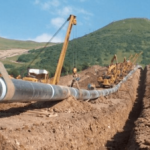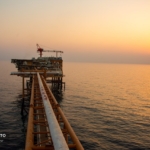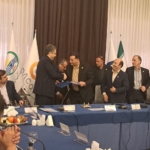
An integrated production services (IPS) contract between the Oil Exploration Operations Company and Dasht Azadegan Arvand Oil and Gas Development Engineering has opened a new phase of cooperation on conservation production and higher recovery at Iran’s Azadegan oil field.
IRAN Feed Atom
A domestically manufactured separation decanter in the high-density polyethylene (HDPE) unit at Bandar Imam Petrochemical has entered production for the first time at the complex, after installation, commissioning, and operating tests were completed successfully.
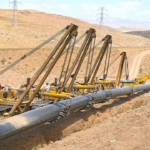
The head of District 6 of Iran’s gas transmission operations said more than 10 pipeline and compressor-station projects are under way to strengthen the network and supply gas to industry, power plants, and refineries in Hormozgan and Kerman provinces.
The chief executive of the National Iranian South Oil Company said support for education and students is part of the oil industry’s approach to sustainable development and neighboring communities, adding that more than 6 trillion tomans in social-responsibility projects have been carried out in Iran’s southern oil-producing regions since the start of the 14th government.
The head of the Oil Industry Technology and Innovation Park said Iran has revised the contract model for reviving low-yield oil wells, with more financial support from the Oil Ministry, lower risk for technology companies, easier access to well data, and no cap on the number of wells that can be assigned.
Tabriz Petrochemical received the golden statue at the ninth national conference honoring prominent figures in Iran’s industry and economy.
The CEO of the South Pars Gas Complex said the facility’s refineries are fully prepared to keep winter gas flowing and are making maximum use of Iranian knowledge-based companies.
An informed U.S. source said China’s imports of Iranian oil — or oil that may belong to Iran — have dropped to 440,000 barrels a day.
Ahdaf Investment Group has taken three of the five board seats at Persian Gulf Petrochemical Industries Company for the first time, after an extraordinary general meeting of the Iranian petrochemical holding.
The governor of South Khorasan Province said the Nehbandan–Sarbisheh gas transmission line in Iran is more than 80% complete and will enter service before winter.
Mehrdad Bazrpash, Iran’s minister of roads and urban development in the 13th government, said the Hormuz shock is no longer confined to oil and that the effects of the war have now reached the price of money.
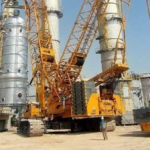
Two heavy reactors have been successfully installed at Lavan Petrochemical in Iran by Faragostar Pars, a subsidiary of the specialized marine holding of Khatam al-Anbiya Construction Headquarters.
Iran has stopped importing gasoil after raising output at domestic refineries and will add about 5 million liters a day of diesel capacity by the end of the Iranian year, Oil Minister Mohsen Paknejad said.
Ilam Gas Refinery has used vacuum thermal reclaiming to recover spent MDEA amine solvent at about 80% efficiency, cutting the need to import fresh solvent and keeping heat-stable salts in circulating amine under control.
The Oil Ministry is 60 trillion tomans behind on pollution-right payments to Khuzestan, Dezful lawmaker Abbas Papizadeh said.
Officials from the University of Tehran Science and Technology Park, the Oil Ministry and related bodies reviewed how to turn academic and knowledge-based capacity into working solutions for the oil industry.
The second session of Persian Gulf Petrochemical Industries Company’s extraordinary general meeting chose a new five-seat board on Thursday, Sept. 17, 2026.
Compressed natural gas consumption rose about 11% in the first week after the third gasoline rate on station cards was raised to 10,000 tomans, the oil minister’s deputy said.
Part of the oil-industry capacity lost in the third imposed war should be available by the end of the Iranian year in March 2027, after the cold season, and the rest in the first half of the following year, Oil Minister Mohsen Paknejad said.
National Iranian South Oil Company aims to cut flare-gas burning to about 8.6 million cubic meters a day by the end of the current Iranian year in March 2027 and to 4.5 million cubic meters a day by the end of 1406 (March 2028), its production manager said.