Statistics from the Ministry of Petroleum in the 14th government indicate numerous and historic record-breaking achievements in gas production. This achievement, though shadowed by suboptimal consumption which diminishes its delight, has been realized solely through the perseverance of oil industry personnel, integrated management, and precise planning, painting a picture of our beloved Iran's strength.
IRAN Feed Atom
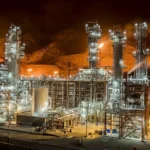
Iran has injected more than 165.5 billion cubic meters (bcm) of sweet gas from the South Pars gas complex into the national grid since the start of the current Iranian year (late March 2025) to Feb. 2, the head of the South Pars Gas Complex (SPGC) said.
country's drilling industry has entered a new phase of development under the seventh five-year development plan, focusing on expanding drilling fleet capacity and improving operational efficiency. This phase prioritizes acquiring new rigs, modernizing the existing fleet and enhancing key performance indicators to support increased oil and gas production.
The first electric submersible pump (ESP) at the South Azadegan oil field has been successfully installed and commissioned at well No. 93, drawing on the expertise of domestic specialists. Officials expect that completing the installation of 50 ESPs by June 2026 will add about 35,000 barrels per day to the field’s production capacity.
head of the National Iranian Oil Refining and Distribution Company visited operational units at the Abadan refinery, including Unit 70 and the project’s second phase, accompanied by senior officials and the Abadan lawmaker, to review progress on ongoing projects.
Iran’s Oil minister said there is no need for concern that the United States, after gaining control of Venezuelan oil, could strike deals with Iran’s long-standing oil customers such as China.
The CEO of the Shahid Hashemi-Nejad Gas Refinery said the facility has increased its daily gas intake and production by 2.5 million cubic meters, driven by the implementation of technical projects, process improvements and equipment optimization.
More than 1,700 new technology-based firms (NTBFs) and domestic manufacturers are now working with Iran’s petrochemical industry, with more than 120 trillion rials ($12 trillion tomans) allocated last year to expand these capabilities, an industry official said.
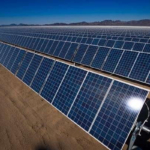
plans to raise its renewable power generation capacity to more than 5,200 megawatts by the end of the current Iranian year (late March), a deputy energy minister said, citing faster permitting and improved financing as key to meeting the target.
Ministry of Oil is actively pursuing solutions to the challenges facing the country's petrochemical sector.
The National Iranian Drilling Company (NIDC) has brought 12 new gas wells into production under a drilling contract with the Central Iranian Oil Fields Company, strengthening gas supply, particularly during the winter season, the NIDC head of said.
Iran has upgraded mazut quality at its refineries, launched crude-oil desulfurization projects and cut daily gas flaring by up to 14 million cubic meters as part of broader efforts to curb air pollution, the head of the Environmental Protection Organization said.
The CEO of the National Iranian Gas Company (NIGC) announced the certification of 35 gas contractor companies, saying the new contractor model turns the threat of “gas flaring” into a business and savings opportunity.
Construction of the first offshore platform jacket at Iran’s Farzad B gas field is 93 percent complete, the project’s development manager said, adding that the structure is expected to be loaded for transport in the coming days and installed by the end of the year.
Iran’s crude oil production edged down marginally in December 2025 even as overall output by the Organization of the Petroleum Exporting Countries (OPEC) increased, according to the group’s latest monthly report.
The CEO of the National Iranian Gas Company said the Oil Ministry is aggressively pursuing gas-efficiency measures in cooperation with energy service firms, projecting a 25% to 35% reduction in consumption at the end of the demand chain once the program is fully implemented.
The head of Iran's Renewable Energy and Energy Efficiency Organization (SATBA) said the installed capacity of the country's renewable power plants has exceeded 3,700 megawatts.
Iran’s trade with member states of the Eurasian Economic Union (EAEU) increased 16 percent in the first eight months of the current Iranian year (Mar. 21st-Nov. 22nd) the head of the Trade Promotion Organization of Iran said.
The CEO of Pars Oil and Gas Company announced an additional daily gas extraction capacity of 25 million cubic meters in the South Pars field under the 14th administration, adding that with new wells coming online by year’s end, this capacity will increase to 30 million cubic meters.
The CEO of PetroIran Development Company said the investment volume under a contract to supply four drilling rigs to the National Iranian Oil Company (NIOC) is about $200 million, adding that the public-private partnership (PPP) contract model guarantees the company’s operations for five years, significantly reducing investment risk for the private sector.