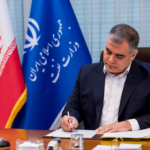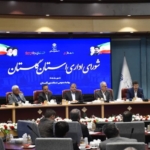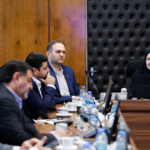
The CEO of PetroFarhang Holding said the transfer of utility pricing arbitration to the National Petrochemical Company underscores the 14th Government and Ministry of Petroleum’s special attention to the petrochemical sector and the private industry. He added that stable and fair utility pricing fosters trust among private investors.
IRAN Feed Atom
Iran’s natural gas exports to Turkey grew by about 16 percent in 2025, reaching more than 8.17 billion cubic meters, according to the latest data cited by Eurostat.
The CEO of the National Petrochemical Company (NPC) said the Oil Ministry under the 14th administration has developed and is implementing medium-term plans to offset idle capacity and ensure a stable supply of feedstock for the petrochemical industry, with large-scale investment in flare gas recovery among the most important measures.
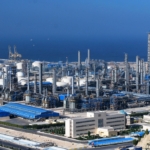
Iran’s petrochemical industry, operating 79 production complexes, has reached a nominal production capacity of more than 100 million metric tons per year, emerging as one of the main pillars of the country’s non-oil economy.
Iran has collected about 9.0 million cubic meters (mcm) per day of associated and flared gas over the past 15 to 16 months, bringing total daily collection to around 16 mcm, Oil Minister Mohsen Paknejad said on Monday.
The CEO of Arya Sasol Polymer Company said transferring authority for utility pricing arbitration to the National Petrochemical Company (NPC) reflects recognition of the petrochemical industry’s role in the national economy and, if properly implemented, could strengthen a development-oriented approach at companies and align government and corporate interests.
Iran’s oil minister marked the 47th anniversary of the Islamic Revolution by stressing the need to preserve unity within the oil industry, strengthen domestic capabilities and make full use of human capital, saying the sector plays a central role in countering external pressure and boosting the country’s economic resilience.
Reviving compressed natural gas capacity, one of the 14th administration’s top priorities, has entered the operational phase over the past year through a series of measures, including the launch of a free vehicle conversion program, construction of new CNG stations and increased factory production of dual-fuel vehicles. The initiative has gained urgency as gasoline consumption has outpaced production and much of the country’s CNG capacity has gone unused.
The Tous gas field development project, aimed at strengthening the stability of the gas supply network in Iran’s northeast and supplying feedstock to the Shahid Hashemi-Nejad Gas Refinery in Sarakhs, was officially inaugurated by presidential order via videoconference.
Iran’s oil industry has set new records in production, exports and capacity development over the past 18 months, despite continued sanctions and external constraints.
The flare gas recovery project in the Aghajari oilfield has progressed more than 60%, with plans to virtually eliminate routine flaring in the area by the end of the Iranian year 1407 (March 2029), according to the head of the Aghajari Oil and Gas Production Company.
The CEO of Persian Gulf Petrochemical Complementary Industries Investment and Development Group (Petrol) said the transfer of arbitration over utility service pricing to the National Petrochemical Company marks a starting point for broader use of specialized arbitration mechanisms in the petrochemical industry.
Iran’s South Pars gas field has set nine production records over the past two years, with daily output reaching a new high of 727 million cubic meters, underscoring the field’s central role in meeting the country’s energy demand.
Iran’s Persian Gulf oil pipelines region recorded a 13 percent rise in oil product transfers in the first 10 months of the current Iranian calendar year (late March, 2025-late January, 2026) compared with the same period last year, the regional director said.
head of Iran’s Oil Pipelines and Telecommunications Company said the country has added about 1,000 kilometers of new pipelines, bringing the total length of its crude oil and petroleum product pipeline network to 15,000 kilometers.
Iran ranks among the world’s 10 countries with the largest thermal power generation capacity, a senior official at the Thermal Power Plants Holding Company (TPPH) said.
Pars Oil and Gas Company, the developer of the world’s largest gas field, has experienced a distinct period of operational and development activity under Iran’s 14th administration, marked by stabilized output at the shared South Pars field, record gas production, higher asset efficiency and groundwork for new offshore gas developments in the Persian Gulf.
Power plant gasoil reserves reached more than 3.4 billion liters for the first time in the country’s history in Aban this year, equivalent to more than 90% of total storage capacity. The level marks an increase of 86% and 6%, respectively, compared with the highest reserves recorded in the Iranian years 1403 (2024) and1402 (2023).
Iran has allocated $48.7 billion in foreign currency for the import of various goods since the start of the current Iranian year (late March 2025), with 73 percent directed to the industrial sector, the spokesperson for the Iran Exchange Center said.
CEO of the National Petrochemical Company announced the operational launch of several major production and infrastructure projects in the petrochemical industry, coinciding with the Ten Days of Fajr celebrations. He stated that with these inaugurations, the industry can celebrate reaching an annual production capacity of 100 million tons.