Iran’s firm policy is that if its oil is not exported, oil from any country that is a partner and accomplice of the United States in interventionist and destabilizing actions against Iran will not be exported either.
TOP NEWS Feed Atom
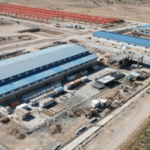
The acting head of Iran’s National Petrochemical Company said construction has restarted at the Islamabad-e Gharb petrochemical project, which had been halted since February–March 2026 because of conditions created by the imposed war.
Brent crude futures rose 66 cents, or 0.7 percent, to $91.15 a barrel. U.S. West Texas Intermediate (WTI) crude futures rose 70 cents, or 0.8 percent, to $86.46 a barrel.
The managing director of the Iranian Oil Terminals Company said the firm has followed a coordinated two-year program to bring idle capacity back into service, protect strategic infrastructure, and strengthen operations. He said the core strategy has been to return existing assets to the operating cycle and create stable conditions for the company’s strategic missions.
The monthly activity report of Tabriz Petrochemical Company, listed under the ticker SHTABRIZ, has been published on Iran’s Codal disclosure system. It shows the company’s revenue from product and service sales reached 21,691 billion tomans in the first five months of Iranian year 1405, covering March 21 to August 22, 2026.
The managing director of Iran’s Fajr Jam Gas Refining Company said the plant is carrying out a package of projects to expand renewable energy, raise efficiency, and support more stable gas production.
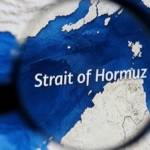
The spokesman for the Presiding Board of Iran’s parliament said Tehran will not stand idle in the face of economic pressure, called any cooperation with what he described as America’s oppressive sanctions a red line, and warned that the Islamic Republic will use strategic tools such as control of the Strait of Hormuz to defeat Washington’s efforts to offset military setbacks through economic means.
The managing director of Iran’s Pars Oil and Gas Company said reconstruction of the South Pars Phases 9 and 10 gas processing plant has started, with plans to restore part of its gas-processing capacity by the end of the current Iranian year in March 2027.
Over the past two years of Iran’s 14th administration, Petropars Group has advanced a slate of major national oil and gas projects focused on raising output, developing shared fields, and completing infrastructure. Gas production from South Pars Phase 11 rose from about 12 million cubic meters per day to more than 26 million cubic meters per day. Oil production capacity in the central package of South Azadegan exceeded 84,200 barrels per day, and with the commissioning of four CTEP trains, the nominal capacity of Iran’s largest crude processing unit reached 320,000 barrels per day. In the same period, development of Belal and Farzad B continued, the South Pars pressure-boosting project moved into the implementation phase, and the field phase of intelligent pipeline pigging began.
Brent crude futures rose $2.21, or 2.51 percent, to $90.31 a barrel. U.S. West Texas Intermediate (WTI) crude futures rose $1.83, or 2.19 percent, to $85.23 a barrel.
Offers of F7000 grade have resumed on the Iran Mercantile Exchange after six months, following an update of product information that confirms Jam Petrochemical’s ownership of Mehr Petrochemical.
During the 14th administration, the Research Institute of Petroleum Industry (RIPI) has pursued research and technology work across Iran’s oil sector by signing 100 research contracts, carrying out more than 170 projects, and responding to more than 3,600 requests for laboratory technology services.
Seyed Esmaeil Hosseini, the member of parliament for Shiraz and Zarqan, said continued gas discoveries in southern Fars have put the province on the verge of becoming Iran’s newest gas hub.
Ahmad Moradi, a member of parliament’s Energy Commission, said Iran’s petroleum industry—despite damage to facilities—did not halt production or energy supply. Instead, it kept crude oil and gas flowing and maintained oil exports.
The lawmaker representing Nehbandan and Sarbisheh in Iran’s parliament said the board of Persian Gulf Petrochemical Industries Company (PGPIC) last week approved a 62 trillion toman ($investment figure as stated) investment to build a petrochemical complex in Nehbandan County.
A major overhaul at Iran’s South Pars Gas Complex Refinery 11 began on August 27, 2026, and is scheduled to last eight days, with replacement of molecular sieves in the gas-treating unit and removal of technical bottlenecks on the agenda.
The managing director of Iran’s Arvandan Oil & Gas Company said development of the Susangerd oil field has begun with the startup of Well No. 4, targeting 18,000 barrels per day in the first phase, with higher output planned in later stages.
The managing director of Iran’s Dehloran Petrochemical Company said authorities have issued a permit for the complex’s urea and ammonia project, and that the plan has moved into implementation after some of the main obstacles—including feedstock supply, financing, and letters of credit—were cleared.
Iran and Russia have agreed to transfer 55 billion cubic meters of Russian natural gas to Iran each year by land pipeline through Azerbaijan, and the deal has entered the implementation phase after an initial memorandum signed in July 2024.
The CEO of Iran’s National Iranian South Oil Company (NISOC) said the firm’s crude oil production capacity has risen by 120,000 barrels per day over the past two years despite restrictions and crisis conditions, and that seven new contracts will add another 380,000 bpd.