Global oil supply will fall by 4.3 million barrels per day, or around 4%, this year, the International Energy Agency said in its monthly oil market report on Wednesday, as renewed hostilities in the Middle East are set to plunge the world deeper into an oil-market deficit.
ADNOC has taken final investment decisions (FIDs) and handed out $8.2 billion in engineering, procurement and construction contracts for phases 2 and 3 of its Rich Gas Development (RGD) project, raising its targeted EBITDA growth to 60% by 2030 versus 2023, which is seen as an upgrade from the previously communicated target of more than 40% over 2023-2029.
Brent crude futures fell 50 cents, or 0.57%, to $87.22 a barrel. U.S. West Texas Intermediate (WTI) crude futures dropped 36 cents, or 0.44%, to $81.77 a barrel.
Uniper expects gas prices to remain at around €50 to €60 per megawatt hour as long as the Strait of Hormuz is closed to shipping, the CEO of Germany's biggest gas importer said.
Russia's Sibur Zapsibneftekhim petrochemical complex in Tobolsk, in the Tyumen region of western Siberia, was damaged in a drone attack on Monday, three industry sources told Reuters.
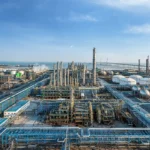
Oil Minister Mohsen Paknejad said about 95 million cubic meters per day of lost gas production capacity will be restored by the end of summer after damage to part of the gas processing facilities in Asaluyeh.
The Tehran Oil Refinery is pursuing a strategy to expand its export-oriented product portfolio, develop new businesses and complete its value chain by transitioning into a petro-refinery, its CEO said Monday.
Brent crude futures rose $1.40, or 1.7%, to $84.95 a barrel. U.S. West Texas Intermediate (WTI) crude futures gained $1.33, or 1.7%, to $79.51 a barrel.
ADNOC Gas reported a 52% slide in second-quarter profit on Monday, with sales hit by the closure of the Strait of Hormuz after the U.S. and Israel launched attacks on Iran. The Abu Dhabi state-owned company's second-quarter profit fell to $665 million from $1.39 billion a year earlier but beat its guidance range of $400 million to $600 million.
The CEO of the National Iranian South Oilfields Company said 13 downhole pumps were installed during the first four months of the current year, with plans to install 40 by year-end.
Simultaneously with the continued production on South Pars platforms, reconstruction operations at the damaged refineries are underway with accelerated speed, aimed at restoring lost capacity and preparing the country's gas network for the cold season.
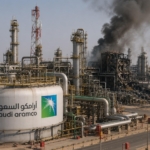
Firefighters extinguished a fire that broke out early on Sunday at a facility at Aramco's Jazan refinery in southwestern Saudi Arabia, the Saudi Energy Ministry said, adding that there were no injuries.
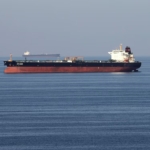
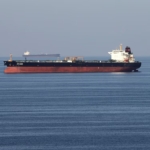
The United Arab Emirates on Saturday condemned what it said was an Iranian attack on a carrier linked to its state oil company as it passed through the Strait of Hormuz, accusing Tehran of "acts of piracy".
Reconstruction of South Pars Refinery No. 3 has moved into the execution phase after Pars Oil and Gas Company signed an agreement with a consortium of domestic contractors.
The CEO of the National Iranian Oil Products Refining and Distribution Company underscored the strategic role of the Abadan Refinery in ensuring a stable fuel supply and accelerating development projects during a visit to the southern city.
Brent crude futures rose 80 cents, or 0.97%, to $83.29 a barrel. U.S. West Texas Intermediate (WTI) futures gained 64 cents, or 0.83%, to settle at $77.93 a barrel.
U.S. crude oil imports from Saudi Arabia fell to zero in July, marking the first time since 1985 that the United States has not imported Saudi crude, following disruptions to the kingdom’s oil exports and escalating tensions in the Persian Gulf.
Brent crude futures rose 46 cents, or 0.58%, to $79.91 a barrel. U.S. West Texas Intermediate (WTI) futures gained 36 cents, or 0.48%, to $75.58 a barrel.
Persian Gulf countries' crude oil and condensate exports were largely steady in July and remained about 40% below pre-war levels, shipping data showed, with signs of a slowdown emerging in the second half of the month as fighting in the region intensified again.