Global Crude Oil Prices on Thursday (August 6, 2026) / Brent Crude Rises to $79.91
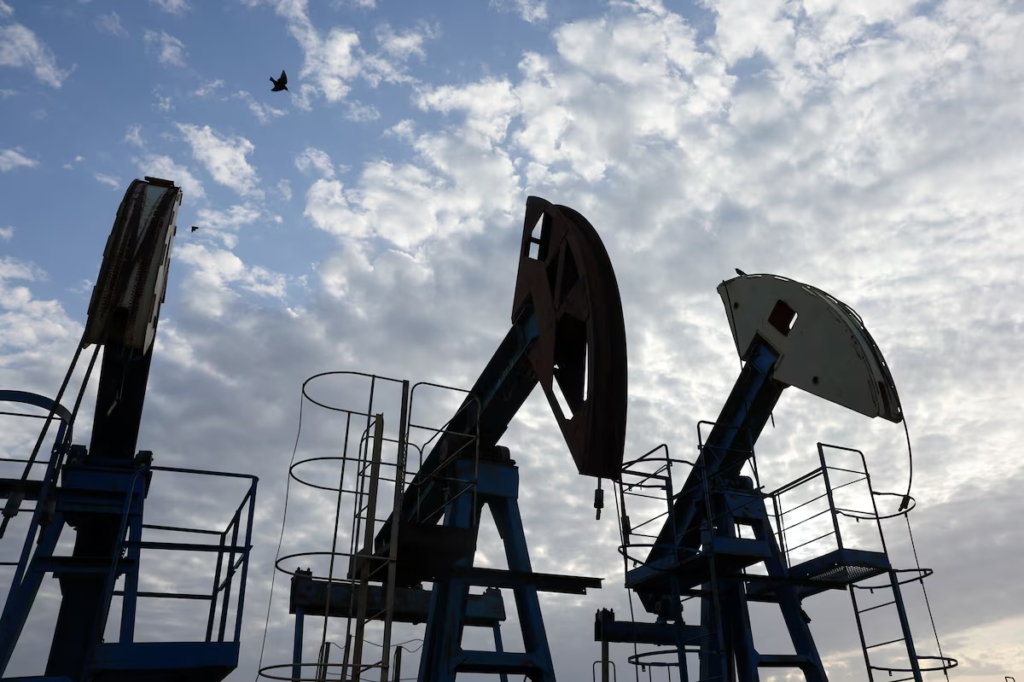
RoydadNaft – Brent crude futures rose 46 cents, or 0.58%, to $79.91 a barrel. U.S. West Texas Intermediate (WTI) futures gained 36 cents, or 0.48%, to $75.58 a barrel.
Oil prices climbed on Thursday as investors remained cautious about the outcome of Iran-Oman talks and whether they would restore flows through the Strait of Hormuz. Reports of attacks on Saudi tankers in the Red Sea and the Gulf of Aden also renewed supply tensions.
Brent crude futures rose 46 cents, or 0.58%, to $79.91 a barrel by 0640 GMT. U.S. West Texas Intermediate futures added 36 cents, or 0.48%, to $75.58 a barrel. Brent had settled slightly higher on Wednesday, while WTI edged lower.
Iran and Oman have reached an understanding on the geographic coordinates for a shipping route through the Strait of Hormuz, and a joint announcement is being finalized provided certain third parties do not interfere, Iran’s Foreign Ministry spokesman Esmaeil Baghaei said on Wednesday.
“The current diplomatic exchanges have merely raised hopes that tensions could ease,” said Linh Tran, market analyst at XS.com. “Risks related to military activity, maritime transportation and oil supply from the Middle East remain firmly in place.”
A proposed deal between Iran and Oman aimed at ending the U.S.-Iran conflict would give Tehran control over ships entering the Gulf through the Strait of Hormuz, a senior Iranian source and two regional officials told Reuters on Wednesday — one of the biggest concessions yet to Iran.
There was no immediate U.S. comment on the proposal. While President Donald Trump has said a deal reopening the strait is imminent, U.S. officials have repeatedly insisted they would never agree to Iran controlling access to one of the world’s most important trade routes for energy supplies.
Iran has warned Gulf states that any new U.S. attack on its territory would trigger retaliation against critical energy infrastructure across the region, according to five sources, as Tehran seeks to raise the cost of military action by threatening Washington’s closest regional allies.
Prices have returned to the levels seen when the United States and Iran signed an interim peace agreement on June 17, with investors closely watching whether the two sides can reach a final deal, said Yuki Takashima, economist at Nomura Securities.
Takashima said concerns that Houthi attacks could hit Red Sea shipping were limiting optimism about an end to shipping disruptions in the Middle East.
Yemen’s Iran-aligned Houthis said on Wednesday they had launched a missile attack on a Saudi oil tanker off the coast of the kingdom’s Red Sea port city of Yanbu and another missile attack on a Saudi oil tanker in the nearby Gulf of Aden. There was no confirmation from Saudi Arabia on either incident.
Gulf countries’ crude oil and condensate exports were largely steady in July and remained about 40% below pre-war levels, shipping data showed.
Separately, U.S. crude stocks rose as refineries eased processing slightly and imports edged higher, data from the Energy Information Administration showed on Wednesday.