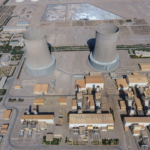
Iran has added 2,028 megawatts of new power plant capacity to its national grid, achieving 75 percent of the 2,709-megawatt target for the current Iranian calendar year (began on March 21), according to the Thermal Power Generation Company.
RENEWABLE ENERGY Feed Atom
An official said: The most important advantages of small-scale and distributed power plants include generating electricity near the point of consumption, reducing grid losses, enhancing passive defense, and creating economic benefits for investors.
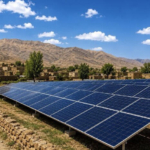
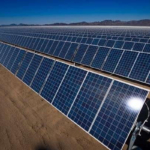
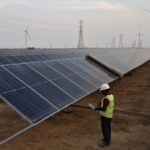
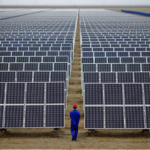
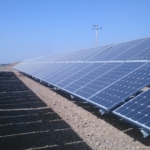
According to IRNA, Mohsen Taraztalab stated during a visit to solar power plants in western Golestan: Since the beginning of the 14th government's term, approximately 4,500 megawatts of new capacity have been added to the country's power grid, and the capacity of renewable power plants has increased from 1,250 megawatts to about 5,800 megawatts.
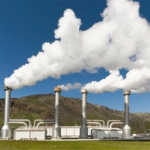
The Minister of Energy said: The Meshgin-Shahr geothermal power plant in Ardebil, with a capacity of five megawatts and an investment of 10 million euros, has been connected to the national electricity grid and has entered the cycle of electrical energy generation.
An official, announcing that the country's renewable power plant capacity has surpassed 5,400 MW, stated: If equipment, foreign currency, and financial resources are provided, the target of exceeding 7,000 MW by the end of summer will be achieved.
India has asked renewable energy companies to either surrender transmission rights or provide higher bank guarantees if they fail to generate power, as the country seeks to free up grid capacity for projects that are actually producing electricity, according to a regulatory order.
The Deputy Head of the Renewable Energy Organization and Electricity Energy Efficiency Organization (SATBA) announced the welcoming of Iran's plan to connect the electricity grids of Shanghai Cooperation Organization (SCO) member states and said: The development of renewables has increased the opportunity for convergence.
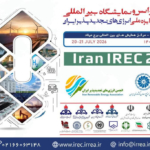
The 10th International Iran Renewable Energy Conference and Exhibition (IRAN REC 2026) will be held concurrently with the 7th edition of the National Renewable Energy Award on July 20 and 21 at the Milad Tower International Conference Center.
The first phase of a solar power plant at the Siraf Port export terminal has been commissioned, the engineering and development director of Fajr Jam Gas Refining Company said.
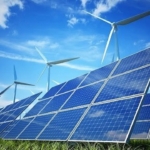
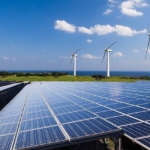
The expansion of solar power plants in Iran is preventing the release of more than 1 million tons of carbon dioxide (CO2) annually, while also helping reduce electricity supply imbalances, state media reported.
India's Bharat Petroleum Corp (BPCL) is scouting global opportunities, ranging from acquisitions to strategic investments in solar, wind and hydropower, a senior official at the state-run refiner said on Friday.
plans to raise its renewable power generation capacity to more than 5,200 megawatts by the end of the current Iranian year (late March), a deputy energy minister said, citing faster permitting and improved financing as key to meeting the target.
The head of Iran's Renewable Energy and Energy Efficiency Organization (SATBA) said the installed capacity of the country's renewable power plants has exceeded 3,700 megawatts.
Iran Energy Minister Abbas Aliabadi says development of renewable energy and electricity consumption optimization is moving forward nationwide, driven by active private-sector participation, as 1,269 MW of projects enter the execution phase.
Iran has increased its installed renewable and clean power generation capacity by 157 percent over the past year and a half, reflecting a steady expansion of wind and solar projects and a rising share of clean energy in the national grid.
Kerman province has cemented its role as Iran’s top solar energy hub, with over 8,000 MW of projects permitted, allocated, and under construction, according to Governor-General Mohammad Ali Talebi.
Iran’s industrial parks have boosted solar capacity from 23 MW to 400 MW in one year, advancing ISIPO’s plan to power them fully with renewables.
Iran’s renewable energy capacity is hoped to reach 4,000 megawatts (MW) by the end of the next Iranian calendar month (December 21), according to Mohsen Tarztalab, deputy energy minister and head of the Renewable Energy and Energy Efficiency Organization (SATBA).
Iran's renewable energy capacity surpasses 2,700 megawatts, requiring stronger facilitation by distribution companies to maintain growth, especially in small-scale solar systems, according to Mohsen Tarztalab.
The Iranian Vice-Presidency for Science, Technology and Knowledge-Based Economy launched the development of small-scale solar power plants in 22 ministries by using the solar panels manufactured by the country’s knowledge-based companies.