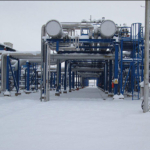
The head of the National Iranian Gas Transmission Company (NIGTC) stated that 99% of Iran's gas transmission equipment and facilities are domestically-made, indicating near-self-sufficiency in the industry.
Iranian First Vice President Mohammadreza Aref emphasized the 14th government's policy of strengthening Tehran-Moscow cooperation and promoting collaboration in various fields.
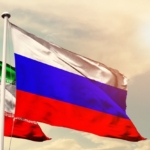
The president of Iran Masoud Pezeshkian has hailed a long-term natural gas supply deal with Russia's Gazprom that will help the country turn into a regional gas hub, bne Intellinews reports, citing a statement during a visit by Russia's Prime Minister Mikhail Mishustin.
Iran and Armenia are discussing ways to enhance economic cooperation, including establishing a joint free trade zone in Armenia, according to the Tehran Chamber of Commerce, Industries, Mines and Agriculture.
The value of Iran’s exports to the members of the Eurasian Economic Union increased by 16 percent in the first five months of the current Iranian calendar as compared to the same period last year, according to the head of the Islamic Republic of Iran Customs Administration.
The CEO of the National Iranian Gas Company (NIGC), Saeed Tavakoli, emphasized the importance of reducing accidents to zero in the gas industry and prioritizing human capital.
Iranian Energy Minister Abbas Ali-Abadi and South African Minister of Mineral Resources and Energy Samson Gwede Mantashe emphasized the expansion of energy cooperation between the two countries.
During a press conference held between the Energy Committee of Iran Chamber of Commerce, Industries, Mines and Agriculture and Iran Renewable Energy Association, the issues related to the renewable energy sector were discussed.
During a conference titled Iran Investment Opportunities, which was held prior to Iran Invest Expo, it was stated that 30 countries have announced their readiness to invest in Iran.
The U.S. Treasury Department on Wednesday imposed sanctions on more than a dozen organizations and vessels over their involvement in Iranian crude oil and liquefied petroleum gas shipments to Syria and East Asia.
Iranian companies are prepared to enter the Central Asian oil industry's upstream and downstream activities, according to Iranian Minister of Petroleum Mohsen Paknejad and Tajikistan's Minister of Energy and Water Resources Daler Juma.
In a meeting between Iranian Minister of Finance and Economic Affairs Abdolnaser Hemmati and Chinese Minister of Finance Lan Fo’an, the two sides emphasized the implementation of the two countries’ long-term strategic partnership plan.