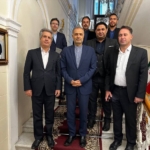
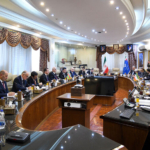
Iranian Minister of Petroleum Mohsen Paknejad left Tehran for Kazan, Russia, today to accompany the President on his trip to attend the 16th BRICS Summit.
Iranian Finance and Foreign Affairs Ministry reports 182 foreign investment applications approved in three months since the 14th government's incumbency, totaling $1.8 billion in approved plans.
The US reports that despite sanctions, Iran's oil exports are expected to increase by 100,000 barrels per day in 2024, reaching 1.5 million barrels per day.
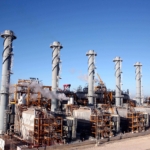
Since establishing the South Pars Oil and Gas Company (POGC) in 1998, more than $80 billion has been invested in plans and projects to develop the shared South Pars gas field which is unprecedented.
Iranian Agriculture Minister Gholamreza Nouri Ghezelcheh announced about the expansion of cooperation between Iran and Tanzania in the fields of agriculture, petrochemicals and tourism.
CEO of NIORDC, Mohammad Sadegh Azimi-Far, plans to boost high-quality petroleum product production in existing refineries and complete refinery projects with physical progress.
Iran's Deputy Oil Minister, Mohammad-Sadegh Azimifar, announced plans to boost gasoline production to 129 million liters daily by the end of 2027's seventh National Development Plan.
Iran's Ambassador Kazem Jalali and Russian Deputy Energy Minister Pavel Sorokin discussed cooperation in various sectors, including implementing oil and gas agreements between the two countries.
Iranian Gas Company Dispatching Manager Saeed Aghli warns of a gas shortage unless other governmental bodies cooperate, stating over 21 billion cubic meters of natural gas are transferred monthly.
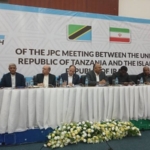
The head of Iran’s Trade Center in Ivory Coast has said the fifth Iran-Tanzania Joint Economic Committee meeting is due to be held from October 18 to 21 in Tanzania, IRIB reported.
Iranian Minister of Petroleum Mohsen Paknejad has said that expanding cooperation between Iran and the Republic of Azerbaijan in the energy sector is essential and requires creating the necessary infrastructures.
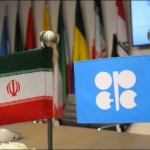
The Organization of Petroleum Exporting Countries (OPEC) in its latest report, published on Monday, has said Iran produced 3.316 million barrels per day (bpd) of crude oil in September, registering a 21,000-bpd increase compared to the previous month.
Iran's National Petrochemical Company (NPC) Acting Head Hassan Abbaszadeh emphasizes the importance of expediting the completion of petrochemical projects to enhance the country's foreign trade balance.
Iranian Minister of Petroleum Mohsen Paknejad emphasized the importance of standardization and its role in the development and sustainability of the oil industry.
Ramazan Ali Sangdovini, vice chairman of the Islamic Consultative Assembly's Energy Commission, stated that Iran is enhancing its oil industry capabilities and aiming to regain global market share.
The CEO of the Iran Fuel Conservation Company (IFCO) Hosein Hoseinzadeh, stated that the company has short-term, medium-term, and long-term plans for energy efficiency, which are expected to save about 90 billion dollars through the year 2041.
The spokesperson for the Iran's Foreign Ministry described the new sanctions imposed by the United States on Iran’s energy sector as illegal and unjustified.
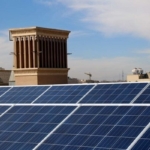
Generating electricity from renewable sources prevented the emission of 12.8 million tons of Green House Gases (GHG) in Iran during the first half of the current Iranian calendar year, according to the Iranian Energy Ministry.