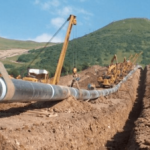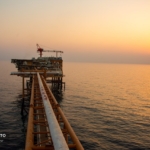
The pressure boosting plan for "Hub 1" of the joint South Pars gas field has entered the implementation phase with the aim of maintaining production capacity, preventing reservoir pressure drop, resolving the country's gas imbalance, and safeguarding Iran's share in this gas field.
BREAKING NEWS Feed Atom
The US has imported fuel oil of Iraqi origin shipped through Syria for the first time, marking a new milestone in Iraq’s efforts to diversify its export routes amid ongoing disruptions to Gulf shipping caused by the Iran war.
Oil Ministry has made significant progress in strengthening the country's smart energy management system by expanding digital infrastructure and integrating key energy data platforms, according to the deputy head of Parliament's Energy Committee.
Iran’s oil minister announced the agreement between Iran and Armenia to form a joint specialized working group in the energy sector and said: Tehran has proposed that, by defining a new model for gas trade, the grounds for developing energy cooperation with Yerevan and even exporting gas through Armenia to other markets be examined.
The U.S. Department of Energy has authorized Argent LNG to export liquefied natural gas from its proposed Louisiana export terminal to countries that have free-trade agreements with the U.S., giving the developer a key federal approval as it works toward a final investment decision on the project.
The head of Iran's parliamentary Energy Committee said comprehensive support for rebuilding the country's refineries, petrochemical plants and power stations will be a top priority, pledging to remove obstacles and facilitate projects across the energy sector.
The Minister of Energy said: The Meshgin-Shahr geothermal power plant in Ardebil, with a capacity of five megawatts and an investment of 10 million euros, has been connected to the national electricity grid and has entered the cycle of electrical energy generation.
Brent crude futures fell nearly $4, or 3.96%, to $96.70 a barrel. U.S. West Texas Intermediate (WTI) crude futures dropped $3.15, or 3.42%, to $89.04 a barrel.
Asia spot liquefied natural gas prices rose for a fifth consecutive week to their highest in four months on fears of wider shipping disruptions, as Houthi attacks on Saudi oil tankers extended the Middle East war to a second major chokepoint.
The caretaker of the National Petrochemical Company (NPC) said Wednesday the company must overhaul its structural model and improve internal processes as part of a broader push to strengthen its governance role.
A significant portion of Iraq's electricity supply depends on natural gas exported from Iran, Iran's oil minister said, highlighting deepening energy ties between the two neighbors.
Brent crude oil futures rose $4.52 (4.80%) to $98.59 per barrel. U.S. West Texas Intermediate (WTI) crude futures gained $3.39 (3.90%) to $90.22 per barrel.
Asian and European buyers of liquefied natural gas (LNG) plan to ask for lower prices and additional supply guarantees from Qatar and the United Arab Emirates as the U.S.-Iran war raises insurance costs on those deliveries, buyers, traders and industry executives told Reuters.
Iran's main military command, Khatam al-Anbiya Central Headquarters, on Wednesday warned that if the United States attacks Iranian infrastructure, Iran will block all oil exports from West Asia and target oil, gas, electricity, and economic infrastructure across the region, according to media reports.
The CEO of South Pars Gas Complex called for the full use of technical, operational and management capabilities to ensure stable gas production ahead of the upcoming winter, describing the season as a critical and challenging period for Iran's gas industry.
Brent crude oil futures rose $2.23 (equivalent to 2.45%) to reach $93.24 per barrel. U.S. West Texas Intermediate (WTI) crude oil futures increased by $2.18 (2.18%) to $86.18.
Iran has set the official selling price for its light crude oil grade for Asian buyers at $4.35 a barrel below the Oman/Dubai average for August, the state-owned National Iranian Oil Company said on Wednesday.
Just weeks after a fragile ceasefire offered a glimmer of hope for stability in the Persian Gulf, the Trump administration has once again plunged the region—and the world—into a dangerous abyss.
Kuwaiti oil tanker that was passing through the US-Omani corridor in the Strait of Hormuz was stopped by Iranian armed forces.
President Masoud Pezeshkian said Tuesday that the government remains committed to ensuring a stable energy supply for the country's industrial sector while removing barriers to production and supporting economic activity.