Jam Petrochemical’s first-half sales rose sharply in September 2026, with about 43 trillion tomans in six-month revenue and nearly 18 trillion tomans in that month alone — more than double September 2025.
BREAKING NEWS Feed Atom
The chief executive of the National Petrochemical Company said about 60% of capacity lost in the war has been restored and warned of feedstock trouble in the coming winter.
Qatar has extended by one more month a partial suspension of its liquefied natural gas export commitments to Asian and European markets, as shipping security in the Strait of Hormuz remains disrupted.
The chief executive of Petropars Group, a subsidiary of the Oil Ministry, said gas production capacity at location B of South Pars Phase 11 has reached 1 billion cubic feet a day after all 12 wells at the site came on stream during the 14th government.
A member of the Islamic Consultative Assembly’s economic committee said a parliamentary inquiry into the National Iranian Oil Company has begun. He listed the main aims as a precise review of violations, recovery of public assets, identification and action against those involved, and reform of oil-sales processes.
Indian Oil Corporation has bought 2 million barrels of Iraqi crude at a discount of about $28 a barrel to the Dubai benchmark for October 2026 delivery. The deal was done on a free-on-board (FOB) basis.
Sedigheh Khazaei, deputy oil minister for management development and human capital, said people must be treated with respect when their requests and complaints are handled, and that attention to public feeling is essential. Serving the ministry’s target community well is a priority, she said.
Oil Minister Mohsen Paknejad said human capital is central to the oil industry’s stability and that firefighters are a main pillar of its resilience chain. He said attention must go to their professional standing, capability, knowledge, skills, and readiness.
The board has appointed Reza Farzadi chief executive of Damavand Energy Assaluyeh, the company that supplies water, power, steam, and utility services for Phase 2 of the Pars Special Economic Energy Zone.
Brent crude futures rose $3.43, or 3.29%, to $107.75 a barrel. U.S. West Texas Intermediate (WTI) crude futures rose $2.14, or 2.32%, to $94.55 a barrel.
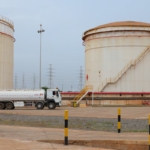
The chief executive of the Iranian Oil Terminals Company said that despite extensive attacks on the Kharg oil terminal in the third imposed war, average crude exports from the terminal rose about 10% from prewar levels and shipments never stopped.
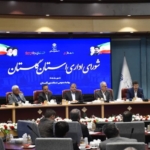
Golestan has spent months tightening coordination among agencies, securing and storing substitute fuel, and writing contingency plans so that gas and power limits hit household supply, critical sites, and factories less hard in the cold season.
The senior assistant and adviser to the commander-in-chief said energy is not only an economic commodity but part of national power, security, and daily life, and that oil-industry employees have played an important role in securing Iran’s energy in different periods.
The deputy oil minister and chief executive of the National Iranian Oil Refining and Distribution Company said the enemy targeted pump stations and the Rey oil depot, cutting the transfer of 90 million liters of products a day, in an attempt to shut filling stations in the capital and paralyze fuel distribution across the northern belt within 72 hours. Round-the-clock work by oil-industry staff and a chain of road tankers, he said, blocked a planned gasoline shortage and social crisis.
Iran’s first vice president said the government plans to return 100 million cubic meters of gas from infrastructure damaged in the enemy attack to the network before the cold season starts, and asked the public to save electricity and gas to keep the energy grid stable through the winter months.
Italy’s industry minister said the government has asked refiners to raise fuel output and help bring prices down.
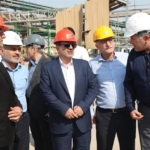
Sekhavat Asadi, head of the presiding board of the oil industry pension funds, visited the Petrochemical Special Economic Zone and toured operations at Nakhl Asmari Petrochemical and Bandar Imam Petrochemical.
At a ceremony attended by board members and senior managers of Parsian Oil and Gas Development Group, Peyman Esfahani was introduced as the new chief executive of Pardis Petrochemical.
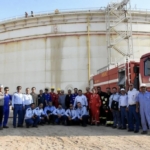
An emergency-response drill with the scenario of a fire at oil tank No. 8 was held to assess the readiness of Iranian Offshore Oil Company operations and firefighting crews on Kharg and to raise coordination among units in the Kharg operating area.
The chief executive of the National Iranian Oil Company described what he called an uneven war against Iran’s oil infrastructure, said production has stayed stable and an eight-year oil-output record has been broken, and dismissed rumors of disruption at oil facilities.