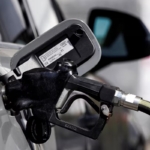
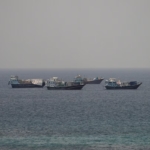
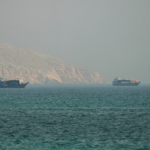
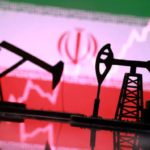
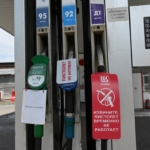
U.S. gasoline pump prices crossed the $4 a gallon mark on Monday as renewed hostilities between the U.S. and Iran further disrupt energy flows through the Strait of Hormuz, a critical route for global oil supplies.
President Masoud Pezeshkian on Sunday called on Oil Ministry to align its operations with global standards, expand technical training and develop integrated management systems to improve the performance of engineers and specialists in the oil and gas sector.
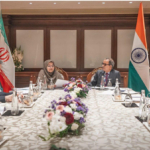
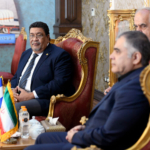
The heads of the national standards organizations of Iran and India emphasized the development of technical cooperation and the role of standardization in facilitating trade and improving the quality of goods and services.
If the U.S. and Iran do not increase oil flowing through the Strait of Hormuz soon, the world should worry about energy security, International Energy Agency Executive Director Fatih Birol said on Thursday.
The Bill exempts countries, mostly European nations, whose imports of Russian natural gas account for less than 15% of Russia's total natural gas exports and which are taking significant steps to reduce those imports.
Iranian Minister of Economic Affairs and Finance, in a meeting with Cong Peiwu, Chinese Ambassador to Iran, emphasized the determination of his country to develop sustainable and strategic relations between the two countries.
President Donald Trump said on Monday that the United States was reinstating a naval blockade on Iran and would be reimbursed 20% on all cargo shipped through the Strait of Hormuz after Tehran claimed it had closed the vital waterway.
Iran and Russia are close to finalizing a long-negotiated gas trade agreement after reaching consensus on most of the contract's key provisions, oil minister said Monday.
U.S. President Donald Trump said on Sunday that the Strait of Hormuz is open to commercial traffic, though the U.S. and Iran continue to trade attacks that have raised concerns over safety on one of the world’s most important oil shipping routes.
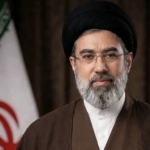
Leader of the Islamic Revolution Ayatollah Seyyed Mojtaba Khamenei expressed heartfelt appreciation for the “astonishing, enemy-breaking and historic” turnout at the funeral of the martyred Leader, vowing that vengeance on the “criminal and disgraced murderers” is certain.
Iran has rushed out five supertankers and one Suezmax vessel carrying roughly 11 million barrels of crude in the past 24 hours, as strikes between the US and Iran threaten to escalate into another blockade on its ports, Bloomberg reported on Thursday.
a statement issued on Wednesday, the Foreign Ministry said the US Treasury Department’s decision to revoke the temporary suspension of sanctions on Iran’s oil sales constituted “a flagrant violation of Clause 10 of the Memorandum of Understanding on the Termination of the War, dated June 18, 2026.”
The U.S. Treasury Department on Tuesday revoked its authorization of Iranian oil sales after a series of attacks on tankers in the Strait of Hormuz this week.
An oil and gas expert stated: Wars do not only destroy infrastructure; they also transform the logic of investment. Any country emerging from a security crisis faces two choices. The first is merely compensating for past damages, and the second is building a more resilient, competitive, and attractive economy for investment from the heart of the crisis.
The CEO of the National Iranian Oil Company said the massive public turnout at the farewell ceremony for the Martyred Leader reflected a renewed commitment to his ideals, stressing that oil industry employees remain steadfast in carrying out their responsibilities as the country's economic frontline.
Oil Minister Mohsen Paknejad said the country will remain steadfast in the face of its enemies, pledging continued support for Iran's leadership and resilience against external threats.
In a meeting between the Oil Minister of Iran and the Minister of Foreign Affairs of the Republic of Nicaragua, the development of bilateral cooperation between the two countries in the oil and energy sector was emphasized.
The secretary-general of the Organization of the Petroleum Exporting Countries (OPEC) extended condolences to Iran over the funeral of the Martyred Leader, Ayatollah Ali Khamenei.
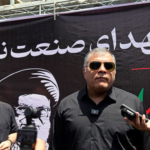
The Oil Ministry's Basij Resistance Center has established service stations along the route of the farewell and funeral ceremonies for the Martyr Leader, offering cultural, medical and hospitality services to participants.
Russia has started seaborne imports of gasoline from India, two industry sources said on Wednesday, in an effort to mitigate fuel shortages triggered by Ukrainian attacks on its energy infrastructure.