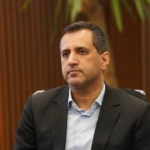
The CEO of Persian Gulf Petrochemical Complementary Industries Investment and Development Group (Petrol) said the transfer of arbitration over utility service pricing to the National Petrochemical Company marks a starting point for broader use of specialized arbitration mechanisms in the petrochemical industry.
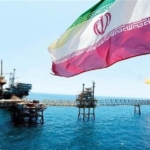
IRAN Feed Atom
Iran’s South Pars gas field has set nine production records over the past two years, with daily output reaching a new high of 727 million cubic meters, underscoring the field’s central role in meeting the country’s energy demand.
Iran’s Persian Gulf oil pipelines region recorded a 13 percent rise in oil product transfers in the first 10 months of the current Iranian calendar year (late March, 2025-late January, 2026) compared with the same period last year, the regional director said.
head of Iran’s Oil Pipelines and Telecommunications Company said the country has added about 1,000 kilometers of new pipelines, bringing the total length of its crude oil and petroleum product pipeline network to 15,000 kilometers.
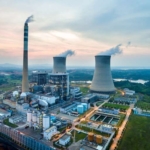
Iran ranks among the world’s 10 countries with the largest thermal power generation capacity, a senior official at the Thermal Power Plants Holding Company (TPPH) said.
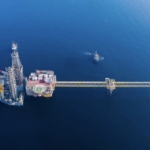
Pars Oil and Gas Company, the developer of the world’s largest gas field, has experienced a distinct period of operational and development activity under Iran’s 14th administration, marked by stabilized output at the shared South Pars field, record gas production, higher asset efficiency and groundwork for new offshore gas developments in the Persian Gulf.
Power plant gasoil reserves reached more than 3.4 billion liters for the first time in the country’s history in Aban this year, equivalent to more than 90% of total storage capacity. The level marks an increase of 86% and 6%, respectively, compared with the highest reserves recorded in the Iranian years 1403 (2024) and1402 (2023).
Iran has allocated $48.7 billion in foreign currency for the import of various goods since the start of the current Iranian year (late March 2025), with 73 percent directed to the industrial sector, the spokesperson for the Iran Exchange Center said.
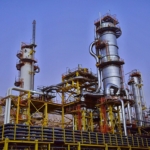
CEO of the National Petrochemical Company announced the operational launch of several major production and infrastructure projects in the petrochemical industry, coinciding with the Ten Days of Fajr celebrations. He stated that with these inaugurations, the industry can celebrate reaching an annual production capacity of 100 million tons.
Statistics from the Ministry of Petroleum in the 14th government indicate numerous and historic record-breaking achievements in gas production. This achievement, though shadowed by suboptimal consumption which diminishes its delight, has been realized solely through the perseverance of oil industry personnel, integrated management, and precise planning, painting a picture of our beloved Iran's strength.
Iran has injected more than 165.5 billion cubic meters (bcm) of sweet gas from the South Pars gas complex into the national grid since the start of the current Iranian year (late March 2025) to Feb. 2, the head of the South Pars Gas Complex (SPGC) said.
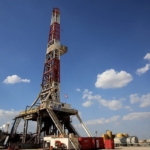
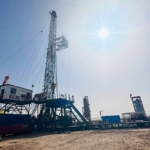
country's drilling industry has entered a new phase of development under the seventh five-year development plan, focusing on expanding drilling fleet capacity and improving operational efficiency. This phase prioritizes acquiring new rigs, modernizing the existing fleet and enhancing key performance indicators to support increased oil and gas production.
The first electric submersible pump (ESP) at the South Azadegan oil field has been successfully installed and commissioned at well No. 93, drawing on the expertise of domestic specialists. Officials expect that completing the installation of 50 ESPs by June 2026 will add about 35,000 barrels per day to the field’s production capacity.
head of the National Iranian Oil Refining and Distribution Company visited operational units at the Abadan refinery, including Unit 70 and the project’s second phase, accompanied by senior officials and the Abadan lawmaker, to review progress on ongoing projects.
Iran’s Oil minister said there is no need for concern that the United States, after gaining control of Venezuelan oil, could strike deals with Iran’s long-standing oil customers such as China.
The CEO of the Shahid Hashemi-Nejad Gas Refinery said the facility has increased its daily gas intake and production by 2.5 million cubic meters, driven by the implementation of technical projects, process improvements and equipment optimization.
More than 1,700 new technology-based firms (NTBFs) and domestic manufacturers are now working with Iran’s petrochemical industry, with more than 120 trillion rials ($12 trillion tomans) allocated last year to expand these capabilities, an industry official said.
plans to raise its renewable power generation capacity to more than 5,200 megawatts by the end of the current Iranian year (late March), a deputy energy minister said, citing faster permitting and improved financing as key to meeting the target.
Ministry of Oil is actively pursuing solutions to the challenges facing the country's petrochemical sector.
The National Iranian Drilling Company (NIDC) has brought 12 new gas wells into production under a drilling contract with the Central Iranian Oil Fields Company, strengthening gas supply, particularly during the winter season, the NIDC head of said.