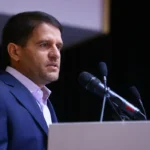
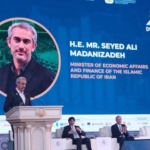
Iran’s representative has attended the main meeting of the Financial Action Task Force (FATF) in Paris for the first time in six years, following an official invitation from the global anti-money laundering body.
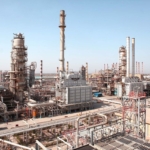
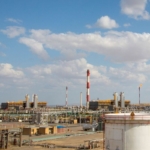
The South Pars Gas Complex supplies 73 percent of Iran’s natural gas, provides feedstock for 65 percent of the nation’s petrochemical plants, produces 45 percent of its gasoline and fuels 60 to 65 percent of power plants, the company’s CEO said Tuesday.
The National Iranian Gas Company is fully prepared for the winter season and will ensure stable gas transmission nationwide through effective management and operational transformation, the company’s managing director, Saeed Tavakkoli, said.
Iran’s Tehran Oil Refinery, one of the country’s oldest and largest facilities, is investing $3.5 billion to modernize operations and produce all fuels—including gasoline, diesel, and jet fuel—in line with stringent Euro 5 environmental standards, its refining engineering chief said.
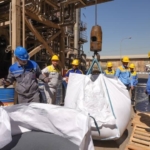
Bu Ali Sina Petrochemical Complex has successfully completed a major overhaul of key reactors in its aromatic and paraxylene units without halting production, enhancing equipment reliability and operational efficiency.
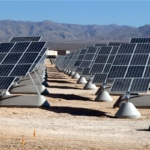
Sistan-Baluchestan Power Distribution Company plans to install 5,000 five-kilowatt solar systems by late 2026, aiming to increase renewable energy capacity to 1,000 megawatts in Iran within two years.
Hassan Abbaszadeh, managing director of the National Petrochemical Company, praised the Petrochemical Research and Technology Company for its role in providing catalysts and technical expertise.
Iran's natural gas consumption surged in October, reaching over 1.604 billion cubic meters, while power plants used 1.763 billion, indicating a close competition between major consumers.
The National Iranian Oil Company's managing director has announced a $800 million budget for the renovation and modernization of its drilling fleet and equipment.
Ali Rabani, director of energy consumption optimization at NPC, plans to implement an energy management system in Iran's petrochemical industry, urging firms to utilize available resources.
Iran’s Trade Promotion Organization (TPO) and Vietnamese Embassy in Iran have emphasized expanding joint production and sharing export experience, building on several cooperation agreements already signed between the two countries.
The CEO of South Pars Gas Complex announced that the complex supplied more than 73% of the country’s gas needs during peak winter demand, describing it as the backbone of Iran’s energy supply.
The International Monetary Fund (IMF) has revised its forecast for Iran’s economic growth downward to 0.6% for 2025, up slightly from an April projection of 0.3% but well below the regional average of 3.5%, while anticipating inflation to spike to 42.4% this year from 32.5% in 2024 and unemployment to climb 1.6% year-on-year to 9.2%.
The South Pars Gas Complex (SPGC) has taken a major step toward industrial self-reliance, with more than 90 percent of equipment and supplies for its refineries now sourced domestically, according to the company’s commercial director.
Iran's oil minister's deputy predicts Pars pipeline project will reduce road tanker dependence and save billions in fuel transportation costs, citing favorable performance in refining and fuel distribution.
The CEO of the National Iranian Oil Company (NIOC) emphasized the importance of the Ahvaz oil field as the country’s largest, saying the new project marks a significant move toward increasing the recovery factor and advancing national oil industry policies aimed at implementing enhanced oil recovery (EOR) methods.
Iran’s minister of economic affairs and finance emphasized the expansion of brotherly relations and economic, commercial, and infrastructure cooperation between Iran and Tajikistan and proposed special opportunities for deepening these relations under the current conditions.
The Khangiran Gas Refinery in northeastern Iran maintained uninterrupted and above-target gas production during the four cold months of 1403, marking the most stable performance among the country’s gas refineries, according to the plant’s operations chief.
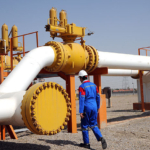
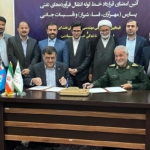
A contract has been signed to construct the Pars Oil Products Pipeline (Mehraaran–Fasa–Shiraz) with a transfer capacity of 73,000 barrels per day and an investment value of €150 million.
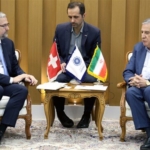
Iran and Switzerland’s private sectors are calling for stronger collaboration in non-sanctioned industries, emphasizing the key role of private enterprises in shaping future economic ties between the two countries.