Excessive consumption of gas in the household sector hinders the increase of Iran’s share in the world energy market
The Ministry of Petroleum of the 13th government has put increasing the share of gas exports in its agenda and in the first five months of current Iranian year compared to the same period of the previous year, gas exports increased by 19%, now, it should be seen whether this goal can be achieved or not, considering the significant share and, of course, the excessive consumption of domestic gas in the entire country.
After nearly two decades have passed since the establishment of National Iran Gas Company, achieving the goal of exporting 500 million cubic meters of gas per day, which was defined in the 10-year horizon of this company, has not yet been achieved. Now, Iran exports about 18 billion cubic meters of gas per year (approximately 50 million cubic meters per day) and has an approximate share of 1.9% in the global gas trade.
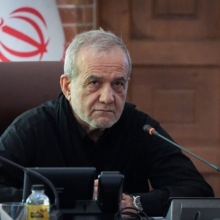
The oil minister of the 13th government has also mentioned the issue of gas diplomacy in the early days of his activity and said that gas trade with neighboring countries, including Turkmenistan, is one of the most important programs pursued by the 13th government.
He also mentioned the increase of two percent share of Iran’s gas trade.
The increase of gas export in our country has obstacles, the most important of which is consumption exceeding production, but it should be noted that due to geopolitical issues and the entanglement of energy trade with political and security issues, the issue of gas export is very important and we must look for a solution to manage consumption.
Iran has a share of 16.6% of the world’s proven gas reserves, and with more than 32 trillion cubic meters of gas reserves, it ranks second in the world. Now Iran is the third producer of natural gas and at the same time the fourth gas consumer in the world after America, Russia and China, while Iran has a significant distance from these countries in terms of size and economic growth.
The significant increase in gas consumption due to the implementation of the maximum gas supply policy in the last three decades, as well as the low level of energy efficiency in power plants, buildings and industries, is today the most important obstacle to increasing Iran’s share of gas trade.
According to available estimates, the intensity of energy consumption in Iran is 15 times that of Japan, and while the index of energy consumption intensity is decreasing in most countries of the world, this index has increased in Iran.
These conditions take away export opportunities from Iran, and this is despite the fact that according to the upstream documents, Iran should have eight to 10 percent of the world’s gas trade.
Of course, the Ministry of Petroleum of the 13th government has put increasing the export share of gas in its agenda and in the first five months of current Iranian year compared to the same period of the previous year, it increased the export of gas by 19%, but due to the high share of gas in energy supply Inside, it is not possible to achieve these goals as it has the capacity.
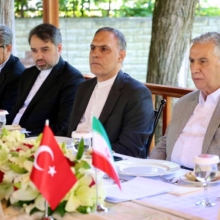
In this regard, in the past few days, the Iran-Iraq gas export contract was also extended for five years.
As the oil minister has announced, the construction of oil and gas pipelines and the improvement of Iraqi oil refineries are among the axes mentioned in the memorandum of understanding between the two countries, and the gas export contract with the Iraqi Ministry of Electricity has also been extended and the expert issues in this field have been completely resolved.
The oil minister also reminded that Iran has two gas contracts with Iraq’s Baghdad and Basra power plants and added: Based on the agreement of both parties, these two contracts will be extended in the next five years.
As it was said, energy consumption management is the most important action that should be taken in order to achieve the country’s major goals to increase the share of energy exports.