Global Crude Oil Prices Today (July 31, 2026) | Brent Crude Falls to $88 per Barrel
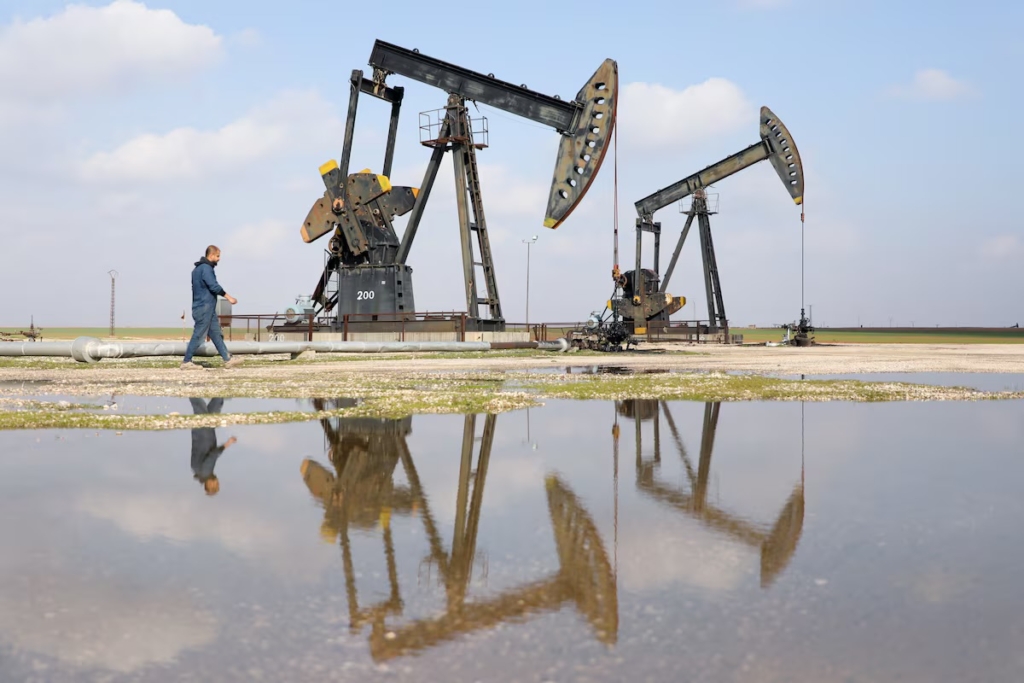
RoydadNaft – Brent crude futures fell $1.03, or 1.2%, to $88.00 per barrel, while U.S. West Texas Intermediate (WTI) crude futures declined $1.50, or 1.8%, to $82.09 per barrel.
Global oil prices declined on Friday but remained on track for a monthly gain of around 20%, as increased crude flows through key maritime chokepoints helped ease market concerns despite the absence of any major breakthrough in negotiations between the United States and Iran.
As of 02:15 GMT, Brent crude futures were down $1.03 (1.2%) at $88.00 per barrel, while U.S. West Texas Intermediate (WTI) crude futures dropped $1.50 (1.8%) to $82.09 per barrel. Despite Friday’s losses, both benchmarks were set to post gains of approximately 20% for the month.
According to Daniel Hynes, Senior Commodity Strategist at ANZ, the decline in oil prices reflects the fact that escalating tensions in the Middle East are being partially offset by signs of increased tanker traffic through the Strait of Hormuz.
The Strait of Hormuz, through which roughly one-fifth of the world’s crude oil and liquefied natural gas (LNG) shipments normally pass, has remained a focal point for energy markets since the outbreak of the U.S.-Israel war against Iran on February 28, with maritime traffic facing significant disruptions.
Meanwhile, Saudi Arabia is seeking to lead a multinational coalition aimed at strengthening maritime security cooperation in the Bab el-Mandeb Strait, the Red Sea, and the Gulf of Aden—all strategic chokepoints for global energy supplies.
Saudi Arabia’s Ministry of Defense announced that 14 countries, including Djibouti, Egypt, Pakistan, Sudan, and Türkiye, have expressed support for the proposed multinational maritime defense coalition.
Separately, Iran-aligned Houthi forces in Yemen declared a naval blockade against Saudi Arabia last week, threatening shipping through the Red Sea, a critical alternative export route for Saudi crude alongside the Strait of Hormuz.
Priyanka Sachdeva, an analyst at Phillip Nova, noted that although tanker traffic continues to move through both the Strait of Hormuz and the Red Sea, heightened security risks have driven up freight costs and insurance premiums, embedding a substantial geopolitical risk premium into global oil prices.
“While prices have retreated from recent highs, the broader market trend remains constructive,” Sachdeva said.