Kazakhstan’s oil export gateway shut again by Ukrainian drone attacks in Black Sea
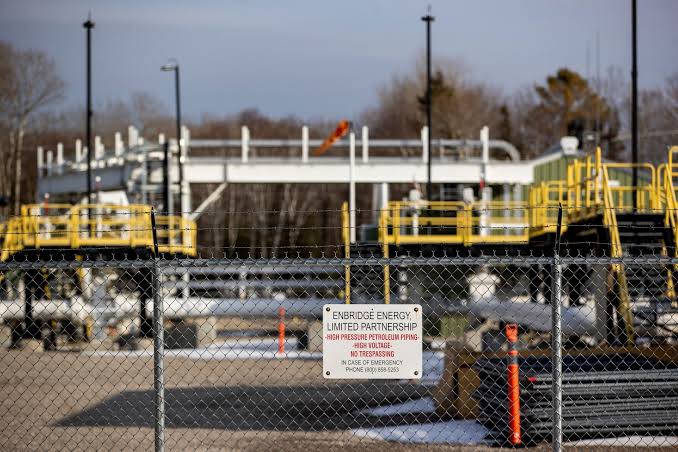
RoydadNaft – Kazakhstan’s main oil export terminal in the Black Sea closed on Thursday for the third time this month, suspending crude tanker loadings after Ukrainian drones hit two vessels at and near the terminal at Russia’s Novorossiysk port.
Previous export loading suspensions have forced the Central Asian state, among the world’s 10 largest oil exporters in the OPEC+ grouping, to reduce output temporarily because it has no easy alternative route to ship crude to world markets.
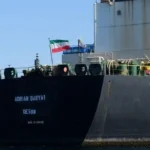
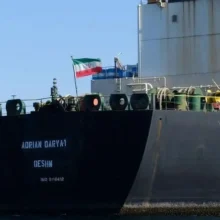
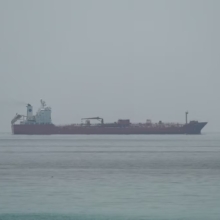
In the latest incident, the CPC said that two tankers, the Marshall Islands-flagged Nissos Sifnos and the Isle of Man-flagged Marathi, were attacked by Ukrainian drones overnight, causing a fire on the Nissos Sifnos. The Nissos Sifnos was hit while loading at the CPC terminal, it said.
Kazakhstan’s energy ministry confirmed the strikes, though it did not name Ukraine as the culprit. Ukraine’s drone forces said they struck four Russian tankers in the Black and Azov seas overnight, but did not specify where.
At least five tankers that previously signalled the CPC terminal as their destination changed direction to Turkey, Spain or to “for orders’ status, LSEG shipping data reviewed by Reuters showed on Thursday.
Kazakhstan has condemned previous attacks affecting CPC facilities while Kyiv has defended them as part of its campaign against infrastructure supporting Russia’s war effort, saying its actions are not directed at Kazakhstan, whose oil the CPC primarily carries.
CENTRAL ASIAN STATE EXPORTS OIL MOSTLY TO EUROPE
A country of 20 million which shares the world’s longest land border with Russia, Kazakhstan is Central Asia’s largest economy and a major energy and minerals producer, providing 2% of the world’s daily oil supply. Most of its exports go to Europe.
As in other Central Asian countries, the war has triggered periodic inflationary shocks as well as rapid economic growth from trade routes redirected via Kazakhstan, for which Russia remains the primary trading partner.
The 940-mile (1,510 km) CPC pipeline is one of the world’s longest. Construction began in 1999 and U.S. companies including Chevron and Exxon contributed nearly half of the $2.6 billion investment in the pipeline which runs from Kazakhstan’s giant Tengiz oilfield to Russia’s Black Sea coast.
The United States hailed it at the time as a message to the world that the U.S., Russia and Central Asian states were cooperating to build prosperity and stability in the region.
Kazakhstan’s Energy Minister Yerlan Akkenzhenov held a meeting with U.S. Ambassador Julie Stufft in which “particular attention” was paid to regional energy security, the reliable operation of export infrastructure and the stability of supplies to global markets, Akkenzhenov’s ministry said on Thursday.
On Wednesday, Kazakhstan’s foreign ministry said that U.S. Secretary of State Marco Rubio held a phone call with his Kazakh counterpart, Yermek Kosherbayev, during which they discussed the CPC.
Kazakhstan’s alternatives to the CPC — westwards across the Caspian Sea to Azerbaijan and onwards to Turkey, and eastwards via pipelines to China — are restricted by capacity issues.
KAZAKHSTAN WALKS FINE LINE ON THE WAR
Kazakhstan has walked a diplomatic tightrope for the past 4-1/2 years on the war in Ukraine — refusing to support Russia, with which it is formally allied, whilst also denouncing Ukrainian strikes on the CPC.
At a meeting with Russian President Vladimir Putin last weekend, Kazakh President Kassym-Jomart Tokayev publicly suggested that Putin “freeze” the Ukraine war and pursue peace talks, a proposal later rejected by the Kremlin.
In Tokayev’s most recent reported call with Ukrainian President Volodymyr Zelenskiy in August 2025, he restated Kazakhstan’s support for Ukraine’s territorial integrity but advised him to agree to peace terms with Russia, telling him: “A bad peace is better than a good war.”