Global Crude Oil Prices Today (June 24, 2026) / Brent Falls to $75.88
RoydadNaft – Brent crude futures dropped $1.20 (1.56%) to $75.88 per barrel. U.S. West Texas Intermediate (WTI) crude futures fell $1.14 (1.6%) to $72.07 per barrel.
According to Roydad Naft, Brent crude prices declined more than 1% on Wednesday, hitting their lowest level in nearly four months. The drop came amid fresh signs of increased tanker activity through the Strait of Hormuz.
Brent futures settled $1.20, or 1.56%, lower at $75.88 per barrel (as of 10:01 GMT). WTI futures dropped $1.14, or 1.6%, to $72.07.
Brent touched an intraday low of $75.37, the weakest level since February 27 (the day before the start of U.S.-Israeli strikes on Iran). WTI fell as low as $71.55, its weakest since March 3.
Tim Waterer, senior market analyst at KCM Trade, said: “While there are some encouraging early signs of rising tanker activity, the market is pricing in a broader scenario that includes the return of Iranian oil to global markets and the normalization of the Strait of Hormuz.”
He added: “If sanctions are eased, Iranian production and exports could ramp up relatively quickly, given the significant volumes already stored on tankers — we’re talking weeks rather than months.”
Adding to the bearish signals, physical crude cargoes worldwide are trading at discounts, and trade flows are shifting as markets absorb rapidly rising supply from the Middle East. Iran is also preparing to boost sales following a temporary U.S. sanctions waiver.
Oman stated it would keep the Strait of Hormuz open to shipping without imposing any fees and has established two temporary lanes — one north and one south of the existing shipping corridor — to facilitate safe passage for vessels exiting the area.
Prices also came under pressure this week from a 60-day sanctions waiver granted by Washington to Tehran following initial peace talks, which allowed oil sales to resume, as well as de-escalating tensions in Lebanon.
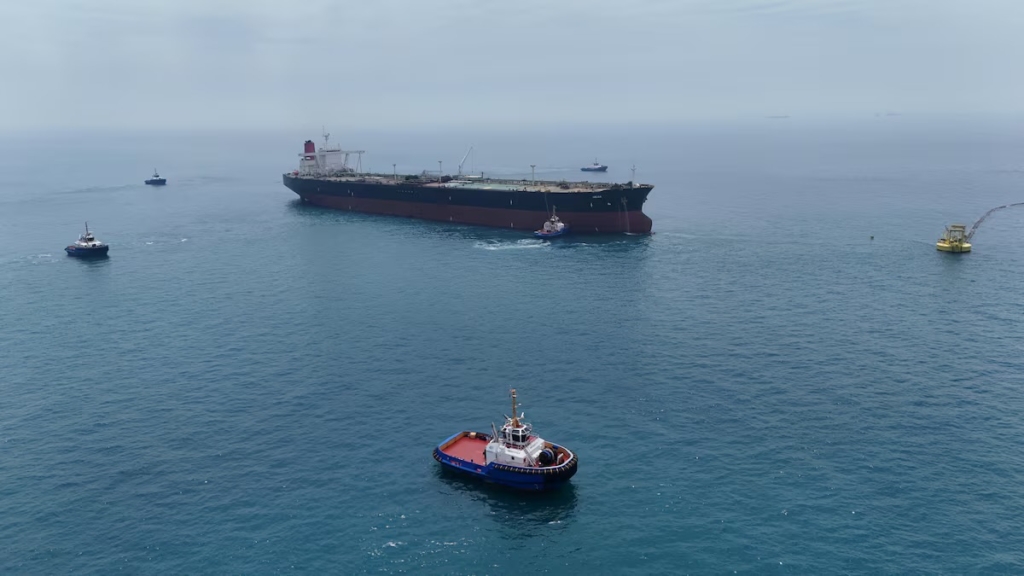
Ship-tracking data showed three previously stalled supertankers transiting the strait on Tuesday. The United Nations shipping agency also announced that an evacuation plan is underway to allow hundreds of detained vessels to pass through the strait following the U.S.-Iran ceasefire agreement.
However, uncertainty remains over the durability of the deal. U.S. President Donald Trump said on Tuesday that Iran had agreed to “unlimited” nuclear inspections, although Tehran stated it had made no such concession.
Mark Malik, investment director at Siebert Financial, said: “Markets are currently showing excessive confidence in a favorable outcome without fully discounting the risks tied to unresolved nuclear issues and outstanding inspection disputes.”
Investors are also closely watching how quickly Middle Eastern producers restore exports and whether more vessels enter the region.
Macquarie has forecast that Brent will average $77.09 per barrel in 2026 before falling to $64 in 2027.