Saudi petchems face precarious future despite first-quarter lift
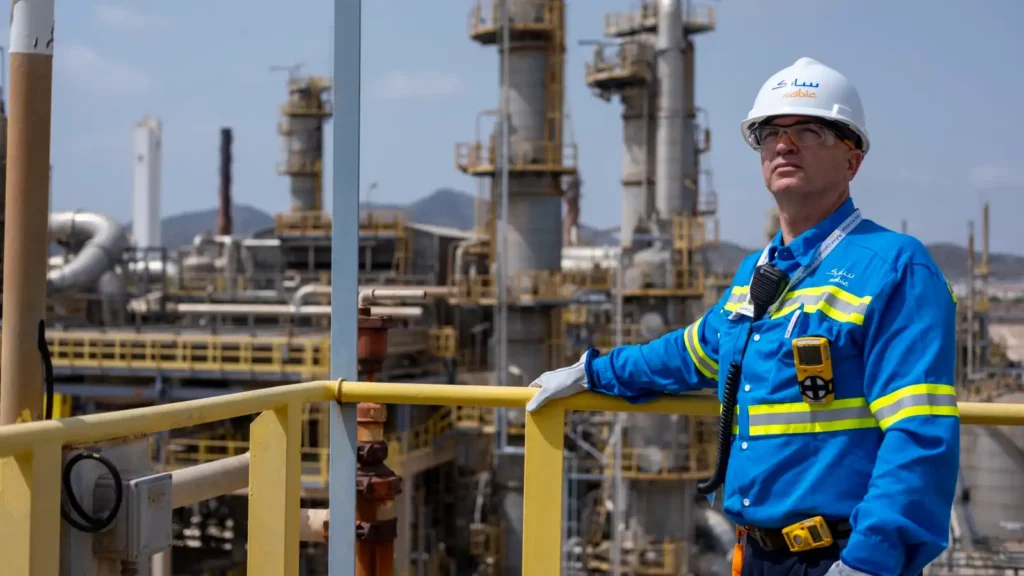
RoydadNaft – Saudi blue chip Sabic and fellow petrochemical producers face an uncertain outlook amid export disruptions and long-term supply-demand imbalances, according to analysts.
The three-month impasse in the Strait of Hormuz has been a boon and a drag for Saudi Arabia’s downstream chemicals industry.
Surging prices have helped to lift margins from multi-decade lows, but the waterway’s effective closure has disrupted exports to customers outside the Gulf. This has forced oil cargoes onto alternative routes including the East-West pipeline linking Saudi Arabia’s Eastern Province with the Red Sea port of Yanbu.
Petrochemical producers are also exploring trucking options to move some products to Red Sea export hubs.
Eight listed Saudi petrochemical companies made a combined net loss of $244 million in the first quarter, a slight improvement on their aggregate net loss of $271 million in the prior-year period, according to AGBI calculations.
Sabic, formally known as Saudi Basic Industries Corp and long the bellwether of Riyadh’s bourse, swung to a quarterly profit of $3.5 million from a year-earlier loss of $323 million.
That improvement came despite quarterly revenue falling 11 percent year on year to $7 billion. Sabic is the world’s seventh-largest chemicals manufacturer by sales.
“Overall, Sabic’s first-quarter performance was decent, although the period only captured one month of higher pricing and export disruptions – the focus now is on how these trends shape Q2 earnings and beyond,” said Oliver Connor, director of energy equity research at Citi.
The bank’s research team has a neutral rating on Sabic’s stock and a price target of SAR58 ($15.50) per share.
Sabic’s first-quarter petrochemical sales fell 12 percent in volume terms versus the preceding three months, although prices rose 6 percent during the same period.
About 70 percent of Sabic’s petrochemical volumes come from polymers, or solid plastics. Some of this can be trucked to Saudi Arabia’s west coast for marine export or sold within the Gulf should the company, majority owned by Saudi Aramco, be unable to export through the strait, explained Connor.
The remaining 30 percent of petrochemical volumes comes from liquids such as methanol and monoethylene glycol, which are used in antifreeze and as chemical feedstocks. These must be exported via ship and are difficult to store, so Sabic’s sales of such products have fallen, Connor said.
“Higher pricing partially offsets lower sales volumes, but the challenge is whether Saudi producers can get enough product out,” Connor added.
Trucking petrochemicals to the west coast also comes with difficulties. For example, to fill a 25,000-tonne-capacity ship with urea would take about 1,200 truckloads, Connor said.
“Petrochemical prices have surged but for Gulf producers it’s about whether they can get product out of the door and at what cost,” said Alex Estefanous, director of Mena equity research at UBS.
Freight and insurance costs have increased substantially, Estefanous and Connor said.
From a longer-term perspective, “the petrochemical sector’s structural issues remain – there is still overcapacity for most products and that won’t change anytime soon”, Estefanous said.
Higher oil and gas prices may dent economic growth in energy-importing nations, especially in Asia. That, in turn, may depress demand for petrochemicals, Connor said.
A softening of demand would be ill-timed, with petrochemical output capacity expected to increase significantly in 2027 and 2028 as new plants begin production.
“Industry-wide [petrochemical] overcapacity continues to weigh on the segment,” Sabic chief financial officer Salah Al Hareky told an April 30 analysts’ call.
A mixed picture
Of the eight listed Saudi petrochemical companies AGBI analysed, four made a first-quarter net profit and four posted a net loss. Advanced Petrochemical Co was the top performer, making a quarterly profit of $8 million, while Saudi Kayan Petrochemical Co’s net loss of $164 million made it the worst.
The octet’s stock price performance this year has varied widely, ranging from a 18 percent decline (Takween Advanced Industries Co) to a 22 percent rise in Saudi Kayan Petrochemical Co’s shares. The latter is located on the Red Sea coast, far from the maritime chaos in the Gulf.