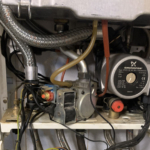
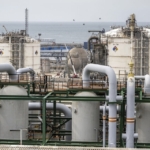
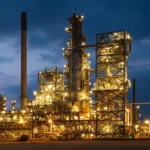
Two backup pumps on the firewater ring of Damavand Energy Assaluyeh have entered service to strengthen safety infrastructure and raise the reliability of the firefighting water network for Phase 2 petrochemical plants in Assaluyeh.
Golestan’s deputy governor for economic coordination said the long-delayed Golestan Petrochemical project remains a serious demand of the province and that provincial officials are following it through until a decision is reached.
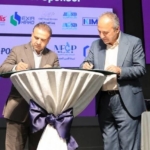
Firmco Pars Engineering and Installation and Khorasan Petrochemical have signed a partnership agreement to develop new solutions for managing energy use and Iran’s energy imbalance.
A domestically manufactured separation decanter in the high-density polyethylene (HDPE) unit at Bandar Imam Petrochemical has entered production for the first time at the complex, after installation, commissioning, and operating tests were completed successfully.
Ahdaf Investment Group has taken three of the five board seats at Persian Gulf Petrochemical Industries Company for the first time, after an extraordinary general meeting of the Iranian petrochemical holding.
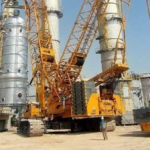
Two heavy reactors have been successfully installed at Lavan Petrochemical in Iran by Faragostar Pars, a subsidiary of the specialized marine holding of Khatam al-Anbiya Construction Headquarters.
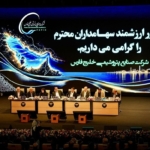
The second session of Persian Gulf Petrochemical Industries Company’s extraordinary general meeting chose a new five-seat board on Thursday, Sept. 17, 2026.
Oil Minister Mohsen Paknejad and Persian Gulf Petrochemical Industries Company CEO Mohammad Shariatmadari held an emergency meeting as PGPIC’s general assembly nears and a new board is due to be set for Iran’s largest petrochemical group.
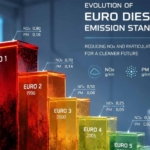
Nouri Petrochemical has completed a heavy-end sweetening unit and begun producing Euro 6 gasoil with sulfur below 10 parts per million, putting Persian Gulf Petrochemical Industries Company at the front of Iran’s clean-fuel output.
Large listed companies — especially petrochemical producers — can import electricity from neighboring countries, Iran’s deputy energy minister for electricity said.
Downstream petrochemical industries could play a much larger role in Iran’s economy with proper planning and investment, said Seyed Esmaeil Hosseini, a member of Parliament’s Energy Commission.
Persian Gulf Petrochemical Industries Company CEO Mohammad Shariatmadari has appointed Yaghoub Rostami Mal-Khalifeh as human capital and learning director of Iran’s largest petrochemical group.
Khorasan Petrochemical’s operating revenue in the first five months of the Iranian year 1405 (to Aug. 22, 2026) rose 209% from a year earlier to more than 127 trillion rials, with exports accounting for 53% of sales.
A Fajr Energy Persian Gulf project worker was killed in an on-the-job accident in the Mahshahr utilities sector. No official account of the cause or how the accident happened has been released.
Iran’s petrochemical industry reached 101.4 million tons of installed capacity in the Iranian year 1404 (ended March 20, 2026), a long-standing development milestone, even as enemy attacks and two wars disrupted the economy.
Iran’s National Petrochemical Company (NPC) and the syndicate of pharmaceutical, chemical and drug-packaging producers have signed a memorandum to extend the petrochemical value chain through to active pharmaceutical ingredients (APIs) and to steady raw-material supply.
Gachsaran Petrochemical is running at about 40% of capacity and needs 860 billion tomans in bank facilities to increase production, the economic deputy governor of Kohgiluyeh and Boyer-Ahmad said.
The chief justice of Bushehr Province said a decision will be made to settle and operationalize the Petro Hami petro-refinery project in Asaluyeh, which is affiliated with Iran’s Prisoners’ Cooperative Foundation. He said that within the next two to three weeks the board will review bringing in an investment partner or securing the funding needed for the project, which has been stalled since 2012.