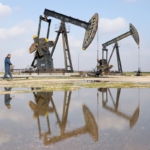
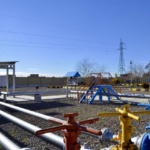
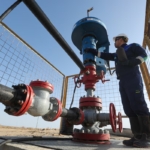
Iran's Petroleum Engineering and Development Company (PEDEC) is targeting production of 110,000 barrels per day at the Sepehr-Jofeir oil field by the end of the current Iranian calendar year, the company's managing director said.
Brent crude futures fell $1.03, or 1.2%, to $88.00 per barrel, while U.S. West Texas Intermediate (WTI) crude futures declined $1.50, or 1.8%, to $82.09 per barrel.
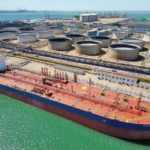
Abu Dhabi National Oil Co (ADNOC) has bought five very large crude carriers (VLCCs) for about $590 million, three sources familiar with the matter said, expanding its fleet as conflicts in the Red Sea and the Strait of Hormuz tighten tanker supply.
Kazakhstan's main oil export terminal in the Black Sea closed on Thursday for the third time this month, suspending crude tanker loadings after Ukrainian drones hit two vessels at and near the terminal at Russia's Novorossiysk port.
The head of the National Iranian Oil Company called for an accelerated rebuilding effort at South Pars gas field refineries damaged in recent attacks, saying the facilities must be restored to operation as quickly as possible using domestic contractors and manufacturers while maintaining strict safety and quality standards.
A cargo of Canadian crude was headed to Japan, ship tracking data showed on Wednesday, the first Canadian crude shipment to the country since early 2025, as the war between the U.S. and Iran has tightened supplies of Middle East crude.
Brent crude futures rose $2.70, or 3.2 percent, to $86.79 a barrel. U.S. West Texas Intermediate (WTI) crude futures gained $2.65, or 3.3 percent, to $81.91 a barrel.
Brent crude futures fell $1.75, or 1.98%, to $86.61 a barrel. U.S. West Texas Intermediate (WTI) crude futures declined $1.26, or 1.53%, to $81.35 a barrel.
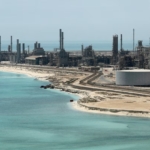
The CEO of the Iranian Oil Terminals Company emphasized accelerating the implementation of development and infrastructure projects at the Kharg Oil Terminal, describing them as essential to ensuring stable oil exports, safeguarding national assets, and strengthening the country's energy security.
The CEO of Arvandan Oil and Gas Company announced: The first smartification project of the country's oil fields will soon be implemented in the Darkhovin field.
Brent crude futures fell $5.70, or about 5.9%, to $91.08 a barrel. U.S. West Texas Intermediate (WTI) futures dropped $4.80, or roughly 5.4%, to $84.51 a barrel.
Kazakhstan, among the world's 10 biggest oil producers, has more than halved its daily oil output following the closure of main exporting terminal in Russia's Black Sea over drone attacks, an industry source said on Monday.
The US has imported fuel oil of Iraqi origin shipped through Syria for the first time, marking a new milestone in Iraq’s efforts to diversify its export routes amid ongoing disruptions to Gulf shipping caused by the Iran war.
Oil Ministry has made significant progress in strengthening the country's smart energy management system by expanding digital infrastructure and integrating key energy data platforms, according to the deputy head of Parliament's Energy Committee.
Brent crude futures fell nearly $4, or 3.96%, to $96.70 a barrel. U.S. West Texas Intermediate (WTI) crude futures dropped $3.15, or 3.42%, to $89.04 a barrel.
Brent crude oil futures rose $4.52 (4.80%) to $98.59 per barrel. U.S. West Texas Intermediate (WTI) crude futures gained $3.39 (3.90%) to $90.22 per barrel.
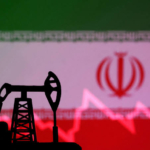
Iran's main military command, Khatam al-Anbiya Central Headquarters, on Wednesday warned that if the United States attacks Iranian infrastructure, Iran will block all oil exports from West Asia and target oil, gas, electricity, and economic infrastructure across the region, according to media reports.
Brent crude oil futures rose $2.23 (equivalent to 2.45%) to reach $93.24 per barrel. U.S. West Texas Intermediate (WTI) crude oil futures increased by $2.18 (2.18%) to $86.18.