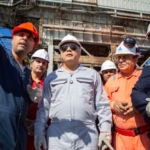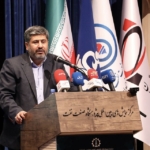
The managing director of the National Iranian Gas Company said the company has set a new record for gas sweetening and transmission to the national grid, increasing daily volumes to 882 million cubic meters during the current period, up from 880 million cubic meters last year.
IRAN Feed Atom
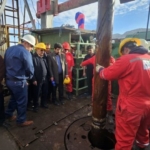
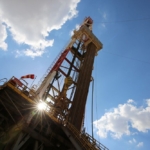
National Iranian Drilling Company (NIDC) has completed 101 oil and gas wells so far this year (started in late March 2025), with total drilling footage reaching 103,456 meters, the company’s head said.
The project manager for the Sabzab–Tang-e Fani–Shazand sour crude oil pipeline said construction has been completed and crude oil transfer to the Shazand refinery has begun, marking the start of operations for the project.
Iran Energy Minister Abbas Aliabadi says development of renewable energy and electricity consumption optimization is moving forward nationwide, driven by active private-sector participation, as 1,269 MW of projects enter the execution phase.
Iran’s President Masoud Pezeshkian said the government’s reforms to gasoline and diesel pricing aim to eliminate rent-seeking and capital flight by depositing energy credits directly and fairly into people’s bank accounts.
Iran’s oil minister said natural gas production at the South Pars field has hit a new record of about 725 million cubic meters per day, praising the efforts of operational staff working in difficult conditions.
Iran’s oil minister said the country’s gas production and processing capacity is rising as damaged facilities gradually return to operation.
Iran’s Ariasasol Polymer Company has achieved approximately $408,000 in annual savings by capturing and reusing valuable burner gas that was previously wasted during plant maintenance, significantly reducing emissions and technical losses, the company announced.
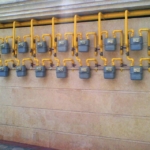
Daily natural gas consumption in Iran’s residential, commercial, and small industrial sectors hit 621 million cubic meters (mcm) on Saturday amid persistent cold weather, according to the National Iranian Gas Company (NIGC).
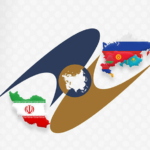
In line with the implementation of Iran's free trade agreement with Eurasia, the fourth International Eurasia Expo will be held in Tehran from February 1st to 4th.
Drilling has begun on Well #2 of Iran’s Mokhtar gas field in Kohgiluyeh & Boyer-Ahmad, home to an estimated ~9 Tcm of gas—seen by provincial officials as a key step toward unlocking northern reserves, boosting jobs, and reshaping the regional economy.
The financial director of the National Iranian Oil Company denied reports that $8 billion in revenue from crude oil and gas condensate exports has not been collected, saying there are currently no stalled receivables.
Tehran’s gas consumption has surged to an unprecedented level amid a sharp drop in temperatures, the spokesperson for Tehran Province Gas Company said.
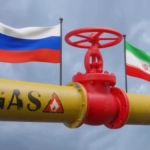
Iran and Russia held an Energy Working Group meeting, co-chaired by senior oil and energy officials, focusing on turning strategic MOUs into concrete, operational projects.
Iran’s petroleum minister said the petrochemical sector is a key economic driver, arguing that stable feedstock supply depends on petrochemical firms investing directly in gas field development—an approach welcomed and legally supported.
Trade between Iran and Oman reached $1.35 billion in the first 10 months of 2025, up 24 percent from a year earlier, with Iranian exports accounting for $500 million of the total, Oman’s National Centre for Statistics and Information said.
Behzad Shamsi, chief financial officer of the National Iranian Oil Company (NIOC), said global oil prices have dropped about 21% in recent months compared with previous periods—a significant decline. However, the oil ministry has partly offset the drop by boosting export volumes and reducing discounts.
Iran’s private sector is ready to participate in large-scale technical and engineering projects in Indonesia, the head of Iran Chamber of Commerce, Industries, Mines and Agriculture (ICCIMA) said, calling for closer cooperation between the chambers of commerce of the two countries to facilitate joint business activity.
The head of research and technology at the National Iranian Oil Company said more than 51% of Iran’s recoverable oil reserves have already been produced, underscoring the need to accelerate the development and localization of enhanced oil recovery (EOR) technologies to protect remaining reserves and sustain output.
Petrochemical projects under Iran’s Seventh National Development Plan are about 60 percent complete, with all first-year targets for the sector achieved in 2024, the head of the National Petrochemical Company (NPC) said.