Iran Issues the Sohrab Field Permit After Years of Expert Review
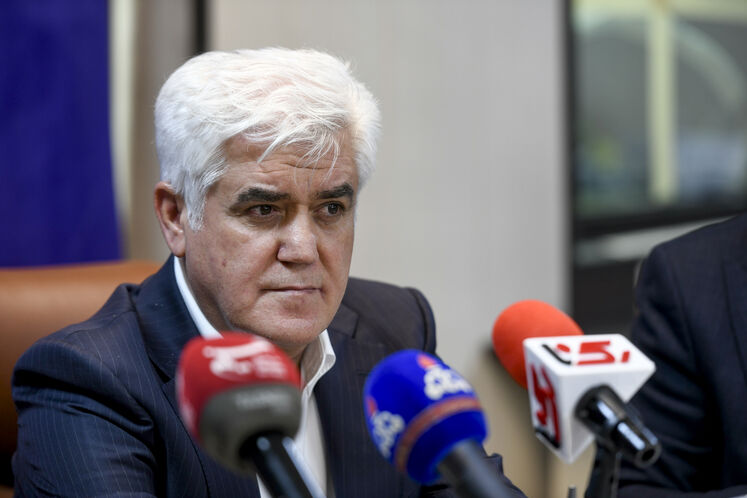
RoydadNaft – The chief executive of the Petroleum Engineering and Development Company said the Hawizeh Marshes must be handled through expert work and dialogue, and that Iran’s permit for the Sohrab field was issued only after years of review, repeated revisions, and hydrologic and ecological conditions.
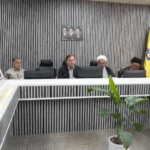
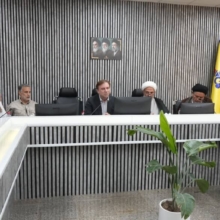
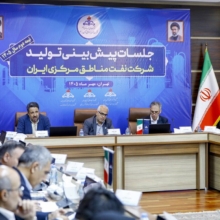
According to Roydad Naft, Nasrollah Zarei told a meeting on protecting and restoring the Hawizeh Marshes that the wetland is a national issue and that agencies, specialists, and experts need a shared conclusion on how to keep and expand its watered sections.
Contrary to the view that the marsh is gone, parts of it still hold life and water, and recent images show that, he said. The main question is how to hold current conditions and extend the watered areas. Two reservoirs still have life and flow, and decisions are needed on how to keep and expand that.
The Sohrab permit followed expert review
Issuing the Sohrab permit took about five years. It was revised nine times, and hydrologic and ecological concerns were taken into account. The permit runs to 38 pages, with set indicators, requirements, and commitments, and Iran’s Department of Environment was involved from the start, Zarei said.
The oil industry will not act in this area without an environment-department permit. The approval should not be read as ignoring the law, the Seventh Development Plan, or ecological requirements. It came from about two years of back-and-forth, study, and advice from consultants and specialists.
Since the 2019 flood, no new pad or road has been built in the Hawizeh area, he said. Existing roads, including exploration roads, the Shahid Tondgooyan road, and spur and access roads, date from before 2016–2018.
Dialogue, not a shortcut
From the start, the position was that Hawizeh issues should be settled by expert work and dialogue, even if that took two years. After the 14th government took office in 2024, the matter went to the Supreme National Security Council. At the first council meeting he attended, Zarei said he insisted the issue be solved by expertise and talk, not by the oil industry using a special body’s permit and calling it confidential so no one could enter the file.
Numbers, footage, and wetland data are not meant to justify the oil industry’s record, he said. They are meant to be available to the public and specialists so they can be checked.
Water structures
Dikes and semi-embankments in the wetland should be judged with numbers, maps, and calculations, including what would have happened to water that has entered the marsh if those structures had not been there. Given the marsh’s main slope toward the Iraqi side, some of that water could have moved into Iraq or spread across reservoirs, he said.
Reservoir 5 and reservoir 35 were filled in 2019 but dried in August, partly from evaporation over the wetland’s wide area. The point of the data, he said, is to show how much water was held and what role the structures played, not to excuse performance.
Social responsibility put on rules
Social-responsibility work was put on a rule-based footing through studies with Shahid Chamran University of Ahvaz, specialists, civic associations, the governor, the county governor, local lawmakers, and a number of local sheikhs and elders. The result is a book on priorities for Dasht-e Azadegan and the operating area, so it is clear where oil-company social spending should go. Zarei asked local lawmakers and officials to demand that study. It has nothing to hide and can be a basis for decisions.
81% of West Karun staff are local
On current figures, 81% of employees on the West Karun fields are local. Oil development alone cannot solve the region’s jobs problem, but the industry’s commitment is to use local workers as far as possible in hiring. A local-hiring directive has been issued and is in force, with a set process. Hiring is not a matter of an official handing over a list of names.
In 2017–18, 252 people from the region were selected and trained, and more than 220 of them now work on the West Karun fields. Local employment should follow a clear mechanism, training, and priority for people from the area. The local-hiring directive is being applied on all projects, especially West Karun, and a monthly report is reviewed.
The oil industry is ready for Hawizeh incidents
Expert meetings have gone through areas, water inflow, and engineering calculations in detail, and the oil industry will meet its share of responsibility, Zarei said. In a meeting with the head of the Department of Environment, he proposed a rapid-response base for emergencies such as fires. A plan exists and the company is ready to carry it out.
In the 2019 flood, when several billion cubic meters of water entered, the oil industry did not block water from the wetland and helped guide it, circulate it, and reach the Iranian side. The company is ready to work again with responsible agencies and local people on water management and wetland protection if such conditions return.
The oil industry’s duty is set by law
The Oil Ministry’s legal mission includes exploration, production, oil development, and creating wealth, and budget laws assign resources to set purposes. Pollution charges and other funds have their own legal path, and claims on them should go to the responsible agencies.
Khuzestan’s development problems cannot be laid on one agency, any more than those of Sistan and Baluchestan. The Plan and Budget Organization, the Energy Ministry, and the Oil Ministry each have a defined role. The Oil Ministry should be allowed to carry out its wealth-and-revenue mission, while demands on how money is spent and how regions develop should follow legal channels. Social and development issues need a comprehensive plan, Zarei said. The oil industry does not see itself as separate from the public, the government, or local communities, and is ready to help within its duties.