Iran’s Crude Exports Did Not Stop for Even One Hour During the 40-Day War
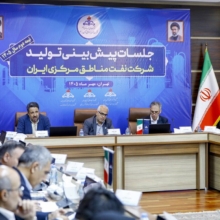
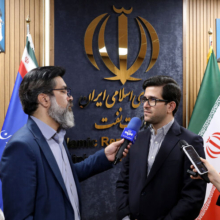
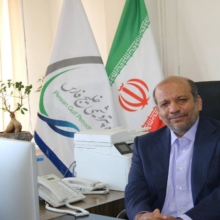
RoydadNaft – Iran’s oil minister said oil and gas production rose, flare-gas collection accelerated, South Pars pressure-boosting projects moved forward, crude processing capacity increased at shared fields, and diesel imports stopped during the Oil Ministry’s two years in the 14th government. He said Iran’s crude exports did not halt for even one hour during the 40-day war.
According to Roydad Naft, Mohsen Paknejad reviewed the oil industry’s two-year record under the 14th government and said fuel storage was the first issue he raised with senior oil officials after taking office on August 22, 2024. Reports on gasoline stocks and power-plant diesel inventories were worrying at the time, he said.
August and September are peak travel months in Iran, so gasoline demand rises. Power plants also face tighter gas supply in winter because household and commercial use increases, forcing them to burn diesel instead of natural gas.
First report to the president
Paknejad said his first meeting with the president focused on fuel stocks. After hearing the figures, the president asked calmly, despite his concern: “What is your plan?”
From then on, the president followed the issue every three to four days. Weekly meetings reviewed gas and power-plant diesel inventories and coordinated the oil, industry, and energy ministries so Iran would not face a fuel shortage.
South Pars pressure-boosting contract
The minister said the South Pars pressure-boosting project was behind schedule and should have started years earlier. In the first six months of the 14th government, expert teams prepared the development contract.
The contract matters because it is the first step toward execution. Pressure decline in the shared field has been a concern for years. Lower pressure means lower output and deepens an energy imbalance that built up over 15 to 20 years and peaked in 2024.
The gas shortfall figures were large enough that action could not wait. Iran’s first major oil-industry contract of the new government was signed in February–March 2025 in the president’s presence.
Fuel supply held after strikes on oil facilities
During the 12-day war, one of Tehran’s oil depots was hit. The facility played a central role in fuel supply and distribution. The Fajr Jam gas refinery and South Pars Phase 14 were also struck.
Despite those hits and a jump in gasoline use in the first days of the 12-day war — when consumption approached 200 million liters a day — Iran did not face a serious problem at Tehran’s gasoline and fuel depots, Paknejad said. Gas supply also held after the strikes on Fajr Jam and Phase 14.
Public role in winter 2024–25 gas demand
Alongside efforts to raise gas output in 2024, overhauls at gas refineries were managed so they would finish by September. If the work had slipped into October and November, part of Iran’s gas production capacity would have been offline heading into winter.
Paknejad said higher output helped, but one of the most effective factors in managing gas use in the winter of 2024–25 was public participation. The president himself proposed the “Two Degrees Lower” campaign. The figures showed it worked, and the president insisted that different parts of the country take part.
11.5 million cubic meters a day of flare gas collected
After the 12-day war, conditions in Iran remained difficult, but work on oil and gas production projects continued. A contract to raise oil output by 250,000 barrels a day needed studies and approvals. Those approvals came after the 12-day war, and the plan moved into execution. About 70,000 to 80,000 barrels a day of that target has been achieved.
Flare-gas collection was one of the president’s priorities. In almost every phone call, even when the subject was something else, he asked about the projects at the end.
The president understood their importance and several times told officials to bring him any problem so interagency delays would not slow the work. From the start of the 14th government to now, Iran has collected about 11.5 million cubic meters a day of flare gas through various projects. Paknejad called that a clear example of stopping energy waste and said the work must continue until it is finished.
More than 30 infill wells at South Pars
Infill drilling at South Pars began in 2025 and moved ahead at a solid pace. More than 30 wells were planned under several drilling contracts. Some of those wells have been completed and have helped raise Iran’s gas output.
The industry was focused on strategic projects in 2025 when, on February 28, 2026, Iran again came under U.S. and Israeli attack. Some oil-industry colleagues were killed while staying on the job. Paknejad said their memory, and that of other oil-industry dead during the 40-day war, should be honored.
Strikes on Tehran oil depots and fuel supply to the north
Damage was greater during the 40-day war. On March 7 or 8, 2026, Tehran’s oil depots were hit again. At 8 p.m., when one facility was struck, Paknejad said he stood on a distant building and watched the flames. The situation looked alarming.
The Rey, Shahran, and Qoochak depots were hit. Loading facilities at the Rey depot were damaged. A depot in Alborz Province was also struck. The loading units mattered because damage there could have disrupted fuel deliveries to Iran’s northern provinces — which, he said, was the attackers’ aim.
Officials met that night and set a framework to keep disruption in Tehran and the northern provinces as low as possible. Logistics from the south were shifted north, and equipment from central regions was moved to Tehran so fuel could move by road. Other measures were taken that he said he would describe later.
Within a few days, the situation moved from alarm to relative stability, and fuel supply in northern Iran was brought under control.
Rebuilding damaged Asaluyeh gas refineries
On March 18, 2026, Asaluyeh’s third through sixth refineries were hit. Paknejad said he was able to inform the president about 20 to 30 minutes after the first reports arrived. In the early hours, officials were deeply concerned.
A large part of output had to be cut. With technical control by National Iranian Oil Company and National Iranian Gas Company staff, parts of capacity were brought back within hours. A substantial share of lost capacity has been restored, and the work continues. Reconstruction planning began one to three days after the strikes, roles were divided, and tasks were assigned.
Debris removal usually starts such rebuilds. That process began about two to three days after the attack, and a large part of the reconstruction has now been done. Paknejad said he hoped results would be visible within a few months and that Iran’s gas output would rise again.
Unannounced presidential visits during the war
During the war days that ran into 2026, the president made several unannounced visits to the Oil Ministry despite security limits. On some days staff were working from other buildings. Paknejad said the president’s manner — approachable, direct, and calm under pressure — stood out.
He listened to concerns and offered guidance. Some of the points were especially useful, the minister said, even though the president is not a technical oil specialist. Staff noticed how closely he followed the details.
Paknejad said he often told the president, as a younger colleague, to take care of himself because the public was watching him.
Strikes on petrochemical utilities
In 2026, petrochemical sites in Mahshahr and Asaluyeh were also hit. The strikes targeted utility units that supply steam, power, nitrogen, and other services to process plants. In the first days, a large share of petrochemical output was lost. That loss feeds through the value chain and can tighten supplies of some goods.
Plans were made with the industry and energy ministries, and conditions were largely managed during the war. Paknejad said history would judge how Iran’s public and armed forces held up.
Public welfare as a constant presidential concern
He said the president repeatedly stressed that people’s livelihoods and basic needs should be met as well as possible. That line, he said, was treated as standing policy across government agencies.
Iran’s crude exports never stopped in the 40-day war
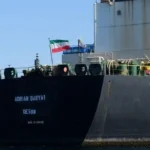
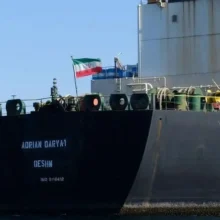
Paknejad called uninterrupted crude exports during the 40-day war one of the oil industry’s lasting achievements. From February 28, 2026, until a temporary ceasefire in late April that was later followed by a blockade, Iran’s crude exports did not stop for even one hour.
Kharg Island, about 23 to 24 kilometers across, was hit more than 550 times, he said. Even under bombardment, staff kept loading tankers. He said history should judge that work and that he felt obliged to honor colleagues across the industry, especially those who kept exports moving.
During that period, export performance was strong and there was no restriction. Oil prices had also risen. That part of the industry’s mission continued without a halt for 40 days.
In 2026, the first blockade drew a line between Ras al-Hadd and Pakistan’s port of Gwadar. Officials took steps he said he would not detail now and tried to work around the blockade. As a result, oil sales and deliveries were carried out thousands of kilometers from the Persian Gulf and the Sea of Oman.
There were limits on moving oil beyond the blockade line. In some cases they were crossed; in others they were not. The blockade ran from about April 13–14, 2026, to June 17–18, 2026. After a pause, Iran used the window to move a substantial volume of oil out of the Gulf and Sea of Oman to points where it could be delivered to buyers, until a new blockade began on July 15, 2026.
Work to get around the blockade continues
A blockade makes delivery harder, Paknejad said, but it is still in place and the oil industry has not stopped delivering crude to customers. Different options are being pursued.
Over two years of the 14th government, he said, more than twice as many flare-collection projects were carried out as before. Crude output rose through several schemes, including 70,000 to 80,000 barrels a day from the 250,000-barrel plan.
Upstream teams also set a record for raw gas production from oil platforms and gas fields.
More than 300,000 barrels a day of extra processing at shared fields
Crude processing capacity at shared fields rose by more than 300,000 barrels a day.
To manage the gap between production and consumption, Iran has two tools, he said. The first is higher output, which remains the industry’s direct mission but needs investment and time. By the time new barrels arrive, fast-growing demand may already have absorbed part of the gain.
The second, and more important, tool is efficient use — “proportionate consumption,” not simply “less consumption.” If people follow efficiency patterns, use falls and the gap between supply and demand can be narrowed.
“Two Degrees Lower” as a behavior model
Energy efficiency has been a presidential priority for two years. Paknejad said the president’s office is usually kept dim. In summer he sometimes complains about the heat, but the president does not turn on the cooling units. The point is not the two units in one room. It is setting an example.
Sometimes the room is so dark that aides say they can barely see the floor. The president keeps those habits and says he does so that people know saving energy has to start at the top.
On one visit to the Oil Ministry, even after lighting had been cut as far as possible, a corridor light was still on. The president asked why, and Paknejad turned it off. That kind of attention, he said, is the behavior model Iran needs.
The energy imbalance is not a one- or two-year problem
Iran faces an imbalance in energy carriers that did not appear in the past one or two years. It built up over about 20 years and now shows up at a large scale, which makes the work harder.
Paknejad asked the public to help the government on efficiency, as it has in other areas.
Gasoline imports can fall if the public is on board
A substantial share of Iran’s foreign currency is spent on gasoline imports. He said that volume can be cut with the right measures.
The key to savings programs is public support. People need timely, clear explanations. Once they are convinced, they cooperate. That, he said, is a feature of Iranian society, and he believes the public will help.
The president kept asking about flare gas even in wartime
During wartime visits to ministries, as the president was leaving one meeting, he told Paknejad not to forget the flare-gas projects. The minister called that persistence, in the middle of war and other crises, a rare ethical standard.
He said the president’s way of criticizing is unusual. Most people dislike being criticized. The president raises weaknesses in a way that still lands well. Paknejad said he had never found those critiques wounding.
Over the past seven or eight months, he said, the industry has had the capacity to recover part of what was lost. Staff are pushing projects faster, and the focus will stay on raising output.
Focus on large projects
Major projects already planned are next. Some need approvals before they can move. One is the integrated development of the Azadegan field — North and South Azadegan treated as one reservoir rather than two separate schemes.
About 17 trillion cubic feet of gas in place discovered
Paknejad listed the discovery of about 17 trillion cubic feet of gas in place at the Pazan and Takhteh fields in southern Fars Province as another achievement of the Oil Ministry under the 14th government.
Diesel imports stopped after years
Stopping diesel imports was another major result. Iran was still importing diesel into early 2025.
After technical work at refineries and higher feedstock rates, diesel imports have been halted for several months. Power-plant diesel stocks are higher than a year earlier, and there is a surplus. Paknejad said he had even discussed exporting the extra volume with a minister from a neighboring country. Ending diesel imports, he said, is a significant gain. He hoped gasoline could one day reach the same point.
The “let it go” line and the book the president gave him
In one discussion shaped by the president’s perfectionism, the president used the phrase “let it go.” Paknejad did not drop the issue and brought it back. The president said again, “Come on, let it go.” Then, seeing that it was still on the minister’s mind, he gave him a summary of a book called Let It Go.
Paknejad said the book was absorbing and calming. The president told him: “See, I keep saying let it go and you don’t listen. Read this.”
He said the phrase is not just casual speech. Behind it is a model of how people deal with one another — in families, among friends, at work, and in management. That pattern, he said, is meant to lower tension, not to dismiss real problems.