Global crude oil prices today, Thursday, August 27, 2026 / Brent crude fell to $86.77 a barrel
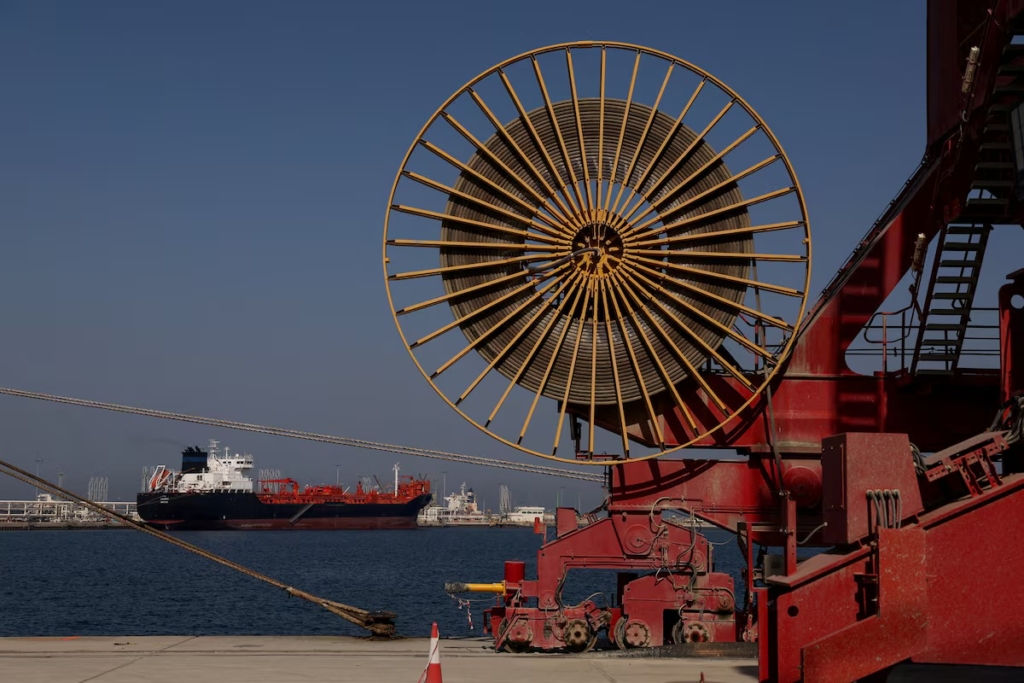
RoydadNaft – Brent crude futures fell $1.07, or 1.2%, to $86.77 a barrel. U.S. West Texas Intermediate (WTI) crude futures dropped $1.13, or 1.4%, to $81.10 a barrel.
Oil prices fell more than $1 on Thursday, extending a losing streak, on expectations that talks between Iran and Qatar could reopen the Strait of Hormuz and ease supply disruptions from the war in the Middle East.
Brent crude futures were down $1.07, or 1.2%, at $86.77 a barrel at 0645 GMT, on track for a fourth straight day of declines. West Texas Intermediate crude futures fell $1.13, or 1.4%, to $81.10, heading for a fifth consecutive session of losses.
Iran and Oman are working to finalize details of an agreement to control the Strait of Hormuz, a senior Iranian source said Wednesday, after Iran’s Revolutionary Guards said the two countries had agreed on how to share the waterway that connects major Gulf oil producers to world markets, along with its revenues.
Before the U.S.-Israeli war on Iran began on February 28, the strait carried oil and LNG shipments equal to about one-fifth of global consumption of those fuels. Since Iran moved to shut the waterway in response, oil flows have dropped to about one-quarter of their pre-war level, according to ship-tracking data.
“Crude oil edged lower as the prospect of the Strait of Hormuz reopening improved amid ongoing talks,” said Daniel Hynes, senior commodity strategist at ANZ, in a note Thursday, though he cautioned that “concerns over shortages in the oil market persist.”
Qatar’s prime minister will travel to Iran on Thursday to restart diplomatic talks aimed at ending the conflict, which is now nearly six months old.
The United States has halted its attacks on Iran for about a month and is seeking to apply greater economic pressure on Tehran, raising investor expectations that Gulf supply disruptions could ease.
Still, the sides remain far apart on their demands to end the fighting, and Iran has struck shipping in the Gulf and the strait to assert control over the waterway.
Iranian officials have also said the strait will not reopen unless the U.S. meets its commitments under an interim ceasefire agreement reached in June that later collapsed.
“At the heart of the dispute remains Iran’s nuclear program, and that is unlikely to be resolved quickly,” said Priyanka Sachdeva, head of market insights at Phillip Nova. “Iran also understands the importance of its geographic position and the leverage the Strait of Hormuz provides, so the risk of prolonged uncertainty remains.”
“As long as the risk to supply remains, some degree of war premium can continue to be priced into oil.”
ANZ’s Hynes also pointed to the impact of the Middle East war and the Russia-Ukraine war on the diesel market. Middle East refineries have been damaged in the conflict, and Ukraine has hit several Russian refineries, cutting exports from what had been a major global diesel supplier.
The drop in worldwide diesel output is showing up in inventory data. The U.S. Energy Information Administration reported Wednesday that distillate stockpiles, including diesel and heating oil, fell by 2.2 million barrels in the week ended August 21 to 103.4 million barrels.
Hynes said that is the lowest distillate inventory level ever recorded for this time of year.