Global Crude Oil Prices Today (July 22, 2026) / Brent Crude Oil Price Rises to $93.24
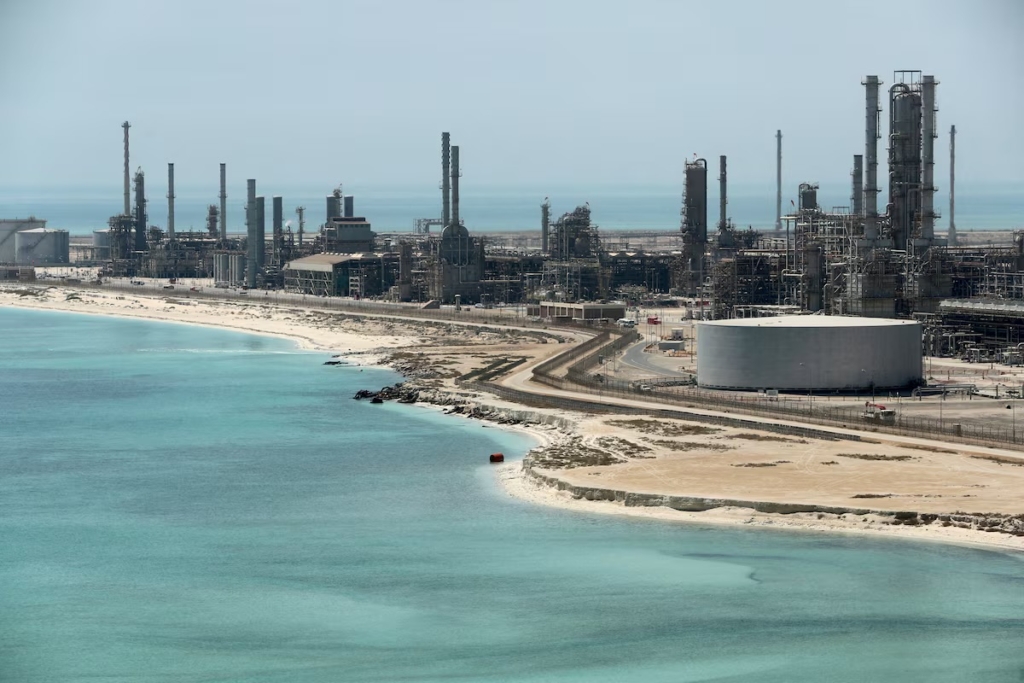
RoydadNaft – Brent crude oil futures rose $2.23 (equivalent to 2.45%) to reach $93.24 per barrel. U.S. West Texas Intermediate (WTI) crude oil futures increased by $2.18 (2.18%) to $86.18.
According to Roydad Naft, crude oil prices hit their highest level in about six weeks on Wednesday, with Brent crude surpassing the $95-per-barrel mark. The surge stemmed from growing concerns over disruptions in Middle East supply routes due to escalating tensions between the United States and Iran, along with threats from Houthi militants in Yemen against maritime shipping.
Brent crude oil futures rose $2.23 (2.45%) to $93.24 per barrel (as of 13:23 GMT). During the trading session, the price had reached a high of $95.47.
U.S. WTI crude oil rose $2.18 (2.18%) to $86.18.
Both benchmarks reached their highest levels since June 11, 2026.
Meanwhile, the three-month Brent crude futures spread widened to $10.89 per barrel — its widest level since May 22, 2026 — deepening the backwardation. Backwardation is a situation in which near-term crude oil trades at a premium to later-delivery barrels, typically signaling short-term supply shortages.
The U.S. military announced it had carried out attacks against Iran for the eleventh consecutive night. These strikes came shortly after the Kuwaiti army reported intercepting Iranian drones with its air defenses.
U.S. President Donald Trump said on Wednesday that the United States “will bomb and destroy a bridge or power plant every time Tehran targets a ship in the Strait of Hormuz.”
In addition to the fresh dispute over control of this vital waterway, Yemen opened a new front in the conflict by threatening to attack Saudi oil tankers in the Bab el-Mandeb Strait and announcing a naval blockade of Saudi Arabia.
The European Union Naval Force (Aspides) stated on Wednesday that vessels linked to Israel, the United States, or Saudi Arabia face a heightened risk of attack in Yemen and advised them to avoid transit through the Red Sea and the Gulf of Aden.
Tim Waterer, senior market analyst at KCM Trade, said: “The energy market is now facing concerns over two straits. It looks like the Bab el-Mandeb could join the Strait of Hormuz as a hotspot, while traders are closely monitoring the number of vessels in the Red Sea.”
Due to the sharp drop in traffic from the Strait of Hormuz following the collapse of the U.S.-Iran ceasefire earlier this month, the Bab el-Mandeb Strait has become a more critical route for Saudi crude oil exports.
Three Saudi crude tankers bound for China and India turned around in the Red Sea on Tuesday, rerouting toward the Suez Canal instead of hugging the Yemeni coast. Four additional tankers also altered course in the Red Sea on Wednesday.
Frank Walbaum, market analyst at the Naga.com trading platform, said: “The Yemeni threats have caused tankers to divert, which could put further pressure on the physical market and Saudi exports, helping to drive prices higher.”
In response to the Yemeni warnings, Asian refineries are attempting to ship crude oil from Saudi Arabia’s Yanbu port on the Red Sea via the Suez Canal or by routing around Africa.