Stop Israel from bombing Iran’s oil sites, Persian Gulf states urge US

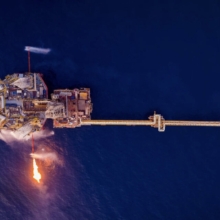
RoydadNaft – Persian Gulf states are lobbying Washington to stop Israel from attacking Iran’s oil sites because they are concerned their own oil facilities could come under fire from Tehran’s proxies if the conflict escalates, three Persian Gulf sources told Reuters.
As part of their attempts to avoid being caught in the crossfire, Persian Gulf states including Saudi Arabia, the United Arab Emirates and Qatar are also refusing to let Israel fly over their airspace for any attack on Iran and have conveyed this to Washington, the three sources close to government circles said.
The moves by the Persian Gulf states come after a diplomatic push by non-Arab Shi’ite Iran to persuade its Sunni Gulf neighbours to use their influence with Washington amid rising concerns Israel could target Iran’s oil production facilities.
During meetings this week, Iran warned Saudi Arabia it could not guarantee the safety of the Persian Gulf kingdom’s oil facilities if Israel were given any assistance in carrying out an attack, a senior Iranian official and an Iranian diplomat told Reuters.
Ali Shihabi, a Saudi analyst close to the Saudi royal court, said: “The Iranians have stated: ‘If the Persian Gulf states open up their airspace to Israel, that would be an act of war’.”
The diplomat said Tehran had sent a clear message to Riyadh that its allies in countries such as Iraq or Yemen might respond if there was any regional support for Israel against Iran.
A potential Israeli strike was the focus of talks on Wednesday between Saudi de facto ruler, Crown Prince Mohammed bin Salman, and Iranian Foreign Minister Abbas Araqchi, who was on a Persian Gulf tour to rally support, Persian Gulf and Iranian sources said.
The Iranian minister’s visit, along with Saudi-American communications at defence ministry level, are part of a coordinated effort to address the crisis, a Persian Gulf source close to government circles told Reuters.
A person in Washington familiar with the discussions confirmed that Persian Gulf officials had been in touch with U.S. counterparts to express concern about the potential scope of Israel’s expected retaliation.
Jonathan Panikoff, former deputy U.S. national intelligence officer on the Middle East and now at the Atlantic Council think-tank in Washington said: “Persian Gulf states’ anxiety is likely to be a key talking point with Israeli counterparts in trying to convince Israel to undertake a carefully calibrated response.”
OIL AT RISK?
The Organization of Petroleum Exporting Countries, OPEC, which is de-facto led by Saudi Arabia, has enough spare oil capacity to make up for any loss of Iranian supply if an Israeli retaliation knocked out some of the country’s facilities.
But much of that spare capacity is in the Persian Gulf region so if oil facilities in Saudi Arabia or the UAE, for example, were targeted too, the world could face an oil supply problem.
Saudi Arabia has been wary of an Iranian strike on its oil plants since a 2019 attack on its Aramco oilfield shut down over 5% of global oil supply. Iran denied involvement.
Riyadh has had a rapprochement with Tehran in recent years, but trust remains an issue. Bahrain, Kuwait, Qatar, Saudi Arabia and the UAE all host U.S. military facilities or troops.
Concerns over oil facilities and the potential for a wider regional conflict were also central to talks between Emirati officials and their U.S. counterparts, said another Persian Gulf source.
In 2022, the Iran-aligned Houthis in Yemen fired missiles and drones at oil refuelling trucks near an oil refinery owned by UAE’s state oil firm ADNOC and claimed the attack.
“The Persian Gulf states aren’t letting Israel use their airspace. They won’t allow Israeli missiles to pass through, and there’s also a hope that they won’t strike the oil facilities,” the Persian Gulf source said.
The three Persian Gulf sources emphasized that Israel could route strikes through Jordan or Iraq, but using Saudi, UAE, or Qatari airspace was off the table and strategically unnecessary.
Analysts also pointed out that Israel has other options, including mid-air refuelling capabilities that would enable its jets to fly down the Red Sea into the Indian Ocean, proceed to the Gulf and then fly back.
‘MIDDLE OF A MISSILE WAR’
According to two senior Israeli officials, Israel is going to calibrate its response and, as of Wednesday, it had not yet decided whether it would strike Iran’s oilfields.
The option was one of a number presented by the defence establishment to Israeli leaders, according to the officials.
Israeli Defence Minister Yoav Gallant said on Wednesday: “Our strike will be lethal, precise, and above all – surprising. They will not understand what happened and how it happened. They will see the results.”
The three Persian Gulf sources stated that Saudi Arabia, as a leading oil exporter along with oil-producing neighbours – the UAE, Qatar, Kuwait, Oman and Bahrain – had keen a interest in de-escalating the situation.
“We will be in the middle of a missile war. There is serious concern, especially if the Israeli strike targets Iran’s oil installations,” a second Persian Gulf source said.
The three Persian Gulf sources said an Israeli strike on Iran’s oil infrastructure would have a global impact, particularly for China – Iran’s top oil customer – as well as for Kamala Harris ahead of the Nov. 5 presidential election in which she is running against Donald Trump.
“If oil prices surge to $120 per barrel, it would harm both the U.S. economy and Harris’ chances in the election. So they (Americans) won’t allow the oil war to expand,” the first Persian Gulf source said.
Persian Gulf sources said safeguarding all oil installations remained a challenge, despite having advanced missile and Patriot defence systems, so the primary approach remained diplomatic: signalling to Iran that Persian Gulf states pose no threat.
Bernard Haykel, professor of Near East Studies at Princeton University, noted that Riyadh was vulnerable “because the Iranians can swarm those installations given the short distance from the mainland”.