Iran Allocates €500 Million to Modernize Oil Export Terminals
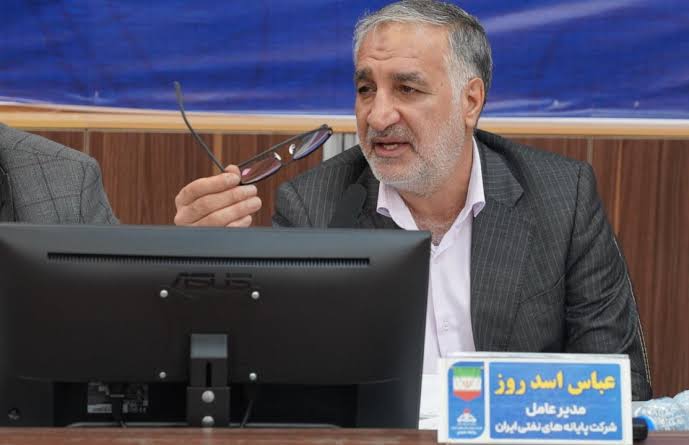
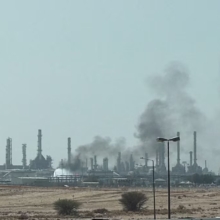
RoydadNaft – Iran Oil Terminals Company (IOTC) has received €500 million in funding for priority rehabilitation and upgrade projects aimed at restoring idle capacity, reinforcing export infrastructure and raising operational readiness across the country’s crude oil loading system, the company’s managing director said.
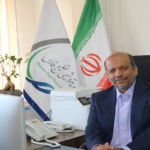
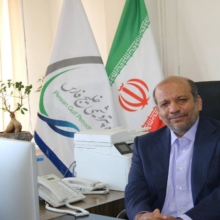
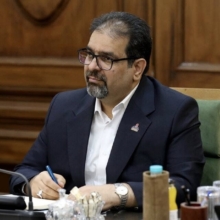
Abbas Asadroz told Rooydad Naft that IOTC sits at the center of Iran’s crude oil transfer, storage and export chain. Over the past two years, he said, management shifted from piecemeal, short-term fixes to a coordinated program to revive infrastructure, improve the reliability of operating assets and strengthen preparedness. That effort secured the €500 million allocation for high-priority maintenance and development work.
Asadroz said the company’s missions rest on an interconnected set of assets, so the condition of any one segment affects the whole operational chain. Early work therefore focused on identifying facilities that had fallen out of service and returning them to operation.
IOTC’s asset-management structure covers six main families: subsea pipelines, storage tanks, jetties and marine structures, vessels, power plants, and water supply and desalination systems. In the first two-year phase, priority was given to equipment that had left the operating cycle for any reason. Repair, reconstruction and modernization projects were used to bring those assets back online.
The same approach was applied across all operational families, he said. It limited further deterioration of assets, restored existing capacity and raised the company’s operational readiness.
Kharg Island infrastructure and operating flexibility
A substantial part of the rehabilitation program was concentrated on Kharg Island, where sustained equipment readiness is critical to IOTC’s mission. Projects covered transfer and storage facilities, marine equipment, safety systems, and power and water supply.
Among the results was the return of two storage tanks after major overhaul and modernization. That restored 2 million barrels of storage capacity and increased operational flexibility.
“In our view, repairing a piece of equipment is not only about fixing a technical fault,” Asadroz said. “It means putting capacity back into the operating chain and raising the reliability of the company’s missions.”
18 vessels returned to service
Another core track of the two-year program was the revival of the marine fleet. Through major repairs, reconstruction and equipment-readiness programs, 18 vessels, barges and tugs were returned to operation, strengthening support capability.
At the same time, fleet modernization was placed on the agenda so that marine capacity can match future operational requirements. Asadroz described the fleet as a decisive link in the terminals’ operating chain and said ready vessels and tugs are essential to sustained preparedness.
South Pars condensate terminal at Asaluyeh
At the South Pars gas condensate terminal, the same approach returned Buoy No. 2 to service after a major overhaul and Buoy No. 3 after replacement of its rotating joint.
Asadroz credited specialized and operational staff, saying no asset can fulfill its mission without skilled personnel and that a large share of the period’s results came from employees’ knowledge, experience and round-the-clock work.
Next phase: from restoration to durability
With idle capacity largely restored, Asadroz said IOTC must enter a new stage: changing traditional contracting approaches, accelerating development and modernization, preventive maintenance, higher productivity, technology deployment, and stronger security and resilience of infrastructure. Funding would come from public-private partnership schemes under Iran’s Seventh Development Plan.
The past two years showed that investment to revive capacity is necessary, he said, but more important is a mechanism that keeps those assets in service and prevents them from falling idle again.
“Today we must move beyond ‘repair to restore’ and toward ‘maintain to sustain,’” he said. Asset management, failure prevention, long-term planning and current technologies will have a central place in that approach.
What has been done, Asadroz concluded, is not merely a list of projects but an effort to strengthen a chain of capacities that together determine IOTC’s operational readiness. Behind every successful marine operation and every ready asset sits a wide network of infrastructure, equipment and human capital that must be continuously monitored, maintained and reinforced.
The path ahead, he said, is to continue that approach with a focus on durable capacity, higher asset reliability, expanded operating capability and protection of infrastructure that is central to Iran’s strategic oil-industry missions.