Turkmenistan Gas Swap: Iran’s Golden Opportunity That Must Not Be Missed
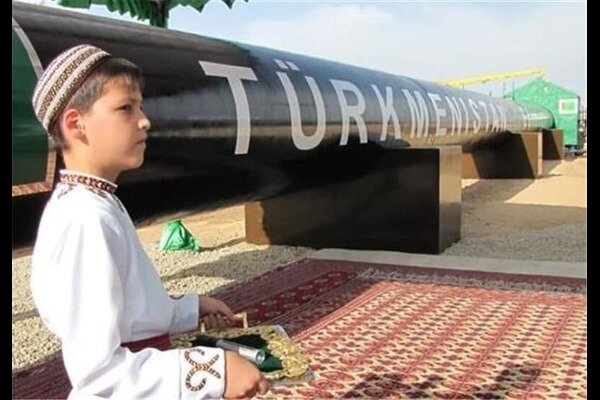
RoydadNaft – Iran still holds one of the best available routes for moving Turkmenistan’s gas to the West. If Tehran fails to use that advantage, Central Asian gas may eventually flow through other corridors.
According to Roydad Naft, citing Mehr News Agency, Turkmenistan is redesigning its gas export strategy. The shift may look like an Ashgabat energy policy decision, but it could have major consequences for Iran’s geopolitical position in Central Asia, the Caspian Sea, the Caucasus, and Turkey’s energy market.
For more than a decade, Turkmenistan has sent most of its gas to China. Ashgabat now wants to reduce its heavy dependence on a single customer and a single export route and move toward a multi-corridor model. China will remain Turkmenistan’s most important gas market, but Ashgabat is also pursuing the Iran-to-Turkey route, the TAPI pipeline to Afghanistan, Pakistan, and India, and the Trans-Caspian path toward Azerbaijan and Europe.
For Iran, this change is both a threat and an opportunity. Iran is Turkmenistan’s only neighbor that can move the country’s gas over a direct overland route to Western markets. Iran’s extensive gas network, connections to Turkey and Iraq, and the option of swap arrangements instead of physical transit give Tehran an advantage competitors cannot easily copy. That advantage is not permanent.
Turkmenistan wants to escape single-route dependence
Turkmenistan is one of the world’s largest holders of natural gas reserves, and the Galkynysh field is among its most important resources. Development of that field will raise Turkmenistan’s production capacity, which is why Ashgabat needs new markets and more diversified export routes.
China will remain the main customer. Cooperation between Ashgabat and Beijing on Galkynysh also shows that China remains the backbone of Turkmenistan’s energy policy. The goal is not to replace China with Europe, but to create more export options.
To the east lies China; to the south, TAPI and the Pakistani and Indian markets; to the west, Iran and the Trans-Caspian route. In that lineup, Iran has a key advantage: its gas transmission lines already exist.
Swap to Turkey and Baku: an opportunity Iran should not lose
In 2025, Turkmenistan began sending gas to Turkey through Iran under a swap arrangement. The initial contract volume was about 1.3 billion cubic meters.
In volume terms, that figure is small compared with Turkey’s gas market. Its importance lies in creating a working new route. For the first time, Turkmen gas reached the Turkish market through Iranian territory, showing that Iran’s corridor can function as part of Turkmenistan’s export network.
That development can become the start of a much larger partnership — if Iran can turn the deal into a long-term contract and raise the volumes.
If the Turkmenistan-to-Turkey gas swap becomes a multi-year, high-volume arrangement, all three countries would benefit. Turkmenistan would gain a new market, Turkey would diversify its gas supplies, and Iran would earn transit revenue while becoming a more important link in the regional energy network. The risk is that the partnership stays limited and short-term.
Iran already has another important experience with Turkmen gas swaps. In 2021, Iran, Turkmenistan, and Azerbaijan signed a trilateral swap agreement, and from the beginning of 2022 Turkmen gas began flowing to Azerbaijan through Iran.
The deal had real geopolitical weight. Iran was able to act as the gas intermediary between Turkmenistan and Azerbaijan, which sit on opposite sides of the Caspian. Now Baku and Ashgabat are deepening their direct cooperation.
In 2026 the two countries signed energy agreements, and talk of closer energy infrastructure links has grown more serious. If that trend continues, one of Iran’s most important advantages — the need to use Iranian territory to move Turkmen gas to Azerbaijan — may shrink.
That is why the Iran-Turkmenistan-Azerbaijan trilateral swap should not be treated as a finished experiment. It can serve as the basis for new cooperation among the three countries. Although the swap has at times been halted or disrupted, news reports in 2026 indicate it has continued at a level of about 5 million cubic meters per day.
Iraq: another market Iran should not abandon
Iraq is another important opportunity. Despite substantial energy reserves, Iraq still struggles to supply gas to its power plants and in recent years has met a large share of that need from Iran.
Turkmenistan could become a new gas source for Iraq, and Iran is the natural transit route. On that basis, a plan was raised to import Turkmen gas into Iraq through Iran, with part of the volumes to be moved through Iran’s network as a swap. U.S. pressure and Baghdad’s sanctions concerns blocked full implementation.
Iraq’s need for gas has not gone away. Iran should not treat the plan as a closed file. If political and legal conditions change, Tehran should be ready to revive the route. Losing the Iraqi market could mean Baghdad turns to alternative suppliers in the years ahead, making it harder for Iran to return.
Trans-Caspian: a rival that is not built yet, but must be taken seriously
The most important long-term threat to Iran’s advantage is the Trans-Caspian route. The idea is to move Turkmen gas across the Caspian seabed to Azerbaijan and then onward through the Azerbaijani, Georgian, and Turkish networks to European markets.
The Trans-Caspian project still faces serious technical, financial, and political obstacles, and its completion should not be treated as certain or imminent. Its strategic importance should not be ignored. If such a route is built, Turkmenistan could reach Western markets without crossing Iranian territory.
For Tehran, the main question is not when the Trans-Caspian pipeline will be built. The question is whether Iran can lock in its position before rival routes mature in favor of Baku and Ankara.
If long-term swap contracts take shape among Turkmenistan, Iran, and Turkey, Iran’s route can keep its place even if a Trans-Caspian line is eventually built. If Iran does not act now, it may later have to compete for a smaller share of a market where its geography could have given it a larger role.
A swap is worth more than transit fees
Some may dismiss the initial Turkmenistan-to-Turkey swap volumes as modest. The real value of the partnership is larger than the revenue from moving gas. A swap can give Iran three benefits: economic income, mutual dependence, and a stronger place in the regional energy network.
If Turkey and Iraq come to rely on Iranian infrastructure for part of their Turkmen gas imports, removing Iran from that network will become costly for them. Tehran’s goal should not be limited to collecting transit fees. Iran should try to become a country through which part of Central Asia’s energy flow is managed. That goal also fits Iran’s broader strategy of becoming a regional energy hub.
Linking energy to the North-South Corridor
The gas swap should not be separated from Iran’s transit policy. Central Asian countries want more routes to foreign markets. In the west, the Middle Corridor through the Caspian, Azerbaijan, Georgia, and Turkey is being strengthened. In the south, Iran can connect Central Asia to the Persian Gulf and the Sea of Oman.
If Iran expands cooperation with Central Asia on rail, ports, roads, electricity, and gas at the same time, its geographic advantage will multiply. In that setting, the Turkmen gas swap would no longer be a stand-alone project. It would become part of a larger economic and geopolitical network.
What Tehran should do
First, Iran should work to turn the Turkmenistan-to-Turkey gas swap into a long-term contract and raise its capacity. Second, it should keep the Turkmenistan-to-Iraq gas plan alive and be ready to implement it if political conditions allow. Third, Tehran should shape its energy ties with Turkmenistan and Azerbaijan so that Iran is not pushed out of the regional energy network even if those two countries deepen direct links.
Fourth, energy diplomacy should be tied to the North-South Corridor and Central Asia’s access to Iran’s southern ports. Finally, Iran should shift its focus from “selling gas” to “managing regional energy flows.”
Conclusion
Turkmenistan’s new strategy shows that Ashgabat is moving from dependence on a single route toward a multi-corridor network. China will remain the main market, but Iran’s route, TAPI, and the Trans-Caspian option have also gained weight in Turkmenistan’s energy calculations.
For Iran, this is a historic opportunity. A land border with Turkmenistan, a wide gas transmission network, and access to the Turkish and Iraqi markets put Iran in a position many competitors do not have. That advantage becomes economic and geopolitical power only if Tehran locks it in with long-term contracts, infrastructure expansion, and active diplomacy.
If Iran delays, Azerbaijan and Turkey can take a larger role in moving Turkmen gas westward. If the Trans-Caspian project is realized, part of Iran’s geographic advantage will shrink. The real contest is not over a few billion cubic meters of gas. It is over the future energy routes of Eurasia.
Iran still holds one of the best existing routes for sending Turkmenistan’s gas to the West. If Tehran does not use this moment to build durable contracts, it may later watch Central Asian gas travel through corridors that Iran neither designed nor manages.