Pezeshkian: Fixing imbalances requires public participation, not just gov’t
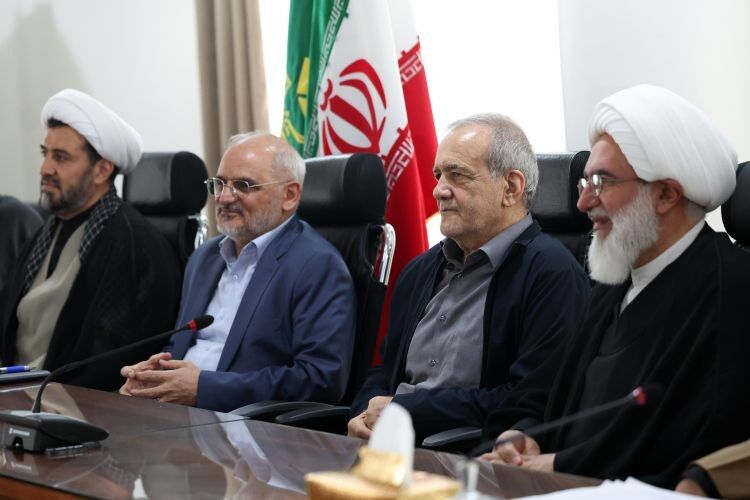
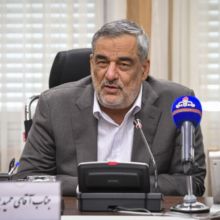
RoydadNaft – Iran’s problems cannot be solved by the government alone, President Masoud Pezeshkian said on Monday, calling for broad public participation to tackle the country’s deep-rooted structural imbalances.
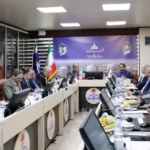
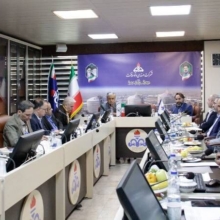
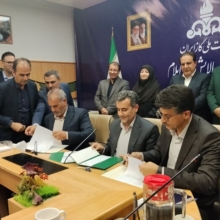
Speaking at a meeting on neighborhood- and mosque-based governance in the Chahardangeh district of Eslamshahr, Pezeshkian reviewed a comprehensive operational plan prepared by the Chahardangeh Conservation Jihad Headquarters. The plan, titled “A Model City of Economic Resistance: From Mosque to Neighborhood, From Neighborhood to City,” was presented.
Pezeshkian praised the initiative as a successful model of public participation in local governance. He noted that adversaries are actively working to hinder Iran’s progress and create challenges for the Islamic Republic, but emphasized that overcoming these obstacles requires mobilizing all social and public capacities.
“Resolving imbalances, reforming structures, and addressing our accumulated national problems demand the participation of the public, social institutions, mosques, grassroots organizations, and local administrators,” he said, adding that government efforts alone are not enough.
Pezeshkian stated that it is unbecoming of an Islamic society blessed with abundant resources to continue grappling with imbalances and shortcomings. He urged citizens not to wait for instructions, but to take initiative and contribute to national progress according to their own responsibilities and capabilities.
He stressed that successful governance requires broad and deep thinking, noting that officials and social activists with wider perspectives are better able to attract meaningful public participation, whereas narrow, short-term thinking limits the achievement of major goals.
Call to Reform Management Attitudes
Pezeshkian highlighted the need to reform attitudes in national management, saying that those who improve their outlook while serving the people will receive divine support. He added that Iran can achieve the position it deserves if current conditions are not treated as final and there is a genuine will to change them.
Citing the country’s vast human and spiritual potential, he said God has endowed the Iranian people with the capacity for excellence, creativity, and innovation. Officials who truly embrace this belief, he noted, will find solutions to problems far more accessible.
The president acknowledged that adversaries are working with full capacity to stop Iran’s progress, but stressed that no power can halt the nation once a strong collective national will is formed.
He commended existing efforts in consumption management and conservation, but said they are not sufficient and that significant untapped capacities remain to expand these initiatives.
“Our Issue Isn’t Non-Consumption — It’s Correcting Consumption Patterns”
Pezeshkian emphasized the importance of reforming consumption patterns in Iran, clarifying that the problem is not about reducing consumption itself, but about correcting patterns and improving efficiency. He noted that Iran’s rich natural resources and God-given wealth give the nation enormous potential, and no one should face economic hardship in a country so abundantly blessed.
He called for a national effort to advance the country with dignity and strength, saying Iran must never lag behind in global progress. If this becomes a shared public concern, he added, solutions will naturally emerge.
Pezeshkian praised the Chahardangeh initiative for its structured design, clear division of labor, careful planning, and systematic approach. However, he pointed out that some measures still depend on external resources, while many issues could be resolved using local community capacities.
The report also outlined initiatives in energy management and optimization, resource efficiency, public education, and sustainable infrastructure development.
Key measures in the program include replacing cooler motors to reduce electricity consumption, installing flow-reduction devices for water management, using smart thermal insulation to improve gas efficiency, training families, businesses, schools, and mosques on consumption management, developing small-scale solar power plants, and upgrading agricultural irrigation systems.