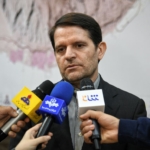
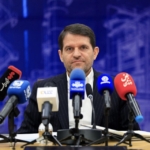
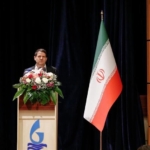
first petrochemical contract for the development of gas fields will be ratified soon, the CEO of the National Iranian Petrochemical Company said Monday.
The capacity of Iran’s petrochemical industry is set to jump by 35 million tons, reaching 131.5 million tons by the end of the Seventh Development Plan through the completion of 66 projects. This growth will not only expand output but also significantly enhance Iran’s global position in the sector.
The head of the Department of the Environment stated that the country's petrochemical industry has recognized the inevitability of moving towards environmental conservation.
Iran produced 32 million tons of petrochemical products in the first five months of the current Iranian year to late August, with 13 million tons worth $5.5 billion exported, the head of the National Petrochemical Company (NPC) said.
Iran produced 32 million tons of petrochemical products from March 21 through August 22 despite challenging conditions, the head of the National Petrochemical Company said Wednesday.
The head of Iran’s National Petrochemical Co. (NPC) said the company is ready to welcome investors in the southeastern port city of Chabahar, where about $10 billion has already been invested, creating capacity for more than 10 million tons of petrochemical production.
The petrochemical industry of Iran, aligning with the annual slogan and the objectives of the 7th Development Plan (2024-28), has set its sights on reaching a nameplate capacity of 131 million tons.
South African petrochemical firm Sasol said on Monday it swung to an annual profit on the back of higher chemicals prices, tighter cost controls and lower asset writedowns.
The head of Iran’s National Petrochemical Company stressed the importance of encouraging downstream producers to manufacture environmentally friendly plastics, saying the approach must be a priority in the industry’s development plans.
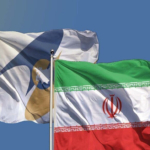
Steel and petrochemicals are expected to account for 50 percent of the objectives set under Iran’s free trade agreement (FTA) with the Eurasian Economic Union (EAEU), Iranian officials said, highlighting the sectors’ pivotal role in boosting exports and activating trade opportunities in the region.
Iran plans to raise its nominal petrochemical production capacity by 35 million tons to 131.5 million tons a year by the end of its Seventh National Development Plan (2022- 2027) through 66 expansion projects, a senior official said, targeting an average annual growth of eight percent.
Iran's petrochemical sector, under the Seventh National Development Plan, will require $24 billion in investment to increase nominal production capacity to 131.5 million tons.
The National Petrochemical Company plans to increase petrochemical production capacity by 35 million tons through 66 development projects under the Seventh Development Plan, aiming to reduce dependence on exports.
Iran’s polymer production capacity has reached about 9 million tons per year, the managing director of the National Petrochemical Company (NPC) said on Sunday.
Union Minister for Petroleum and Natural Gas, Hardeep Singh Puri, on Friday outlined India’s ongoing efforts to enhance domestic energy production while acknowledging the country’s continued reliance on imports to meet rising demand.
Iran’s National Petrochemical Company (NPC) is seeking to attract $100 billion in domestic and foreign investment to complete semi-finished projects and expand the country’s petrochemical value chain, a senior official said on Tuesday.
Liquefied propane was the primary non-oil product exported by Iran in the first four months of the current Iranian calendar year, according to IRICA's head.
Iran's petrochemical industry, set to boost non-oil exports and foreign exchange, faces challenges like international sanctions and funding constraints, necessitating diversified strategies for investment attraction.
Ahmad Jalilianfard, the director of projects at Iran’s National Petrochemical Company announced that 19 petrochemical projects are expected to become operational by the end of the current Persian calendar year (March 20, 2026) which include 15 production projects and four feedstock supply projects.
The Iraqi Minister of Industry and Minerals, Khalid Battal al-Najm, and officials from Saudi Arabia’s Ajyal Group discussed on last Tuesday a possible deal to construct a petrochemical complex in Iraq.