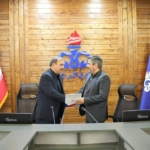
Petrochemical Pardis Company and Pars Special Economic Energy Zone Organization signed an MoU to boost Iran’s urea exports by securing 30,000 tons of storage and a dedicated dock for direct shipments.
Iran’s Bushehr Province’s industry chief warned that despite hosting South Pars and many petrochemical plants, the region gains little economic benefit, urging a rapid focus on downstream development and retaining financial resources locally.
Iran’s National Petrochemical Company (NPC) announced that projects included in the country’s Seventh National Development Plan have achieved an average progress rate of 60 percent, with an estimated total investment requirement of around $26 billion.
The National Petrochemical Company’s managing director said the industry is focusing on attracting investment from genuine private sector players, noting that only about 15% of the $92 billion invested in Iran’s petrochemical sector so far has come from real private investors.
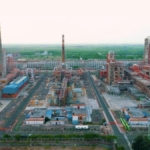
Bu Ali Sina Petrochemical Complex has successfully completed a major overhaul of key reactors in its aromatic and paraxylene units without halting production, enhancing equipment reliability and operational efficiency.
Hassan Abbaszadeh, managing director of the National Petrochemical Company, praised the Petrochemical Research and Technology Company for its role in providing catalysts and technical expertise.
Ali Rabani, director of energy consumption optimization at NPC, plans to implement an energy management system in Iran's petrochemical industry, urging firms to utilize available resources.
The executive decree on land use planning for the petrochemical industry has been officially communicated to petrochemical holding companies and firms, according to the National Petrochemical Company (NPC).
The managing director of South Pars Gas Complex reported a new record in propane and butane production in the first half of the current Iranian year, attributing this success to enhanced efficiency, optimized production processes, and the continuous efforts of the workforce.
Iran’s polymer production capacity is set to rise to 16 million tons annually by the end of the Seventh Development Plan, marking a 7-million-ton increase fueled by new petrochemical projects and abundant oil and gas resources.
The head of Iran’s National Petrochemical Company stressed the need to attract new investments and boost production, urging the use of all available capacities to finance petrochemical projects.
The National Petrochemical Company’s production control director said Iran’s petrochemical output in 1404 has remained defensible despite a 12-day war, with field development, flare gas recovery and investments in gas-saving projects identified as key strategies to secure stable feedstock.
Haldia Petrochemicals, one of India's biggest petrochemicals companies, looks to raise trading volumes by 30% and hire more traders as it expands in the key Asian petrochemicals market, sources with knowledge of the plans told Reuters on Wednesday.
The energy optimization director of the National Petrochemical Company announced that 1.7 billion cubic meters of gas have been saved over the past four years through efficiency projects.
Kazakhstan continues to seek imports of petrochemical products, including from Iran, despite its own investment in domestic production, according to Iran’s commercial attaché in the country.
The head of Iran’s National Petrochemical Company stressed the need to promote energy conservation, saying the petrochemical industry plays a key role in creating value from natural gas through feedstock use and value-chain development.
The managing director of Iran’s National Petrochemical Company (NOC) said the country’s polymer production capacity is planned to reach 16 million tons.
Persian Gulf Petrochemical Industries Co. CEO emphasizes the industry's economic significance and its progress in reducing raw material sales and producing diverse products through development projects.
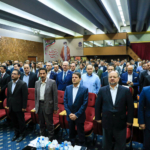
The 19th IRAN PLAST 2025 exhibition, attended by senior officials, executives, and industry representatives, opened at Tehran's Permanent International Fairgrounds.
The production capacity of polymer products is projected to reach 16 million tons by the end of Iran's Seventh Development Plan (2028), according to the CEO of the National Petrochemical Company.