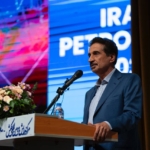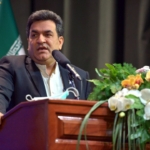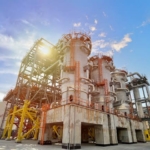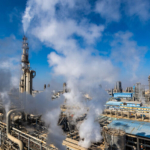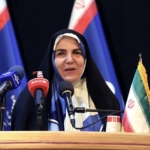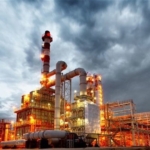
More than 1,700 new technology-based firms (NTBFs) and domestic manufacturers are now working with Iran’s petrochemical industry, with more than 120 trillion rials ($12 trillion tomans) allocated last year to expand these capabilities, an industry official said.
PETROCHEMICAL Feed Atom
Ministry of Oil is actively pursuing solutions to the challenges facing the country's petrochemical sector.
The head of Iran’s National Petrochemical Company (NPC) stated that the company has set a goal of increasing petrochemical production capacity by over 130 million tons under the Seventh National Development Plan.
Iran’s National Petrochemical Company (NPC) CEO Hassan Abbaszadeh has called for a fundamentally balanced development across the country’s petrochemical value chain, warning that uncoordinated growth between upstream and downstream segments undermines efficiency and value creation in Iran’s vital petrochemical sector.
Iran’s Ariasasol Polymer Company has achieved approximately $408,000 in annual savings by capturing and reusing valuable burner gas that was previously wasted during plant maintenance, significantly reducing emissions and technical losses, the company announced.
Petrochemical projects under Iran’s Seventh National Development Plan are about 60 percent complete, with all first-year targets for the sector achieved in 2024, the head of the National Petrochemical Company (NPC) said.
A presidential adviser said Iran’s petrochemical industry could become one of the country’s main engines of wealth creation and economic growth by easing investment procedures, cutting red tape, tapping small-scale foreign currency investments and leveraging the capacity of new technology-based firms.
The CEO of the National Petrochemical Industries Company (NPC) described health, safety and environment (HSE) as an organizational value and said decisions in this area must be made in an integrated manner and aligned with national interests.
Iran’s petrochemical industry has invested more than $95 billion to date in the sector, with a further $24 billion in new investment planned under the country’s seventh National Development Plan, the head of the National Petrochemical Company (NPC) said on Sunday.
South Korean petrochemical firms have submitted restructuring plans—including major plant closures and potential mergers—to help the government cut up to 3.7 million tons of naphtha cracking capacity ahead of a high‑level review on Monday.
PGPIC’s CEO announced that research and development boosted production by 7%, adding 590 trillion rials in revenue while reducing costs by 180 trillion rials.
Iran’s Petrochemical Employers Association emphasized that adopting modern technologies to curb pollution and fostering balanced growth through skilled human resources are key to national progress.
Shahid Tondgooyan Petrochemical Company saved over 1 trillion rials annually by reusing low‑pressure steam, cutting steam use 25%, water 360,000 m³, and electricity 6,500 MWh.
Arya Sasol Polymer Company hit a new peak in November 2025, producing 34,514 tonnes of polyethylene and breaking its third consecutive monthly output record within six months.
Nouri Petrochemical Company, Iran’s largest aromatics producer, posted a stellar 38% revenue surge to 140 trillion rials ($2.4 billion) in the eight months to November 21, 2025, marking a sharp jump from 101 trillion rials a year earlier.
Top Iranian petrochemical firms will meet on Kish Island in January 2026 for Petrochem 2026 to tackle industry challenges and present new innovations, products, and technologies.
Arya Sasol Polymer Company has approved a 150% capital increase from retained earnings to fund three strategic projects that expand capacity and strengthen long-term profitability amid global market challenges.
The National Petrochemical Co. (NPC) and the National Iranian Gas Company (NIGC) have signed a memorandum of understanding aimed at encouraging petrochemical companies to invest in natural gas efficiency and conservation projects.
Iran’s Kermanshah Petrochemical increased urea/ammonia production and nearly doubled exports to $91M in 7 months while national petrochemical output fell 4% on energy curbs.
Iran’s Lordegan Petrochemical Complex set new October records for urea and ammonia output after a catalyst upgrade, generating $100 million in foreign currency from urea exports.