India boosted Russian crude imports to €2.6 billion in November, reinforcing its role as Moscow’s second-largest buyer and channeling discounted oil into rising exports to Australia and sanction-hit Western markets.
Brent crude futures rose 43 cents, or 0.70%, to $61.71 per barrel. U.S. West Texas Intermediate (WTI) crude futures also gained 43 cents, or 0.75%, settling at $58.03 per barrel.
The International Energy Agency has lowered its 2026 global oil surplus forecast to 3.84 million barrels per day, citing stronger demand and reduced supply from Russia and Venezuela due to sanctions.
OPEC’s crude oil production fell by 1,000 barrels per day in November, reaching 28.48 million barrels per day, according to the organization’s latest monthly report issued in December 2025.
Brent crude futures tumbled $0.73, or 1.19%, to settle at $61.47 a barrel on Wednesday, extending a slump in global oil markets. The U.S. benchmark West Texas Intermediate (WTI) crude followed suit, shedding $0.77, or 1.40%, to $57.64 a barrel.
Asian buyers are forcing Venezuelan oil exporters into record discounts amid competition from cheap sanctioned Russian and Iranian crude, while U.S. military activity in the Caribbean heightens risks for shipments from Venezuela’s ports.
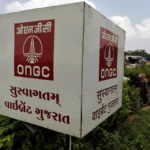
Indian refiners, except Reliance Industries, are continuing to purchase discounted non‑sanctioned Russian crude, with four of the seven largest processors involved, and imports expected to persist at reduced levels into next year due to attractive pricing.
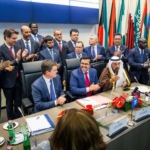
Today is the ninth anniversary of the OPEC+ Declaration of Cooperation, signed in Vienna on December 10, 2016, which reshaped global energy markets through unprecedented collaboration between OPEC and non-OPEC producers.
Brent crude futures rose by 19 cents (+0.3%) to $62.13 per barrel. U.S. West Texas Intermediate (WTI) futures also gained 19 cents (+0.3%), reaching $58.44 per barrel.
Adam Waterous, a 64‑year‑old Canadian financier, aims to transform Strathcona Resources into a North American energy powerhouse by more than doubling crude output to 300,000 barrels per day by 2035.
Brent crude oil fell by 7 cents, or 0.1%, to $62.42 per barrel. U.S. West Texas Intermediate crude declined by 13 cents, or 0.2%, to $58.75 per barrel.
The Kremlin stated on Monday that India will continue to purchase oil from any source that offers the most commercially advantageous terms, underscoring New Delhi’s pragmatic approach to energy security.
Iran’s oil minister said the country offers “golden opportunities” for investment, especially in the oil and gas sector, and announced that a package of contracts has been prepared for cooperation with friendly nations.
Brent crude futures fell 25 cents, or 0.4 percent, to $63.50 a barrel, while U.S. West Texas Intermediate crude fell 25 cents, or 0.4 percent, to $59.83.
The acting director of the Aban and Paydar-e Gharb oil field development and production enhancement project said the company has prioritized bringing the “Sarvak” oil layer online as its main strategy to stabilize and increase output from the two fields.
Iran’s economy in the first half of 1404 saw minimal overall growth, with oil driving a 0.1% expansion versus a 0.5% contraction without it, as the sector contributed nearly one-quarter of total growth.
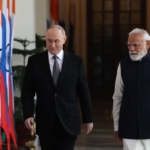
At a summit with Prime Minister Narendra Modi, President Vladimir Putin pledged steady energy supplies to India while urging stronger defence and economic cooperation, even as New Delhi faces growing U.S. pressure over its reliance on Russian oil and arms.