Brent crude futures rose by $1.38 (1.95%) to $72.13 per barrel. US West Texas Intermediate (WTI) crude futures increased by $1.40 (2.15%) to $66.61 per barrel.
Iran’s crude oil and condensate exports rose to 2.2 million barrels per day (bpd) in February, up 50 percent from the average of the previous three months, according to data from energy cargo tracking firm Kpler.
India wants to buy any energy product it can from Canada and its officials are urging the federal government to streamline approvals for various projects so it can tap into new supplies to feed a rapidly growing country with relatively few natural resources of its own.
Brent crude futures rose by 21 cents (0.3 per cent) to $71.06 per barrel. US West Texas Intermediate (WTI) crude futures increased by 16 cents (0.2 per cent) to $65.58 per barrel.
Saudi Arabia is increasing its oil production and exports as part of a contingency plan in case any U.S. strike on Iran disrupts supplies from the Middle East, two sources familiar with the plan said on Wednesday.
The U.S. Treasury Department said on Wednesday it would authorize companies seeking licenses to resell Venezuelan oil to Cuba's private sector, according to guidance posted on the department's website, a move that could help ease the island's acute fuel scarcity.
Brent crude futures rose by 42 cents (equivalent to 0.6%), reaching $71.19 per barrel. Meanwhile, US West Texas Intermediate (WTI) crude futures increased by 41 cents (0.6%), reaching $66.04 per barrel.
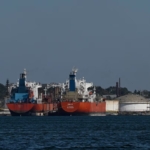
Trading houses and buyers of Venezuelan oil have chartered the first very large crude carriers (VLCCs) to export from the South American country since a Caracas-Washington supply deal began, a move that will boost deliveries to India, according to four sources and shipping data.
The Oil Ministry exceeded its obligations on fuel storage, a deputy speaker of Parliament said, praising what he described as a responsible approach to ensuring winter energy security.
The Brent crude oil futures contract remained unchanged from the previous day, trading at $71.49 per barrel. Meanwhile, the US West Texas Intermediate (WTI) crude oil futures contract rose by 11 cents (equivalent to 0.2%) to $66.42 per barrel.
The U.S. Supreme Court has agreed to hear a bid by ExxonMobil and Suncor Energy to scuttle a lawsuit brought by officials in Boulder, Colorado that seeks to hold the oil companies liable for helping fuel climate change in a case that could affect dozens of similar lawsuits around the country.
The deputy managing director for drilling operations at the National Iranian Drilling Company said 116 oil and gas wells were drilled and completed in the first 11 months of the current year, marking a 23% increase compared with the same period last year.
The Brent crude oil futures price fell by 4 cents (0.06%) to $71.72 per barrel. The U.S. West Texas Intermediate (WTI) crude price also dropped by 4 cents (0.06%) to $66.44 per barrel.
Brent crude futures rose by 33 cents (0.5%) to $71.99 per barrel. US West Texas Intermediate (WTI) crude futures climbed by 62 cents (0.9%) to $67.05 per barrel.
The United States is engaged in “active negotiation” regarding the sale of Venezuelan oil to India, aimed at helping India diversify its sources of crude oil, US Envoy Sergio Gor said on Friday.
India is set to import the most crude from Saudi Arabia in more than six years this month, as the South Asian nation faces sustained US pressure to reduce purchases of Russian barrels.
Iran’s Oil Minister Mohsen Paknejad has commented on the possibility of cooperation between Iran and the United States in the oil and gas sector, amid the ongoing nuclear negotiations between the two countries. He stated: “Everything is possible.” However, it remains unclear whether such oil and gas cooperation between Tehran and Washington will become operational at this stage.
Iranian Offshore Oil Company (IOOC) is moving ahead with plans to localize key marine equipment, including 6- to 9-megawatt-class turbogenerators for the Taurus 70 turbine, the company said.
Brent crude futures rose by 24 cents (equivalent to 0.3%) to $70.59 per barrel. Meanwhile, US West Texas Intermediate (WTI) crude futures increased by 28 cents (equivalent to 0.4%) to $65.47.
India’s state-owned Bharat Petroleum Corporation (BPCL) has bought Venezuelan oil for the first time ever, while private refiner HPCL Mittal Energy Ltd (HMEL) has purchased crude from the South American country for the first time in two years, three sources with knowledge of the deals said on Wednesday.