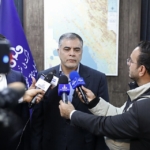
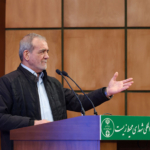
Oil Minister Mohsen Paknejad outlined the specifics of his two-day trip to Khuzestan Province, emphasizing his commitment to addressing the challenges faced by the local population.
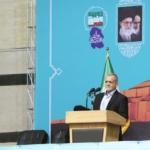
President of Iran Masoud Pezeshkian stated that his administration did not create the imbalances in gas and electricity but inherited them, vowing to address the issues through collective efforts.
The second phase of the Ahvaz Central Desalination Plant will be inaugurated during the president’s visit to Khuzestan province, with the oil minister in attendance.
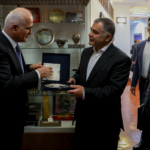
Iran’s Oil Minister Mohsen Paknejad emphasized the continuation of energy cooperation between Iran and Azerbaijan during a meeting with the Azerbaijani Prime Minister’s deputy on Tuesday.
Leader of Iran’s Islamic Revolution Ayatollah Seyyed Ali Khamenei highlighted that the only way to advance the country is by leveraging the capabilities of the private sector.
President Masoud Pezeshkian stated that imbalances in water, electricity, fuel, finances, and the environment cannot be resolved without reforming consumption patterns.
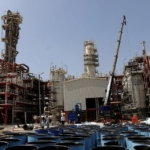
The CEO of the South Pars Gas Complex announced the supply of two turbines for Refinery 13 from domestic manufacturers, marking a significant step in sustaining gas production.
The drilling manager for West Karoun oilfields at the National Iranian Drilling Company (NIDC) announced that the cumulative progress of drilling 10 wells in the shared South Azadegan oil field has surpassed 90%.
President Masoud Pezeshkian said Sunday that one way to boost economic development in southern ports is to issue licenses for small-scale refineries, adding that he has ordered streamlined processes to facilitate their establishment.
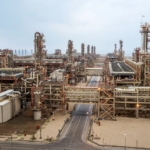
Pars Oil and Gas Company's deputy of development projects reported a 1.7 million cubic meters per day increase in gas production capacity at South Pars Phase 13.
Iran's residential, commercial, and small-scale industrial sectors consumed 621 million cubic meters of gas due to decreased temperatures, accounting for 72% of the total natural gas production.
The head of exploration at the National Iranian Oil Company (NIOC) announced that exploration drilling in offshore areas will resume after a five-year pause, marking the first such activity under the 14th administration.
Iran's Energy Minister announced plans to facilitate the export of Iran’s engineering and technical services to Tajikistan, emphasizing the active involvement of Iranian engineers in the country's water and power projects.
The parliamentary deputy to the president stated that hidden energy subsidies in the country amount to a significant sum and are one of the reasons behind the smuggling of energy resources.
The CEO of Abadan Refinery announced that the facility’s daily gasoline production will increase by 8 to 10 million liters as operational conditions stabilize.
The spokesperson for the National Iranian Gas Company announced on Saturday that 867 million cubic meters (mcm) of gas were delivered to the national grid on Friday.
The National Iranian Oil Refining and Distribution Company reported a significant increase in daily gasoline production over 10 million liters in the last four months of last year.
Iran's Renewable Energy and Energy Efficiency Organization head Tarztalab suggests establishing national market guarantees in countries alongside international mechanisms like carbon trading and emission reduction certificates.