CNG Could Cover Iran’s 20-Million-Liter Gasoline Shortfall, Trade Group Says
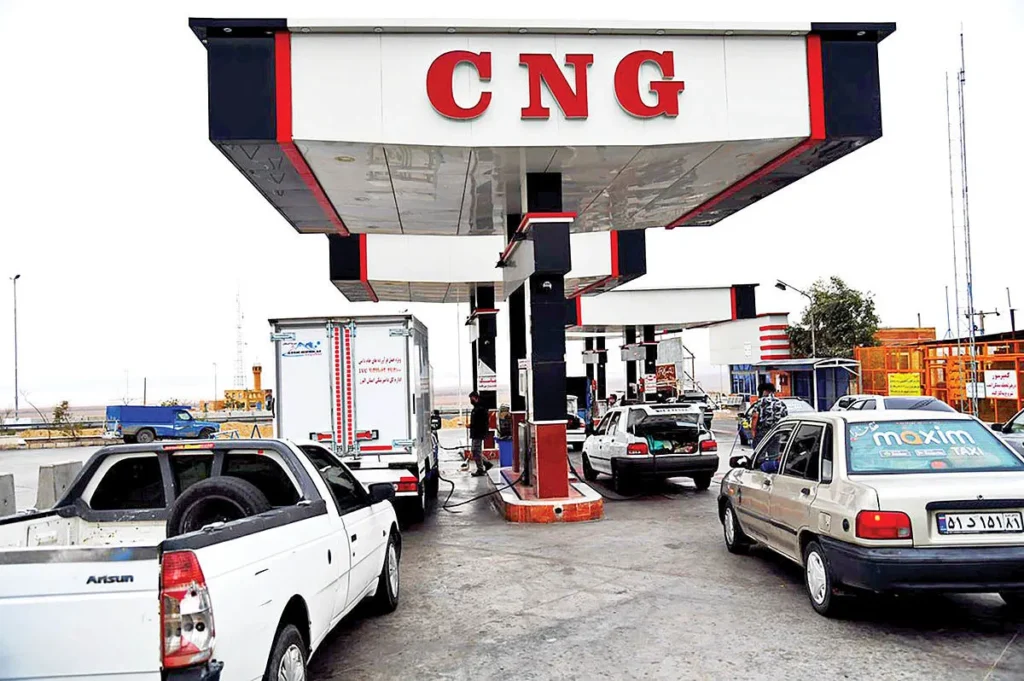
RoydadNaft – The chairman of the CNG trade association said the price gap between gasoline and compressed natural gas is the main reason drivers have pulled back from CNG, and that using existing CNG capacity and incentives for dual-fuel vehicles could offset at least 20 million liters of the gasoline imbalance.
According to Roydad Naft, Ehsan Janmohammadi said about 4 million dual-fuel vehicles are on Iran’s roads, many of them in public transport, taxis, and pickup fleets. Because the gap between gasoline and CNG prices is too narrow, gasoline is more attractive for those vehicles.
The main lever for raising CNG’s share of the fuel mix is a wider price gap, he said. Experience in Kerman and Sistan and Baluchestan over the past month showed that when the gap is large enough for CNG to pay for the driver, use of the fuel rises on its own.
The government should either widen the gasoline–CNG price gap or offer direct or indirect rial incentives to public-transport drivers so CNG is more attractive than gasoline, he said.
Stations gave free CNG for a month
About 1,000 CNG stations nationwide offered gas free for a month. Station operators and the trade funded the scheme; the government did not put money into it.
The aim was for both the government and consumers to see the effect of free CNG on gasoline use. Estimates put the average substitution at about 2 million liters of gasoline a day.
Three demands of the government
Janmohammadi listed the association’s main requests for easing the gasoline imbalance: automakers should build dual-fuel vehicles as required by the Seventh Development Plan; a proper program should offer free conversion for owners who want it; and CNG station commissions should be updated and paid in line with economic reality so full station capacity can stay online.
If those three pieces come together, the CNG industry can return to its former place and, on existing capacity, take at least 30% of the country’s fuel mix, he said.
Capacity to cover 20 million liters
Iran’s gasoline imbalance is about 20 million liters, he said. Electric vehicles can cut gasoline use by at most about 3 million liters, and other options have limited capacity. CNG can cover most of the gap without large new investment.
The industry already has the infrastructure and stations, so a sizable share of gasoline use can be replaced with what is already built, he said. A reason the capacity was neglected in past years was the lack of a single policy line. In recent months, government officials and lawmakers have grown more convinced that CNG can play a real role in managing the gasoline imbalance.
CNG price for consumers will not rise
On government insistence, the end-user CNG price is not to increase, Janmohammadi said. A Cabinet decision requires the gasoline–CNG price gap to be kept so the fuel stays economically attractive and drivers are encouraged to use it.