Two Years of Iran’s 14th Administration: Petropars Advances Oil and Gas Production Growth and Capacity Expansion
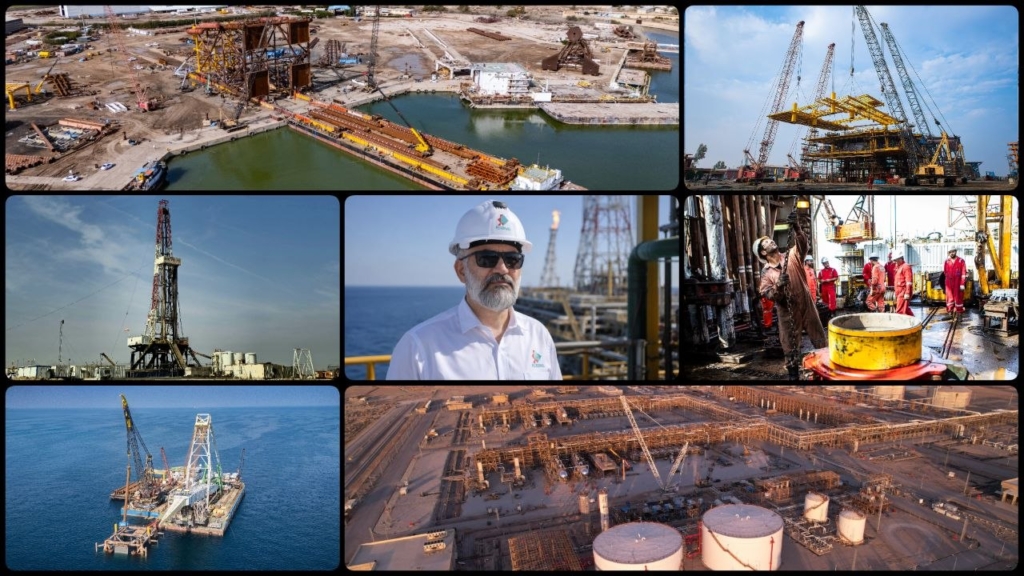
RoydadNaft – Over the past two years of Iran’s 14th administration, Petropars Group has advanced a slate of major national oil and gas projects focused on raising output, developing shared fields, and completing infrastructure. Gas production from South Pars Phase 11 rose from about 12 million cubic meters per day to more than 26 million cubic meters per day. Oil production capacity in the central package of South Azadegan exceeded 84,200 barrels per day, and with the commissioning of four CTEP trains, the nominal capacity of Iran’s largest crude processing unit reached 320,000 barrels per day. In the same period, development of Belal and Farzad B continued, the South Pars pressure-boosting project moved into the implementation phase, and the field phase of intelligent pipeline pigging began.
According to Roydad Naft, drilling and well completions continued in parallel, some previously idled capacity returned to production, and drilling capability as well as processing and offshore infrastructure expanded. The combined effort both lifted current output and put in place part of the infrastructure needed to sustain production in coming years.
South Pars Phase 11: Gas Output More Than Doubled
Gas production from South Pars Phase 11, which stood at about 12 million cubic meters per day at the start of Iran’s 14th administration, rose to more than 26 million cubic meters per day by June 2026 as drilling and well completions continued. The number of wells drilled on the phase increased from four to 11.
With the 11th well tied into the trunkline, production from Platform 11B exceeded 915 million standard cubic feet per day. The well, with a final depth of more than 4,300 meters, added about 75 million cubic feet per day to platform output after acidizing and clean-up.
At the 11A location, the jacket was installed after fabrication and offshore operations were completed and was secured with more than 700 meters of piling. The work continued under ceasefire violations and wartime conditions in the Persian Gulf. Once finished, it provided the infrastructure needed to set the topside. Construction of the 11A topside also continued in this period and reached about 50 percent progress.
Phase 11 sits on the most frontier section of the shared South Pars field. Work in this period raised recovery from the 11B location while preparing 11A for the next stages of development.
South Azadegan: Higher Output and Well Development
In South Azadegan, more than 63,000 barrels per day were added to oil production over 17 months. In that time, 4,180 meters of new-well drilling and 1,626 meters of workover drilling were completed, one new well and two workover wells were brought on stream, and acidizing and production-enhancement operations were carried out on 22 wells. After a two-year pause, 38 downhole pumps were designed and built in cooperation with three Iranian manufacturers, passed technical tests, and were delivered to the project.
As a result, the number of wells commissioned in the field’s central package reached 49, and their production capacity exceeded 84,200 barrels per day. South Azadegan is one of Iran’s most important shared oil fields with Iraq, and the production increase also strengthens Iran’s share of recovery from the common reservoir.
CTEP: Iran’s Largest Processing Unit in the History of the Oil Industry
Alongside the production increase at South Azadegan, four trains of the field’s crude processing center, CTEP, were commissioned during Iran’s 14th administration, lifting the nominal capacity of the country’s largest processing unit to 320,000 barrels per day. Each train is designed to process 80,000 barrels of oil per day and together they enable receipt, processing, and desalting of the field’s produced crude.
More than 28 million barrels of oil have already been processed at the complex. With all four trains commissioned, the processing infrastructure needed for a gradual rise in South Azadegan and West Karun output is now in service.
South Pars Pressure Boosting: A Project to Sustain Iran’s Gas Production
Among Petropars projects during the two years of Iran’s 14th administration, the South Pars pressure-boosting scheme holds a special place. Given the natural decline in reservoir pressure, it is directly tied to sustaining the country’s gas output in coming years.
In this period, basic and advanced basic engineering studies for Hub 1 began under a combined onshore-offshore scenario. The first stage calls for installing nine compressors at the onshore facilities of Phase 12, each with a capacity of 333 million standard cubic feet per day. Two offshore mini-hub complexes are also planned later to protect ultimate recovery, and a contract has been awarded for construction of the four-legged RP-1 jacket, weighing about 2,500 tons.
Moving the scheme into the implementation phase matters because South Pars supplies most of Iran’s gas demand, and falling reservoir pressure could affect output in future years. Pressure boosting is intended to provide the infrastructure needed to offset that decline and preserve the capacity of Iran’s largest gas field, which is why it ranks among the strategic projects of the gas industry.
Belal: Continued Development of the Gas Field
Development of the Belal gas field also continued during the two years of Iran’s 14th administration. The field’s 75-meter jacket, weighing about 1,760 tons, was installed in June 2025 in 65 meters of water in the Persian Gulf, a drilling rig was mobilized, and the first development well was completed. At the same time, conductor driving for eight wells and the tie-back of well BLG-8 were carried out.
On the offshore structures side, construction of the production topside with a capacity of 500 million cubic feet of gas per day advanced, and progress on the main structure rose from about 4 percent to more than 75 percent during the 14th administration. Installation of the fourth deck level, weighing about 213 tons, was also completed, and equipment, piping, electrical, and instrumentation work continues.
Farzad B: Progress on the Shared Field
On the Farzad B project, construction of the four-legged jacket for one of the wellhead platforms—more than 60 meters high and weighing about 1,485 tons—along with the temporary drilling platform and related piles, was completed and the package was made ready for offshore operations and installation in the field. Completing this part of the project is another step in developing Farzad B as a shared field between Iran and Saudi Arabia and in putting in place the infrastructure needed to start drilling.
Intelligent Pigging: Expanding Pipeline Inspection
In this period Petropars Group launched the field phase of intelligent pigging on pipelines. After completing preparatory stages and mobilizing equipment, operations began on transmission lines. Route data collection, precise DGPS surveying, and identification of pig launcher and receiver stations were among the activities at this stage. Specialized EGP, MFL, and TFI tools will next be used to assess deformation, wall condition, corrosion, and possible defects. The resulting data will support more precise planning for repairs, preventive maintenance, and pipeline risk management, while also expanding Petropars’ technical and engineering services in transmission-line inspection and monitoring.
Expanded Offshore Rig Capacity
During this period, Petropars’ offshore rig fleet capacity in the Persian Gulf doubled, and the number of active rigs rose from two to four. The added capacity has made it possible to drill simultaneously on several projects, including South Pars Phase 11 and the Belal field, and to keep multiple work fronts active at once.
Drilling of new wells on gas projects continues in parallel, and as drilling and completion work finishes, additional wells are moving toward production.
Supply Chain and Project Support
Alongside operations, materials and contract management were also reorganized. More than 26,000 material items in company and project warehouses across Iran were identified and registered in an integrated coding system to improve use of existing inventory, make tracking easier, and avoid duplicate purchases.
In contracts and tenders, contractor evaluation and estimate management were revised, and a clearer mechanism was put in place for cost estimating and closing out completed contracts.
From Raising Today’s Output to Protecting Tomorrow’s Production
Petropars’ record over two years of Iran’s 14th administration has combined higher production with development of oil and gas infrastructure. In the central package of South Azadegan, production capacity exceeded 84,200 barrels per day, and with four CTEP trains commissioned, the nominal capacity of Iran’s largest processing unit reached 320,000 barrels per day. The complex has already processed more than 28 million barrels of oil.
At South Pars Phase 11, gas output rose from about 12 million cubic meters per day to more than 26 million cubic meters per day, and production from Platform 11B exceeded 915 million standard cubic feet per day after the 11th well was tied in. Development of the 11A location, progress at Belal and Farzad B, a doubling of offshore drilling-rig capacity, and the start of the field phase of intelligent pipeline pigging were also pursued in the same period.
Alongside the production increase, the South Pars pressure-boosting scheme entered the implementation phase—a project aimed at preserving the field’s output capacity in coming years and offsetting the effects of natural reservoir-pressure decline.
Taken together, the work presents two parallel tracks at Petropars: raising output and completing current projects on one side, and building the infrastructure needed to sustain production in the years ahead on the other.