Iran’s Persian Gulf Holding Approves 62 Trillion Toman Petrochemical Project in Nehbandan
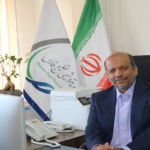
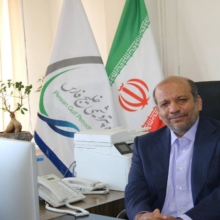
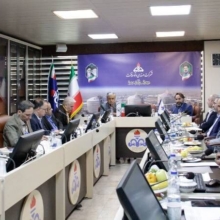
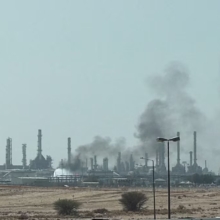
RoydadNaft – The lawmaker representing Nehbandan and Sarbisheh in Iran’s parliament said the board of Persian Gulf Petrochemical Industries Company (PGPIC) last week approved a 62 trillion toman ($investment figure as stated) investment to build a petrochemical complex in Nehbandan County.
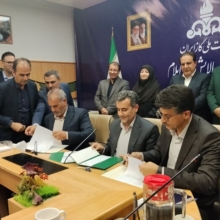
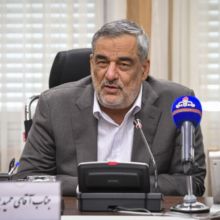
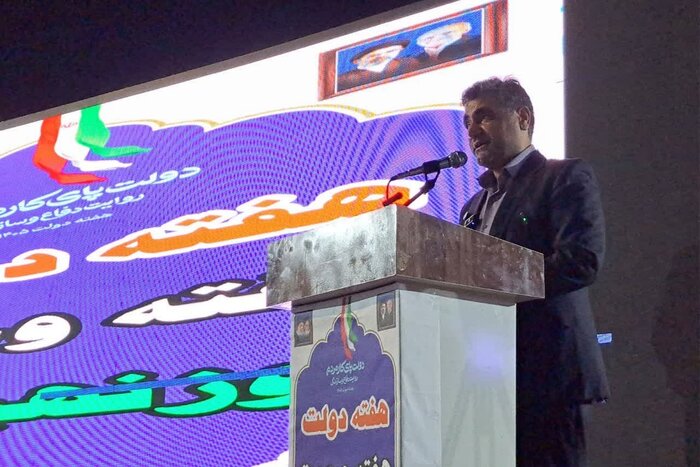
According to Roydad Naft, Mostafa Nakhaei spoke Saturday night (August 29, 2026) at a ceremony marking Government Week, Unity Week and Nehbandan Day. He said that after about six years of persistent follow-up and dozens of expert meetings at the Petroleum Ministry and the National Petrochemical Company, a project tailored to the region’s capacities, climate, infrastructure and market was drafted and approved at the Petroleum Ministry.
The plan was submitted to PGPIC — Iran’s largest petrochemical holding — about a year to a year and a half ago, he said.
Nakhaei added that PGPIC has also approved investment in a 150-megawatt solar power plant in Nehbandan.
He expressed hope that, with the follow-up already under way and the backing of the provincial governor and executive agencies, construction on both projects would start in Nehbandan as soon as possible.
Push for a 5 trillion toman Nehbandan development plan
Nakhaei said a county development plan was approved by the Cabinet after Ayatollah Ali Khamenei’s visit to Nehbandan in 1999 (7 Shahrivar 1378 / August 29, 1999), but what the leader had in mind was never fully carried out.
In recent years the plan was updated and finalized by the government with funding of more than 5 trillion tomans, he said, yet it has still not been fully notified or implemented.
As head of the South Khorasan parliamentary caucus, Nakhaei asked the first deputy speaker of parliament to press for the plan to be updated, officially issued and made binding on executive agencies.
Call to upgrade Nehbandan to a special governorate
Citing the county’s size and potential, Nakhaei said upgrading Nehbandan’s governor’s office to a special governorate remains a major local demand. Under the previous government the proposal advanced as far as approval by the Interior Ministry and a specialized Cabinet commission, he said, but it dropped off the agenda after the death of then-President Ebrahim Raisi.
Nehbandan covers about 26,000 square kilometers — larger than 10 or 11 of Iran’s provinces — and given its scale, problems and capacities, the upgrade is a necessity, he said.
He also pointed to the county’s border potential, saying the reopening of the Dokuhaneh crossing is another key demand of residents and local businesses. The plan has been approved by the national border-development working group, he said, but putting it into operation will require more diplomacy by the Foreign Ministry with Afghanistan. With support from provincial officials, the border guard and the army, and with traders present at the crossing, commercial activity could begin, he added.
Nakhaei said he is also pursuing a free trade and economic zone in Nehbandan. Talks and correspondence have been held with the president, the Economy Ministry and other agencies, and if the government gives final approval, parliamentary backing will be needed to complete the legal steps.
On health care, he said a specialty clinic at Nehbandan Hospital has been built and is serving the public, and the hospital emergency-ward expansion has been completed and commissioned. Medical equipment — including a CT scanner, ophthalmology gear, and ICU, cardiology and dialysis facilities — has also been supplied.
A 96-bed hospital in Nehbandan, a hospital in the Shusf district and an air-ambulance base are among other health projects still being followed, he said.
Iran’s first national mining department opened in Nehbandan
In education, Nakhaei said the country’s first national mining department for technical and vocational training has been launched in Nehbandan and is offering specialized courses needed by the mining sector.
A National Skills University campus for women was opened in the city about two years ago, he said, and a campus for men and the expansion of programs are being pursued.
The county’s higher health complex already enrolls associate and bachelor’s students, and, in cooperation with Birjand University of Technology, a university-affiliated high school in Nehbandan is due to open in the new academic year (September 2026).
He called renewable energy another pillar of local development, saying several solar-plant projects are under construction or in the permitting stage in Nehbandan, some with 100-megawatt capacity. With those projects, he said, Nehbandan could soon become one of Iran’s major renewable-energy hubs.
Nakhaei also said the Seventh National Gas Transmission Pipeline has been brought as far as Nehbandan and commissioned as a key piece of local infrastructure, with work continuing toward Sarbisheh.
A 132-kilovolt substation has been commissioned in the Shahpur area, and construction of a 400-kilovolt substation on the outskirts of Nehbandan is about 60 percent complete, he said.
Nehbandan–Birjand highway about 60% complete
On the dual-carriageway project linking Nehbandan to the provincial capital, Nakhaei said the route has made significant progress in recent years and is now about 60 percent complete. With more national funding and the support of the governor, the roads department and provincial officials, the remaining 40 percent should move faster, he said.
He added that water-supply schemes, completion and rehabilitation of water complexes, commissioning of the Bandan Dam, and development of mineral processing — gold, copper, fluorite, iron oxide and magnesium — are among other important projects and capacities that must be pursued in earnest.