The head of Iran’s parliamentary Energy Committee said diversifying the country’s fuel mix is essential and has been clearly outlined in the Seventh Five-Year Development Plan.
The Turkish Statistical Institute announced that the value of this country’s imports from Iran in the first ten months of 2025 increased by four percent compared to the same period last year, reaching $2.035 billion.
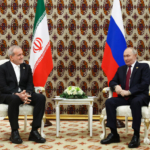
President Masoud Pezeshkian reaffirmed Tehran’s commitment to implementing a comprehensive strategic cooperation agreement with Russia, saying Iran is determined to put the signed accord into effect and expects Moscow to expedite and finalize its part of the process.
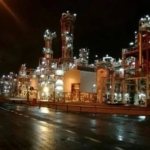
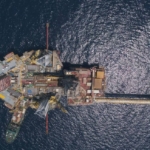
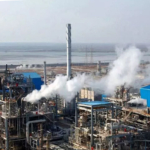
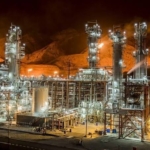
The CEO of Pars Oil and Gas Company said the company has set a new record by producing 722 million cubic meters of rich gas per day from the shared South Pars field — an increase of 6 million cubic meters compared with last winter.
PGPIC’s CEO announced that research and development boosted production by 7%, adding 590 trillion rials in revenue while reducing costs by 180 trillion rials.
Iran launched its first SME 100 ranking, a joint IMO–ISIPO initiative to identify top-performing small and medium enterprises through structured evaluation.
Iran’s oil minister said the country offers “golden opportunities” for investment, especially in the oil and gas sector, and announced that a package of contracts has been prepared for cooperation with friendly nations.
The acting director of the Aban and Paydar-e Gharb oil field development and production enhancement project said the company has prioritized bringing the “Sarvak” oil layer online as its main strategy to stabilize and increase output from the two fields.
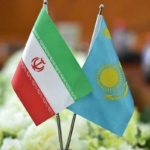
Hamed Asgari of ICCIMA emphasized that Iran’s private sector is prepared to lead in boosting economic ties with Kazakhstan during the president’s trade delegation visit.
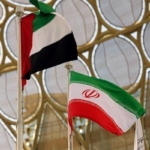
Iran’s transport minister highlighted that commercial relations with the UAE could grow significantly, given the two countries’ strong historical, geographic, and cultural ties.
Iran’s oil minister stressed that without the South Pars gas-compression project, the field will start losing annual output within one to two years as natural pressure declines after decades of production.
Iran’s economy in the first half of 1404 saw minimal overall growth, with oil driving a 0.1% expansion versus a 0.5% contraction without it, as the sector contributed nearly one-quarter of total growth.
Iran’s Petrochemical Employers Association emphasized that adopting modern technologies to curb pollution and fostering balanced growth through skilled human resources are key to national progress.
The CEO of the National Petrochemical Company said the Bidboland Persian Gulf Gas Refining Complex, the country’s largest flare gas recovery project, is now receiving 80% of its feedstock capacity and is supporting petrochemical plants.
Shahid Tondgooyan Petrochemical Company saved over 1 trillion rials annually by reusing low‑pressure steam, cutting steam use 25%, water 360,000 m³, and electricity 6,500 MWh.
Babak Poladi-Borj, Head of Research and Technology at Iran’s South Pars Gas Complex, stated that AI will drive South Pars into a new era of digitalized operations, enhancing monitoring, energy management, and real-time analytics.