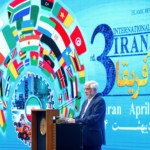
Iran’s NPC CEO calls for a comprehensive petrochemical industry development model to integrate value chain, prevent resource wastage, and maintain balance across the chain.
The CEO of Petrochemical Industries Development Management Company (PIDMCO) announced that the firm is currently managing 25 projects valued at over $11 billion despite challenging sanctions. Some of these projects are among the largest national initiatives, and their completion is critical for boosting production and strengthening the economy.
The Isfahan Oil Refinery has successfully produced heptane solvent for the first time in Iran. This product plays a significant role in reducing air pollution by cutting MTBE consumption.
The CEO of Bandar Imam Petrochemical Complex (BIPC) said the company’s investment in the Marun Petrochemical Diamond Project is a key step toward completing the value chain for its products.
The Deputy Minister of Iran Petroleum for Petrochemical Affairs announced the establishment of a utility corridor in Phase 3 of the Pars Special Economic Energy Zone to support the development of downstream petrochemical industries.
The Bandar Imam Petrochemical Complex produced more than 4.87 million tons of products in the Iranian calendar year 1403 (2024-25), achieving an 8% growth and securing the top production rank among Iran’s 72 active petrochemical plants, according to the National Petrochemical Company.
The Iranian Masterbatch and Compound Producers Association and Shenzhen Plastics Association of China signed a memorandum of understanding to enhance cooperation in the plastics industry.
Iran’s annual export of the petrochemicals is anticipated to reach about 34.8 million tons in the current Iranian calendar year (ends on March 2026), according to the head of the National Petrochemical Company (NPC).
Iran's National Petrochemical Company CEO expressed readiness to participate in Niger's petrochemical complex construction and supply urea for the African agricultural sector.
The CEO of the National Petrochemical Company (NPC) announced that by the end of the Iranian calendar year 1404 (March 2026), the nominal production capacity of the petrochemical industry is expected to reach 105 million tons, with exports of approximately 34.8 million tons worth about $13.6 billion.
Arvand Petrochemical has significantly increased production of various PVC grades by addressing challenges and implementing development strategies, playing a key role in stabilizing Iran’s PVC market.
The CEO of the National Petrochemical Company (NPC) said the petrochemical industry is expanding along the coasts of the Persian Gulf and the Sea of Oman due to favorable infrastructure and access to open waters, with new investors being concentrated in the Makoran region.
Iran, with its vast gas and oil reserves, geopolitical position, and top 10 mineral status, has the potential to become a key chemical production and export hub.
The CEO of Iran’s National Petrochemical Company discussed opportunities to expand cooperation with Chinese firms during Iran Day at the CHINAPLAS 2025 exhibition.
Iran plans to expand its petrochemical production capacity by 9.0 million tons in the current Iranian year (ending March 2026), according to the head of the National Petrochemical Company (NPC).
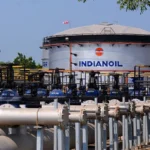
Indian Oil Corporation plans to invest ₹61,000 crore in a petrochemical complex in Odisha, following a preliminary agreement with the Odisha government.
The CEO of the National Petrochemical Company (NPC) stated that unfinished petrochemical projects must be reviewed, adding that lawmakers have set a deadline of late September 2025 to resolve their status.